How to Request Pineapple Aloe Vera Drink Samples
A practical guide to requesting Pineapple aloe vera drink samples, from identifying the current cup and review purpose to confirming shipment arrangements and recording useful tasting feedback.
How to Request Pineapple Aloe Vera Drink Samples
A useful pineapple aloe vera drink sample request tells the supplier which product the buyer wants, where it will be sold and what the sample must help decide. These details make it easier to select a relevant version, prepare supporting information and organize feedback after the parcel arrives.
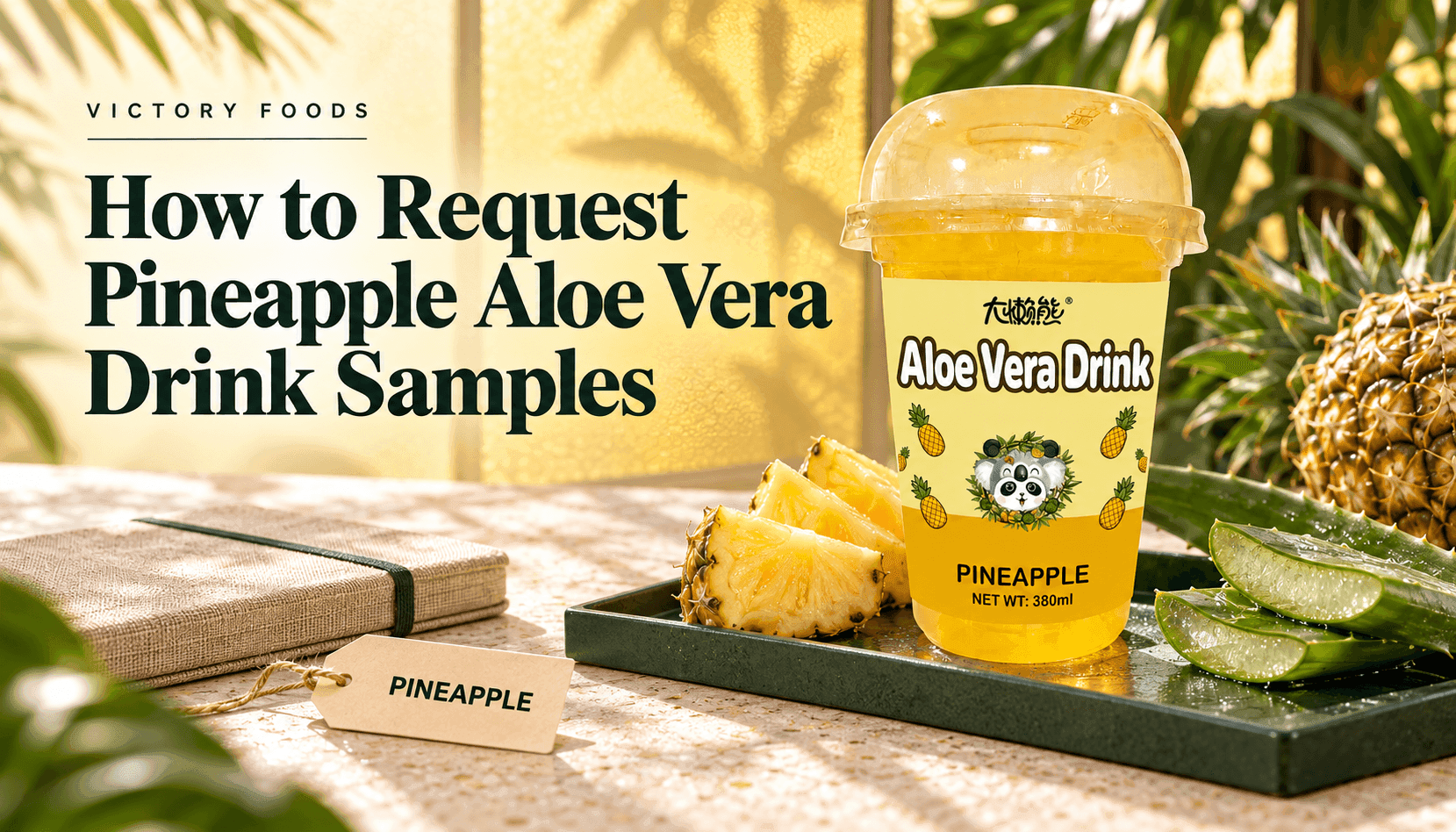
Victory Foods lists Pineapple in its 380 mL ready-to-drink aloe vera beverage range. The drink contains aloe pulp and comes in a cup with a snap dome lid. For an importer, distributor or retail brand considering this format, a sample can help connect the online description with the actual flavor, drinking experience and packaging.
This guide explains what to prepare before requesting samples, how to keep the shipment connected to the project and how to turn a tasting into a clear next step. Sample availability, quantities, charges and dispatch arrangements should be confirmed with the supplier for the individual request.
Identify the Exact Pineapple Product
Begin with the product name and the current aloe vera drink product page. State that the request concerns the Pineapple flavor in the listed 380 mL cup. Include the page reference or a current product photograph so both sides can recognize the same item.
The flavor name identifies the requested option. It does not establish that the drink is pure pineapple juice or define its ingredient composition. If the project has ingredient requirements, describe them separately and ask for the information applicable to the sample.
Tell the supplier whether you want to evaluate the existing product or discuss a different version. A request for the current Pineapple cup and a request for a new formula may require different preparation. Keeping that distinction clear prevents a standard sample from being mistaken for a completed custom development.
Explain the Sales Opportunity
Share the destination country and intended channel. A supermarket distributor may need to understand shelf presentation and case handling. An online retailer may focus on the selected selling unit and delivery protection. A brand owner may be checking whether the drink format fits a planned range.
Describe the current stage of the project in a few sentences. For example, the buyer may be exploring the category, shortlisting a supplier or preparing a presentation for a named retail channel. The supplier does not need a long business plan, but it helps to know what the sample is expected to support.
Our aloe drink wholesale buyer guide provides broader sourcing context. Use the sample request to identify the part of that process you are ready to evaluate. A preliminary tasting and an order approval review should not be treated as the same decision.
Give the Sample a Clear Purpose
Choose the main question before discussing how many cups to send. The purpose might be to understand the Pineapple flavor, compare the aloe texture with another sample, review the cup in a retail meeting or check whether the product matches an existing brief.
Write that purpose as an observable decision. “Our purchasing team wants to decide whether to shortlist this Pineapple cup for a supermarket proposal” is more useful than “Please send your best samples.” It identifies the product and the next step without asking the supplier to guess the commercial target.
If several teams will review the product, name their different needs. Marketing may need intact packaging for photography, while a tasting group needs units to open. Keep those uses visible when agreeing on a practical sample quantity.
Select Comparison Flavors Deliberately
The listed aloe beverage range includes Original, Mango, Pineapple, Coconut and Strawberry. A request focused on Pineapple can still include another flavor when the comparison serves a clear purpose. Original may help reviewers discuss the base beverage experience, while another fruit flavor can support an assortment decision.
Avoid adding every flavor automatically. A large, unstructured tasting can produce preference comments without answering whether Pineapple fits the project. Our aloe drink flavor selection guide explains how the full range can be considered alongside the intended channel and opening assortment.
Confirm which samples can be supplied together and whether they represent comparable product versions. If one cup is a development sample and another is current commercial stock, record that difference before drawing conclusions about the range.
Agree on Quantity and Supporting Information
Tell the supplier how many people will participate, whether the review will happen in one session and whether unopened units are needed for a retail presentation. These practical details help both sides agree on the sample request. There is no single sample quantity that suits every project.
Ask for the product information needed for the planned review: the sample reference, flavor, package size, applicable ingredient and nutrition information, storage guidance and the status of the artwork. Request the current specification where available and identify any questions that still require confirmation.
Keep requests proportionate to the stage. An early flavor review may not need every document required for a commercial shipment. It does need enough information to identify the sample and use it as directed. Record any outstanding documents as a separate follow-up rather than assuming they arrived with the parcel.
Confirm the Delivery Details Before Dispatch
Provide the recipient's full name, company, complete delivery address, postal code, country, telephone number and email address. If the shipment is going to a forwarder, identify the receiving contact and the reference needed to connect the parcel to your company.
Ask the supplier to confirm the proposed sample availability, preparation time, courier arrangement and any sample or freight charges. A previous shipment or a different product's policy should not be treated as the confirmed arrangement for this request.
The recipient should also check any destination requirements relevant to receiving food samples. Coordinate these questions before dispatch. A correctly addressed parcel can still be delayed if the receiving party is unavailable or the required shipment information has not been agreed.
Separate Existing Product Sampling From Private Label Work
Victory Foods offers OEM/ODM services, but a current branded sample should be described according to its actual purpose. It may provide a starting point for discussing flavor, texture or format. It does not automatically represent the final artwork or specification of a buyer's future brand.
Our private label versus custom formula guide explains why branding and formulation requests can involve different work. For the Pineapple aloe beverage, list the changes you want to discuss and ask which are feasible. Keep a preferred outcome separate from a supplier-confirmed option.
If you provide a benchmark product, explain what you want to learn from it. The relevant point may be flavor intensity, drinking texture or pack convenience. A benchmark is easier to use when the buyer describes the attribute of interest instead of asking for an undefined copy.
Record the Parcel and Samples on Arrival
Before opening the drink, check the outer parcel and visible condition of the cups. Photograph any obvious damage, wetness or leakage and share the observations with the supplier. Keep the shipment reference with the sample record so a delivery issue is not confused with a flavor assessment.
Identify the sample version, flavor and any lot or date information supplied. Store the cups according to the applicable instructions. If the parcel contains several versions, keep their labels and accompanying notes together rather than moving everything into an unmarked tray.
A sample that appears damaged or otherwise unsuitable should be set aside for supplier review. Do not treat an affected unit as a normal tasting result. The useful question is first what happened to that particular sample and whether another representative unit is available.
Run a Focused Tasting
Use the intended serving conditions and record them. When comparing samples, keep the conditions consistent enough for the observations to be meaningful. Do not let decorative ice in a photograph determine the storage or preparation instructions used for the actual sample.
Ask reviewers to describe pineapple flavor recognition, sweetness, acidity, aftertaste, liquid mouthfeel and aloe texture. Record observations independently before discussing preference as a group. A buyer who dislikes one attribute may still consider the product suitable for a different audience or channel.
Our sensory evaluation scorecard guide was written for functional jelly, but its approach to sample identity and specific feedback can be adapted to a beverage. Use relevant drink attributes rather than copying a gel assessment unchanged. The goal is a clear explanation of what was experienced in the Pineapple sample.
Review the Cup Alongside the Drink
Keep at least one intact example available when packaging matters to the decision. Review the flavor name, overall product identity, visible closure and the space the cup occupies in the intended display. Confirm dimensions with the supplier instead of estimating them from a photograph.
Observe the intended opening and drinking method using the supplied guidance. If the review reveals a question about handling, record the action and the result. “The reviewer could not find the opening instructions” gives the team a clearer issue to investigate than “The package is inconvenient.”
Sample delivery packaging may differ from the final shipping case. Ask for the proposed commercial packing information separately before presenting a carton arrangement to a retail customer. One successfully delivered sample parcel does not confirm the performance of a full commercial shipment.
Send Feedback That Can Be Used
Return the sample reference with a short description of the review conditions, observations and decision. State which attributes fit the brief and which require clarification or further discussion. Include photographs when they help explain a packaging or identification issue.
If a change is requested, describe the desired result and the features that should be retained. Our sample revision brief guide shows how an observation can become an actionable development request. The same discipline helps avoid changing flavor, texture and packaging together without knowing which change answered the original concern.
Possible next steps include requesting more information, arranging a second review, discussing a development option or obtaining a quotation for the current version. Agree on the next decision and the information required for it so the sample exchange moves the project forward.
Keep Sample Approval Connected to the Order
When the sample is suitable, retain its reference in the quotation and specification discussion. Confirm which product version, flavor and artwork the proposed order describes. If something changes, ask whether another review is needed before relying on the earlier approval.
An accepted tasting sample answers only the questions covered by that review. Commercial packing, label details, remaining shelf life and order terms still need the confirmations appropriate to the project. The buyer should be able to connect the sample they liked with the item they intend to purchase.
For a current-product project, the next conversation can focus on the order quantity, destination, packing and required timing. For a private label project, it may focus on the development brief and approval stages. Both routes benefit from a clearly identified starting sample.
Frequently Asked Questions
What should I include in a Pineapple aloe drink sample request
Identify the listed 380 mL Pineapple cup, destination market, sales channel, review purpose and recipient details. Explain whether you want the current product or a private label discussion, then confirm availability and shipping arrangements with the supplier.
Can I compare Pineapple with other aloe drink flavors
The listed range also includes Original, Mango, Coconut and Strawberry. Ask which comparison samples are available and select them according to the decision your team needs to make. Confirm the version of each sample before comparing results.
Are samples and courier shipping free
Confirm sample charges, courier costs and the payment arrangement for the specific request before dispatch. This guide does not establish a fixed sample policy for every product, destination or development project.
Does the Pineapple flavor name mean the drink is pineapple juice
No. It identifies a flavor in the aloe vera beverage range. Use the applicable ingredient information to understand the composition and agree on accurate wording for your own product listing.
What is the next step after a successful tasting
Send the identified sample result to the supplier and request the information needed for your next stage. This may be a quotation, confirmed packing details, additional documents or a private label development discussion.
Request Pineapple Aloe Vera Drink Samples
Contact Victory Foods with the Pineapple product reference, your destination market and the purpose of the review. Share the intended channel and recipient information so our team can discuss a relevant sample arrangement. A clear request makes the eventual tasting and the follow-up conversation more useful for everyone involved.