How to Confirm Mango Aloe Vera Drink Packing Details
A buyer guide to confirming Mango aloe vera drink packing information, from the quoted selling unit and cup arrangement to carton dimensions, weights, identification and shipment records.
How to Confirm Mango Aloe Vera Drink Packing Details
Before ordering mango aloe vera drinks, a buyer should confirm what each quoted unit contains, how the cups are arranged for shipment and which dimensions and weights apply to the finished pack. These details connect the product price with the warehouse, freight and retail plan.
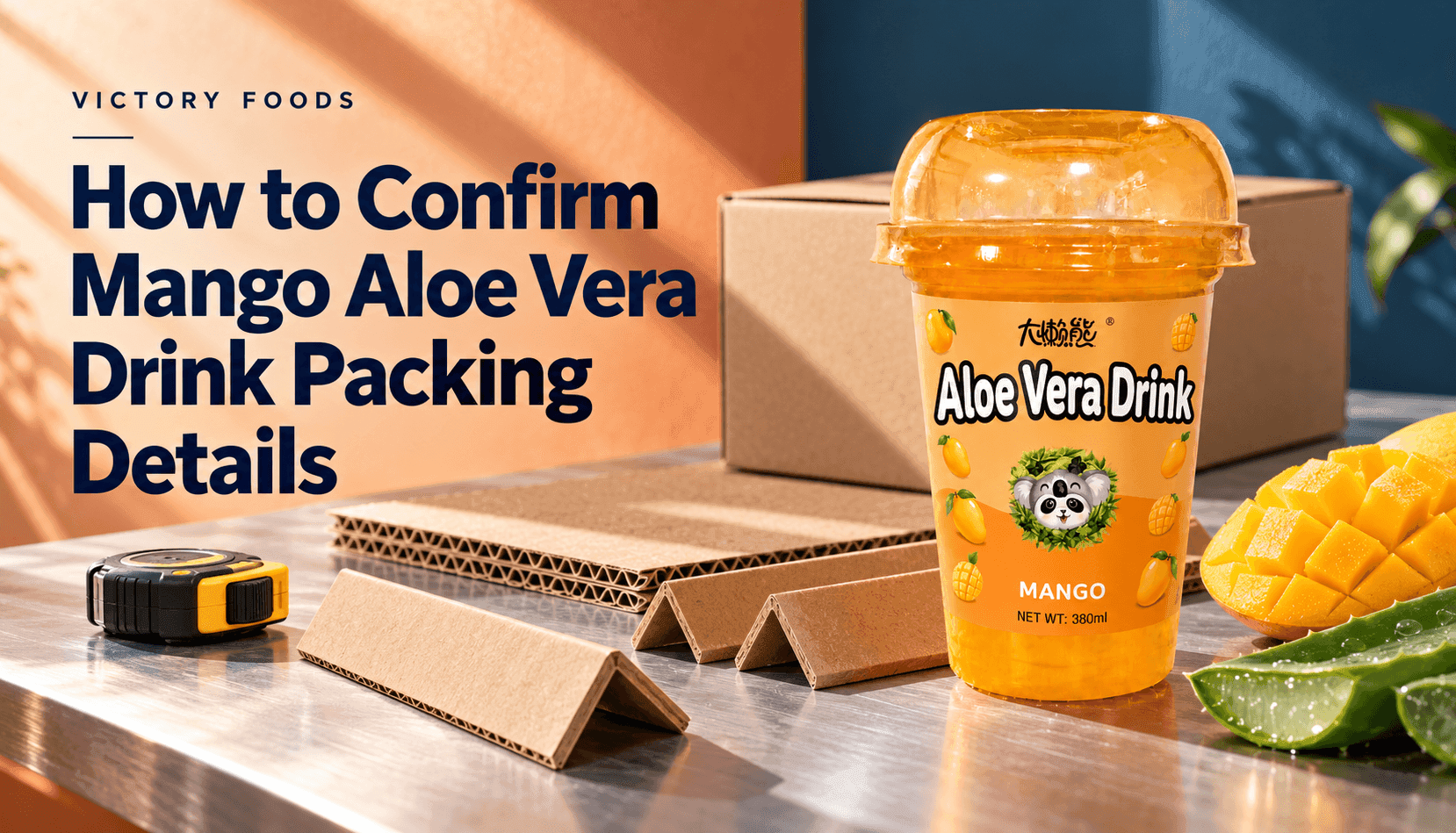
Victory Foods lists Mango in its 380 mL ready-to-drink aloe vera beverage range, supplied in a cup with a snap dome lid. The cup size identifies the beverage format, but it does not establish cups per carton, carton dimensions or a container loading quantity. Those details need confirmation for the actual order.
This guide explains how importers, distributors and brand teams can review packing information before purchasing. It focuses on questions and records that make the order easier to understand, without assuming a standard case configuration for every market or project.
Begin With the Exact Product Version
Use the current aloe vera drink product page to identify the Mango flavor and the listed cup size. Ask the supplier to connect the packing proposal to the product code, artwork version and specification used for the quotation.
Similar-looking cups can belong to different projects. A change to the lid, label, retail bundle or cup dimensions may affect the packing arrangement even when the flavor stays the same. Record the version being discussed before comparing carton information from different emails or catalogs.
If the buyer plans to distribute the current product, state that clearly. If the project involves private label artwork or a different retail configuration, describe those requirements as part of the packing discussion. A confirmed current-product carton is not automatically the approved pack for a future variation.
Define What the Quoted Unit Means
Confirm whether the price is per cup, per retail pack or per shipping carton. Then connect that price to an exact count. The word “box” can mean a consumer multipack, an inner pack or an outer shipping case, so use more specific terms in the quotation.
If a carton contains inner packs, confirm both levels: cups per inner pack and inner packs per carton. If cups are packed directly into the outer case, ask for the cups-per-carton figure and the arrangement. The order quantity should be expressed on the same basis as the quoted price.
Our aloe drink wholesale buyer guide provides the wider sourcing context. For packing approval, the immediate goal is a shared definition of the purchased unit. This prevents a low-looking case price from being compared with another offer that contains a different number of cups.
Distinguish Retail Presentation From Shipping Protection
Ask how the product will be offered to the end customer. A distributor supplying individual cups has a different retail presentation question from a seller offering a multipack. The outer shipping carton may serve neither purpose directly if the retailer removes the cups before display.
Confirm whether any display tray, sleeve, handle or retail box is part of the offer. If an element is still being developed, identify it as a proposal rather than including it silently in the expected finished pack. Photographs should make clear which layer of packaging they show.
Our secondary packaging guide discusses the roles of presentation and transport protection. Apply that distinction to the Mango cup project: one pack may help the product display neatly, while another protects it through handling and distribution. Both need a clear specification when they are part of the order.
Request the Actual Cup Arrangement
Ask for a photograph or packing illustration of the proposed commercial case. It should show enough detail to understand the number of layers, cup orientation and any internal separation or protection used. Confirm the arrangement against the stated count.
The cup and dome lid should be considered together. Ask how the packed arrangement supports the cups and manages contact with the closure area. Do not assume that a visible lid is designed to carry the weight of cups stacked above it.
Discuss empty space, movement and removal from the carton with the supplier. These observations help identify questions for packaging evaluation; they do not establish transport performance by themselves. Any required handling or distribution testing should relate to the finished configuration and planned route.
Confirm External Carton Dimensions
Request the external length, width and height of the closed, filled shipping carton, with the measurement unit stated. Make clear whether the figures describe the finished carton or an internal packing space. Freight planning normally needs the external shipping dimensions.
Keep the dimension order consistent across the quotation, packing sheet and freight request. A copied figure can be difficult to interpret when one document uses length by width by height and another changes the order without labeling it.
Ask whether the dimensions are estimated during development or confirmed from the approved packed case. If the retail pack or internal arrangement changes, revisit the carton measurements. The earliest design dimensions should not remain in the shipping documents after the physical pack has changed.
Separate Product Volume From Shipping Weight
The listed 380 mL cup size describes beverage volume. It should not be treated as the weight of one packed cup or used alone to declare carton weight. Shipping weight includes the filled product and the relevant packaging.
Confirm how the supplier defines net and gross weight on the packing sheet. Request gross weight per finished carton for the agreed configuration. If a pallet is used, confirm whether pallet-level figures include the pallet, wrap and any other shipping materials.
Check that the counts, dimensions and weights refer to the same pack version. Mixing a weight from one carton arrangement with dimensions from another can produce a misleading freight request, even when both numbers were individually correct for earlier proposals.
Calculate Volume From Confirmed Measurements
Once the external carton measurements are available, carton volume in cubic meters can be calculated as length multiplied by width multiplied by height, with all three dimensions expressed in meters. For dimensions recorded in centimeters, divide their product by one million.
Keep that calculation tied to the actual measurement source. For an order packed as separate cartons, the sum of carton volumes is a starting reference. If the shipment will be palletized, the palletized dimensions may be different and should be provided to the freight partner.
A carton-volume calculation alone does not confirm container capacity or a final freight charge. Loading layout, weight limits, pallets, handling requirements and the carrier's basis can all matter. Ask the supplier and freight partner to confirm the planned shipment rather than presenting a theoretical cube calculation as a guaranteed loading quantity.
Review Mixed Flavors as a Separate Packing Question
The current range lists Original, Mango, Pineapple, Coconut and Strawberry. If an order includes several flavors, confirm whether the plan uses separate single-flavor cartons or an approved mixed-flavor configuration. These arrangements create different counting and receiving requirements.
Our aloe drink flavor selection guide helps buyers think about assortment choice. Once that selection is made, convert it into a written packing request. State the quantity wanted for each flavor and ask the supplier to confirm how the proposed cases will be identified.
Do not assume that all flavors can be mixed within one carton or that every assortment has the same ordering conditions. If the supplier confirms a mixed pack, retain the agreed composition and labeling details with the order. The receiving team needs to know how the delivered cases correspond to the purchase.
Agree on Carton Identification
Discuss the information needed on the outer case to identify and receive the shipment. Depending on the project, this may include product reference, flavor, case count, lot or date information and buyer references. Confirm the actual content and placement before printing.
If the buyer or retailer requires a barcode, warehouse label or specific shipping mark, provide the requirement and approved data early. The supplier should not have to invent a buyer's internal product code. Check that marks remain readable when the carton is closed and handled in its intended orientation.
The approved product label and the carton mark serve different purposes. Keep them connected without assuming that all consumer information belongs on the shipping case. The required information should be agreed for the actual product, customer and destination.
Ask About Pallets and the Handover Route
Confirm whether the goods will move as loose cartons or on pallets. For a palletized proposal, request the pallet footprint, cartons per layer, number of layers, total height and gross weight, together with the proposed wrapping or securing method.
Share any receiving limitations from the warehouse or forwarder, such as access arrangements or handling requirements. These details should be reviewed before the packing plan is finalized. A pallet format that works at dispatch may still need confirmation with the receiving facility.
Agree on the physical handover location and the packing information the freight partner needs. Ask for the scope of the quoted logistics services in the commercial documents. A product packing sheet describes the shipment; it does not, by itself, define which transport or handling charges are included in the sale.
Connect Packing With Storage and Delivery Timing
The current aloe drink listing states a two-year shelf life and storage in a cool, dry place. Confirm the instructions for the ordered version and discuss how the proposed storage and delivery route will follow them.
Remaining shelf life at dispatch or receipt is a separate commercial question. A buyer with a warehouse or retailer requirement should share it before the order is finalized. Record the agreed basis in the relevant order documents rather than relying only on the general website statement.
Also confirm how date and lot information will remain accessible during receiving. The warehouse should be able to connect the delivered product with its records without opening every individual cup. Ask the supplier how this identification is handled in the proposed packing arrangement.
Approve One Packing Record
Bring the agreed product reference, counts, arrangement, carton dimensions, weights, marks and any pallet information into one packing record with a version and approval date. Attach the relevant photographs or drawings so the written details describe an identifiable physical configuration.
Our finished product specification guide explains the value of connecting an approved product with controlled purchasing information. For this aloe drink project, the packing record should refer to the appropriate product specification and artwork, while stating its own packaging details clearly.
If a carton, internal fit or retail unit changes after approval, ask which counts, dimensions, weights or marks must be updated. Keep the supplier, buyer and freight partner working from the same final information. A revised packing plan should not leave an older attachment circulating as the shipping reference.
Use the Confirmed Details in Sales Materials
After approval, carry the relevant facts into the quotation and product information shared with customers. Show the selected selling unit clearly and avoid letting a photograph of one Mango cup imply an unconfirmed multipack or case offer.
Our coconut aloe drink product page guide explains how product identity, images and practical information can work together online. The same principle applies here: the public listing should agree with the commercial pack it describes, while detailed freight information can remain in the buyer's packing documents.
Before dispatch, request the final packing list for the actual shipment and compare it with the confirmed order. Resolve differences in counts, versions or marks while the goods can still be checked at the dispatch stage. That final comparison gives the receiving team a clearer basis for checking the delivery.
Frequently Asked Questions
How many Mango aloe drink cups are packed in a carton
Confirm the cups-per-carton figure with Victory Foods for the actual product version and packing proposal. The public 380 mL cup size does not establish an outer-case count, and this guide does not assume one.
Can I calculate shipping weight from the cup volume
No. Beverage volume and packed shipping weight are different measurements. Request the confirmed gross weight of the filled carton, including the packaging used for the agreed configuration.
Does carton volume tell me the container loading quantity
It provides a useful starting calculation, but loading depends on the physical arrangement, weight limits, pallets and handling requirements. Obtain a loading proposal for the actual shipment before confirming a container quantity.
Can Mango be shipped with other aloe drink flavors
Ask the supplier to confirm the available ordering and packing arrangements. State whether you want separate flavor cartons or a mixed-flavor pack, and retain the confirmed composition with the order documents.
What should be approved before the first order
Confirm the product version, selling unit, packing count, cup arrangement, external carton dimensions, weights, identification and relevant pallet details. Connect them to the quotation, artwork and final shipment records.
Request Mango Aloe Vera Drink Packing Information
Contact Victory Foods with the Mango product reference, destination, intended sales channel and estimated quantity. Share any warehouse or forwarder requirements so our team can discuss the packing information needed for your project. Confirmed details help the product offer, shipment plan and receiving process describe the same order.