How to Build a Finished Product Specification for Functional Jelly
A finished product specification converts an approved functional jelly concept into a controlled purchasing and manufacturing reference. This guide shows buyers how to define product identity, sensory attributes, composition, packaging, testing, release and change control without inventing universal limits.
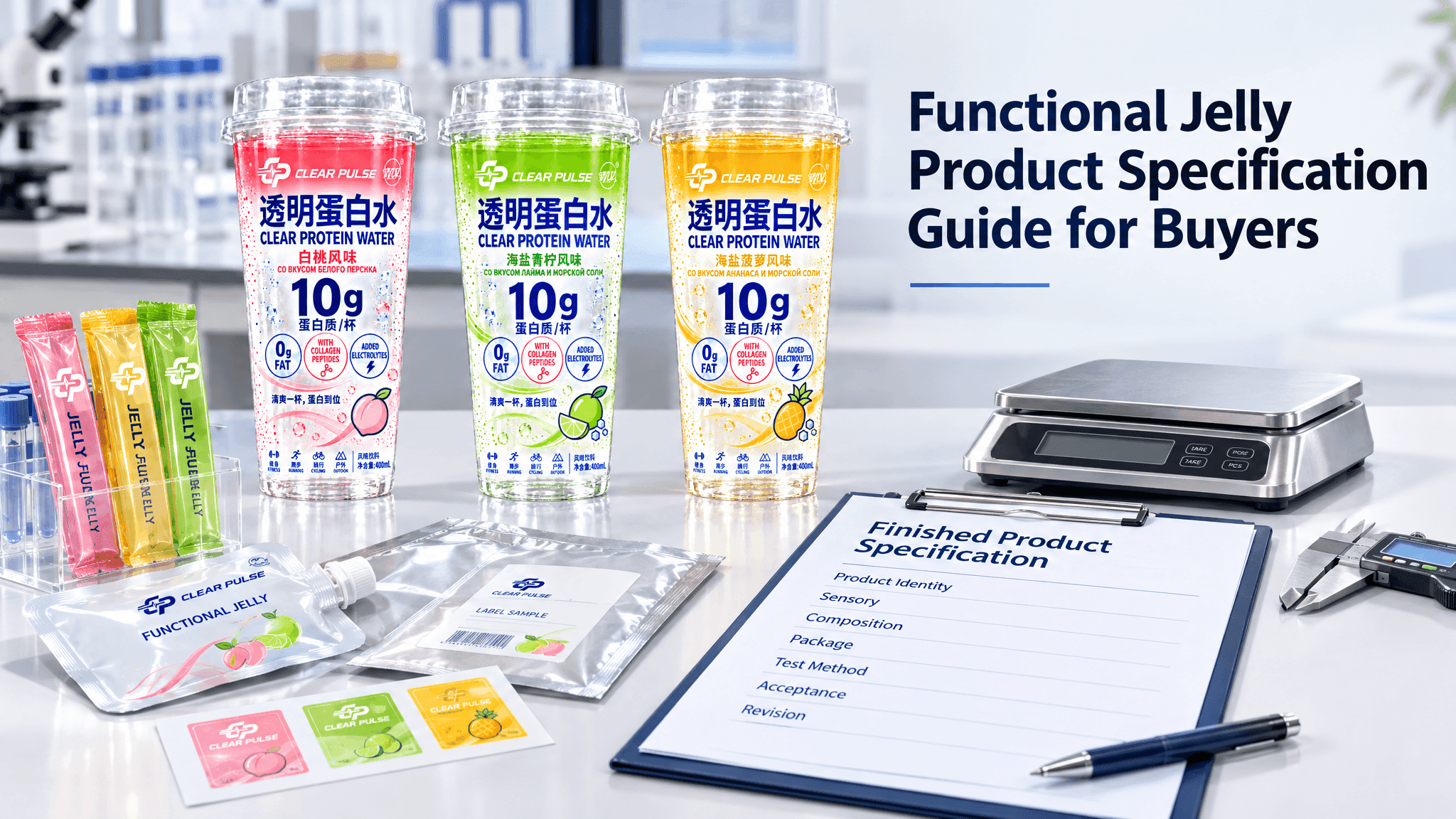
How to Build a Finished Product Specification for Functional Jelly
An approved functional jelly sample is a milestone, but it is not yet a complete manufacturing instruction or release standard.
Before commercial production, the buyer and manufacturer need a controlled finished product specification. This document defines exactly which product is being purchased, which characteristics matter, how those characteristics will be checked and who can approve a change.
A good specification connects the commercial brief with the formula, process, package, label, test plan and shelf-life evidence. It does not replace those records. It gives every team one shared reference for deciding whether a finished lot matches the approved product.
This distinction matters for private-label projects. A formula explains how the product is made. A certificate of analysis reports selected results for a particular lot. A label describes the product to the market. The finished product specification sets the controlled requirements that these records must support.
Define the Exact Product Version
Start with identity. The title "functional jelly" is too broad to control a commercial order.
The specification should identify the product name, product or stock code, destination market, serving format, flavor, unit size, pack configuration and responsible business parties. It should also reference the approved formula, packaging artwork and relevant component versions.
Version control prevents a familiar but costly problem: the buyer approves one sample while purchasing, production and artwork teams are working from different revisions.
At minimum, the document should show:
- specification number and revision
- effective date and document owner
- product name and internal product code
- market and language version
- formula or master manufacturing reference
- primary package and secondary pack references
- approved artwork reference where applicable
- approval names or functions
If one product is sold in several markets, do not assume one specification can cover every version. Ingredient declarations, claims, warnings, pack copy, serving information and testing expectations may differ.
Separate Targets From Release Limits
Not every number in a development brief has the same purpose.
A target is the result the team is trying to achieve. A release limit defines the acceptable range or condition used to decide whether a lot can be released. A monitoring parameter may be recorded to detect drift without functioning as a standalone release decision.
Mixing these categories creates confusion. A development target may be narrower than the validated release range. A process setting may affect the product but belong in the manufacturing instruction rather than the finished product specification. A marketing aspiration may not be a measurable quality criterion at all.
For every proposed criterion, ask:
- Is this a target, a release requirement or a trend-only check
- Is the limit supported by approved samples, validation, regulation or process capability
- Is the test method defined well enough for two laboratories to interpret it consistently
- Does the result actually help decide whether the finished product is acceptable
Do not copy a tolerance from another jelly merely because the format looks similar. The appropriate limit depends on the final product, the method, the package, the intended use and the destination market.
Describe Product Identity and Intended Use
The specification should say what the product is and how it is intended to be used. This gives context to later decisions about texture, unit format, instructions and safety controls.
Useful identity fields can include the food category used for the project, the consumer format, intended age group where relevant, preparation or consumption instructions and any channel-specific use. A squeeze pouch, stick pack and cup may contain related jelly systems but require different physical and packaging criteria.
Keep brand positioning separate from legal classification. Terms such as wellness, sports, beauty or energy may guide the commercial brief, but they do not determine the regulatory category or permitted claims. The final classification and presentation must be reviewed for the destination market.
Define Sensory and Physical Attributes
Functional jelly quality cannot be described by one word such as "good" or "firm." The specification should convert the approved experience into observable characteristics.
Sensory and physical fields may cover:
- appearance and color
- aroma and flavor profile
- sweetness, acidity, bitterness or aftertaste where relevant
- texture at first bite or squeeze
- cohesiveness, elasticity, smoothness or particle perception
- visible separation, syneresis, settling or air bubbles
- ease of dispensing or opening in the intended package
Use clear descriptions and an approved reference sample or sensory scorecard where appropriate. State the conditions under which the product is evaluated, because temperature, storage history and serving method can change the experience.
Instrumental tests can support a sensory decision, but a number should not be added simply because an instrument is available. The team should understand how the measurement relates to the approved product and whether the method is repeatable.
Record Composition and Functional Targets
The specification should identify the composition information needed to control the finished product without turning the document into an uncontrolled copy of the formula.
Depending on the project, this may include the declared functional ingredient, finished-product target, relevant nutrient or compositional parameters, allergen status and other characteristics that support the approved label. The document should state the unit of measure, test basis and point in shelf life to which a requirement applies.
The commercial ingredient amount and the amount of a declared active component are not always the same. Carriers, standardization, moisture and assay basis can affect the calculation. Define which value is being controlled and which source csupport it.
No functional target should be treated as proof of a health benefit. Claims and nutrition declarations require a separate destination-market review based on the final formula, serving size, evidence and applicable rules.
Connect the Specification to the Package
The finished product is the jelly and its package together. A suitable bulk jelly can still fail as a commercial item if the unit leaks, the seal is inconsistent, the code is unreadable or the pack does not protect the product through its intended life.
Package-related fields can include:
- primary container and lidding or closure reference
- nominal unit content and the applicable control method
- seal, closure or leak criteria
- opening and dispensing performance
- code content and legibility
- retail pack count and assortment
- shipping case configuration
- artwork and label version
- acceptable and unacceptable visual defects
Reference the approved packaging drawings and component specifications instead of trying to reproduce every material detail in one document. The finished product specification should make those records traceable and explain which assembled-pack checks affect lot acceptance.
Define Chemical and Microbiological Criteria
Chemical and microbiological criteria must be product-specific and risk-based. They should reflect the final formula, process, packaging, intended users, storage conditions, shelf life and destination-market requirements.
The relevant technical team may need to consider parameters such as acidity, soluble solids, moisture or water activity, active or nutrient content, contaminants, allergens and appropriate microbiological criteria. This is not a universal checklist, and not every parameter belongs in every specification.
For each included item, define the method, unit, sampling point, limit or decision rule and responsible laboratory. If an external laboratory is required, define how the method and reporting format will be agreed.
Avoid statements such as "meets all standards" without naming the applicable requirement and evidence. A precise reference is more useful than a broad assurance.
Select Methods and Sampling Rules
A limit without a method can be ambiguous. A method without a sampling plan may not represent the lot.
The specification or a linked quality agreement should state how samples are selected, who collects them, how they are protected, which method is used and how results are interpreted. Sampling should match the nature of the defect and the risk of making a wrong acceptance decision.
For attribute checks such as visible package defects, a qualified team may use an appropriate acceptance-sampling framework. For compositional or microbiological testing, the plan may need different sample units and decision rules. International guidance can help structure the approach, but it must be selected and applied by competent personnel for the actual product and market.
The specification should also explain what happens when a result is atypical, out of specification or inconsistent with another result. Retesting, resampling, investigation and disposition should follow an approved procedure rather than an improvised decision.
Add Coding Storage and Shelf Life
The document should connect each lot to traceability and approved storage conditions.
Define the required lot or date code content, location and legibility. State the approved storage statement and shelf-life claim exactly as supported by the final formula, process and package. If transport or open-pack conditions matter, place them in the appropriate specification, handling instruction or customer document.
Shelf life should not be copied from an earlier formula or a similar product. Reformulation, a new ingredient source, a different barrier package or a process change can affect the evidence. The specification should reference the current shelf-life protocol or report and identify which quality attributes are monitored over time.
Link the Specification to Labels and Claims
The specification and label should tell the same technical story.
Ingredient declarations, allergen information, net content, serving information, nutrition values, functional ingredient amounts, storage instructions and claims should be checked against the final controlled product records. The approved artwork reference should be clear enough to prevent an obsolete label from being used with a revised formula.
This review is especially important when a development name has become familiar inside the project. Internal shorthand may not be a permitted product name or claim in the destination market.
Treat label approval as a documented cross-functional decision. The manufacturer can provide product and process information, but the brand owner and importer should confirm the final market presentation with qualified local advice.
Assign Approval and Release Responsibilities
A useful specification makes ownership visible.
The manufacturer may own production controls, factory testing and lot release under the agreed system. The brand owner may approve sensory standards, commercial features and artwork. The importer or local regulatory team may confirm market-specific requirements. Exact roles vary, but they should not remain implied.
Clarify who can:
- approve the initial specification
- approve the reference sample
- review certificates and test reports
- release or reject a lot
- authorize a concession or deviation
- approve a specification revision
- communicate a change to affected markets
The certificate of analysis should report the agreed lot-specific results, not function as a substitute for the underlying specification. The quality agreement can define which results appear on the certificate and which records remain available for review.
Control Changes and Revisions
The first approved specification is not the end of the process. It becomes the baseline for controlled change.
Changes that may trigger review include a new ingredient supplier or grade, formula adjustment, process change, functional target revision, new package material, seal-system change, artwork update, test-method change, shelf-life extension or destination-market addition.
The team should decide which changes require notification, technical assessment, new samples, validation, label review or formal approval before implementation. Revision history should record what changed and why.
Change control protects both parties. It gives the manufacturer a clear route for proposing improvements and gives the buyer visibility when a change could affect product identity, evidence or market presentation.
Review the Specification Before Mass Production
Before the document becomes active, run a cross-functional review against the latest approved sample and records.
Confirm that:
- the product, formula, package and artwork versions match
- each release criterion has a defined method and unit
- limits are supported rather than copied from another product
- sampling and decision rules are clear
- shelf-life and storage statements match current evidence
- label and claim references match the destination market
- deviations, approvals and document ownership are defined
- obsolete versions will be removed from use
The goal is not to create the longest possible specification. It is to create a controlled document that lets qualified people make the same decision from the same evidence.
For a new functional jelly project, Victory Foods can review a buyer's draft specification alongside the approved sample and manufacturing records before commercial production is planned.
Frequently Asked Questions
Is a finished product specification the same as a formula
No. The formula defines ingredients and manufacturing quantities or ratios. The finished product specification defines the approved characteristics and acceptance requirements of the commercial product.
Is a certificate of analysis enough for lot approval
A certificate of analysis reports selected results for a specific lot. The specification defines the criteria, methods, units and references used to interpret those results. The agreed quality system may also require production, packaging, sensory and traceability records.
Should every specification include the same tests
No. Tests should be selected for the actual formula, process, package, intended use, risk and destination market. Universal checklists can create unnecessary testing while missing product-specific risks.
Who should set the acceptance limits
Qualified quality, research and development, regulatory and manufacturing personnel should set and approve limits using applicable requirements, validation data, approved samples and demonstrated process capability. Buyers should not invent limits without technical support.
When should the specification be revised
Revise it when an approved change affects product identity, composition, quality criteria, process references, packaging, label, test method, shelf-life evidence or market requirements. Use formal change control so production does not move to a new version before approval.