
How to Choose Aloe Vera Drink Flavors for Retail and Wholesale
How should buyers choose an aloe drink flavor range? Compare Original, Mango, Pineapple, Coconut and Strawberry, then plan samples, shelf presentation and replenishment with Victory Foods.
How to Choose Aloe Vera Drink Flavors for Retail and Wholesale
Choosing aloe vera drink flavors starts with the customers you serve, the space available and the drinking experience you want to offer. For a first order, compare samples, give each selected flavor a clear role and confirm the ordering conditions before building a wider range.
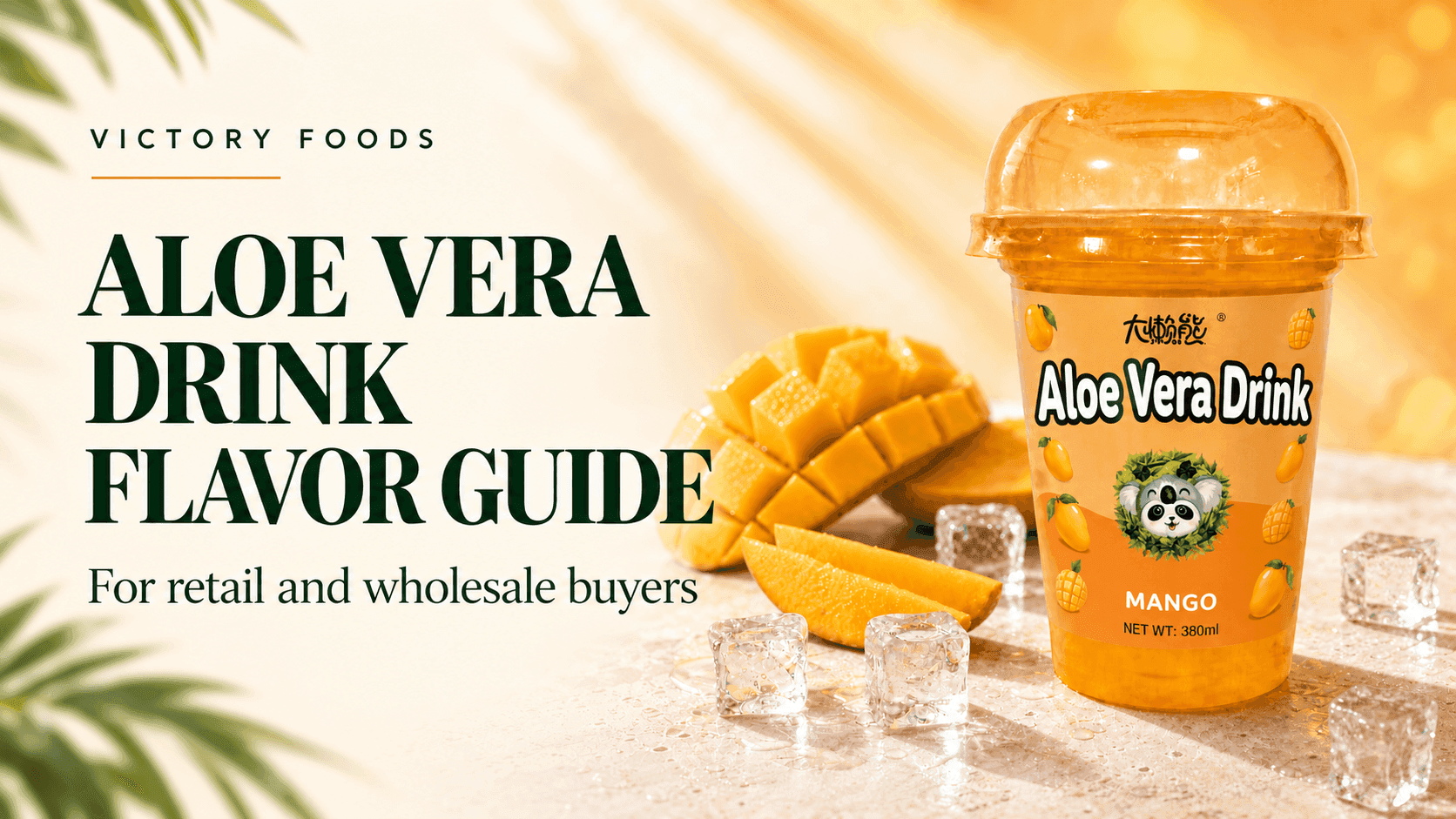
Victory Foods offers a 380 mL aloe vera drink in Original, Mango, Pineapple, Coconut and Strawberry. The ready-to-drink cup combines a liquid beverage with aloe pulp and uses a snap dome lid. These five options give importers, distributors and retailers a practical starting point for an assortment review.
This guide explains how to move from a flavor list to a launch decision. It covers sample comparison, shelf presentation, ordering questions and the information needed to discuss a retail or private label project with our team.
Start with the retail channel and the shopping occasion
A convenience store, an international grocery shop and an online beverage seller may need different assortments. Define where the product will appear, what nearby drinks customers already understand and how much explanation the aloe pulp experience needs.
For a physical store, review the planned shelf position and the number of cup facings available. For an online store, consider whether customers will choose a single flavor or a seller-assembled selection. For a distributor, identify whether several retailers need the same range or different selections.
Our beverage range provides the wider category context. Compare the role of an aloe drink with the other beverages you stock, then decide what this product should contribute: a different texture, another flavor choice or a new cup format. Keep that purpose clear when choosing samples.
Give every selected flavor a reason to be there
An assortment works best when each item contributes something the buyer can explain. Begin with a candidate for the main listing, add a contrasting option if the channel supports it and hold further choices for later review.
For example, a retailer could evaluate Mango and Strawberry as an initial tropical-and-berry comparison. Another might compare Original and Pineapple to explore different expressions of the beverage. These are testing examples; the decision should follow the actual samples, customer feedback and commercial conditions.
Our guide to choosing flavors for functional jelly discusses the importance of matching flavor to the audience and finished product. That planning question is also useful here, while the aloe drink itself needs its own tasting. Familiarity with a fruit name does not prove that a particular beverage will succeed in your market.
Compare samples under consistent conditions
Request clearly identified samples and keep a record of the flavor, sample code, date received and storage history. Check the package condition before tasting. Follow the supplied storage and preparation instructions, and compare the drinks under the same serving conditions.
Ask evaluators to record aroma, flavor recognition, sweetness, acidity, aftertaste and the feel of the aloe pieces. Record overall liking separately. Someone may recognize a strong pineapple note accurately while personally preferring another fruit.
Have participants write their observations before the group discussion. Where practical, vary the order in which samples are presented so the same flavor is not always evaluated first. If a sample seems unusual, check another intact cup before treating the observation as a reason to change the entire range.
Our functional jelly sensory scorecard guide offers a useful framework for sample identification and clear feedback. Adapt the attributes to a drink, including liquid mouthfeel and aloe texture. A small internal tasting can help shortlist products; it does not establish market-wide preference.
Record the decision behind the tasting result
A score alone rarely explains what the next action should be. Alongside each rating, write a short observation and the decision it supports. Comments such as “mango aroma is easy to recognize” or “the finish is longer than our target” are easier to discuss than “good” or “needs improvement.”
Separate three outcomes: selected for a retail trial, held for a second comparison, or unsuitable for the current brief. A flavor can be well made yet unsuitable for a particular store or customer group. Preserve that distinction when communicating with the supplier.
Keep the sample reference attached to the decision. If your team later requests a different version, evaluate it as a new sample and update the record. This prevents a sales presentation, approved artwork and purchase order from referring to different products.
Match the launch range to your ordering capacity
Offering five flavors does not mean a buyer must launch all five. Each additional item needs an order allocation, shelf space, a product listing and a replenishment plan. Start with a range your team can display and monitor properly.
Ask for the minimum order and packing arrangements for each chosen flavor. Confirm whether flavors can share an order and whether any mixed case is available. A supplier offering several flavors is not automatically offering a factory-packed variety case.
Build a simple order worksheet showing planned stores, initial cups per store, stock held for replenishment and the review date. Use those assumptions to discuss quantities with the supplier. Revise the plan when actual retailer commitments arrive instead of dividing the order equally between flavors by default.
Check the cup and the outer packaging together
The 380 mL cup and snap dome lid are part of the customer's experience. Measure an actual sample against the proposed shelf or display. Check whether the flavor name remains visible when cups are positioned together and whether staff can identify the right item quickly.
Then review the transport and selling units. Ask for units per case, case dimensions, gross weight and the way cups are protected. Online sellers should assess the parcel configuration they will actually ship, including any seller-created assortment.
Our secondary packaging guide for retail and e commerce discusses the different jobs of retail and transport packaging. Apply that distinction to this cup beverage and confirm the actual packing specification. A suitable shelf presentation and a suitable delivery pack may require different arrangements.
Make the flavor choice clear on the product page
Use a consistent naming pattern across product listings, shelf labels and sales sheets. A clear example is “Mango Aloe Vera Drink 380 mL.” Keep the beverage name, flavor and size easy to find, with a separate photograph of the actual pack for each item offered.
Describe the drink plainly: a ready-to-drink aloe beverage with pulp in a cup. Add sensory descriptions only after checking the sample. Avoid describing an untested flavor as the sweetest, most refreshing or most popular choice.
For an online selection box assembled by the seller, state exactly which flavors and how many cups the customer receives. Use photos of the supplied products and keep substitutions clear. The advertised selection should match the order that the warehouse can fulfill.
Plan replenishment around the actual shipment
The current product listing states a two-year shelf life and storage in a cool, dry place. Confirm the applicable storage instructions and remaining shelf life for the shipment you order. The total listed shelf life is different from the time remaining when stock reaches a retailer.
Track each flavor separately. Record deliveries, stock available, sales and any periods when an item could not be purchased. Low sales during a stockout tell you little about demand. A flavor receiving more shelf space or promotion also needs that context in the review.
Use the results to adjust the next order. A focused replenishment decision may involve changing the balance between existing flavors before adding another item to the assortment.
Review early sales with useful context
Set the trial questions before launch. You may want to learn whether customers understand the aloe texture, which flavors receive repeat requests or whether the cup fits the intended display. Ask store staff to record recurring questions in the customer's own words.
Compare results across a consistent selling period and note differences in price, promotion, placement and availability. Keep tasting feedback separate from paid purchases. People enjoying a free sample is useful feedback, but it does not measure repeat buying.
End the review with a specific action for each flavor: maintain the allocation, increase it, run another comparison or remove it from that channel. Keep the conclusion limited to the stores and conditions you observed. A small launch should inform the next order without becoming an unsupported claim about every market.
Separate flavor selection from a private label development brief
Selecting from the current range and developing a buyer-branded product involve different decisions. Victory Foods offers OEM/ODM services, and the available options for this aloe beverage should be confirmed with our team.
Our explanation of private label versus custom formulation can help organize the discussion. State whether you want the existing product, new artwork or a different flavor direction. Then ask which changes are feasible and how they affect samples, packaging quantities and timing.
For a custom project, describe the desired drinking experience and provide an agreed benchmark if you have one. Keep the destination market, target channel and intended package visible throughout development. Confirm the final version before preparing a launch calendar or promising it to retailers.
Discuss your aloe drink assortment with Victory Foods
Victory Foods, Fujian Jinjiang Weiduoli Food Co., Ltd., is based in Jinjiang, Fujian, China, and was established in 1997. Our portfolio includes beverages, jelly products and puddings, with OEM/ODM services for brand and distribution projects.
For an aloe drink inquiry, share your destination country, sales channel, preferred flavors, estimated quantity and required arrival date. Tell us whether you are reviewing the current product or planning a private label project.
You can request aloe drink samples and an assortment quotation to confirm sample availability, product information and ordering arrangements. A clear brief helps our team respond to the range you actually intend to launch.
Frequently asked questions
Which aloe vera drink flavors does Victory Foods offer
The current 380 mL range lists Original, Mango, Pineapple, Coconut and Strawberry. Confirm the current specification, sample availability and ordering conditions for the flavors you plan to buy.
Which aloe drink flavor is best for a first retail order
There is no single best choice for every market. Compare the finished drinks with your intended customers, consider the role of each flavor and check the commercial conditions before selecting the opening range.
Should a distributor launch all five flavors together
That depends on retailer demand, display space and ordering capacity. A focused selection can make an initial trial easier to manage. A broader launch needs a clear stocking and replenishment plan for each flavor.
Can buyers order a mixed flavor case
Ask our team to confirm the available packing and order arrangements. The existence of several flavors does not establish a mixed-case offer. Seller-assembled selections should also be described accurately to the final customer.
Does Coconut flavor mean the drink is coconut milk
No. Coconut is a flavor name in this aloe beverage range. Use the confirmed ingredient declaration and product description for the ordered version instead of inferring a different beverage category from the flavor name.
How should retailers store the aloe drink
The current product page specifies a cool, dry place and a two-year shelf life. Follow the instructions supplied with the ordered product and confirm the remaining shelf life when planning receipt and replenishment.
Can Victory Foods discuss private label aloe drink projects
Yes. Victory Foods offers OEM/ODM services. Share the target market, flavor direction, branding needs and expected quantity so our team can confirm the options available for this product and the next sampling step.