
How to Evaluate Popping Boba Serving Appearance Across Cup Styles
The same popping boba recipe can look different in a clear cup, printed cup, narrow cup or wide dessert vessel. This guide shows foodservice teams how to compare serving appearance while holding the product, base, portion, syrup handling and assembly method constant.
How to Evaluate Popping Boba Serving Appearance Across Cup Styles
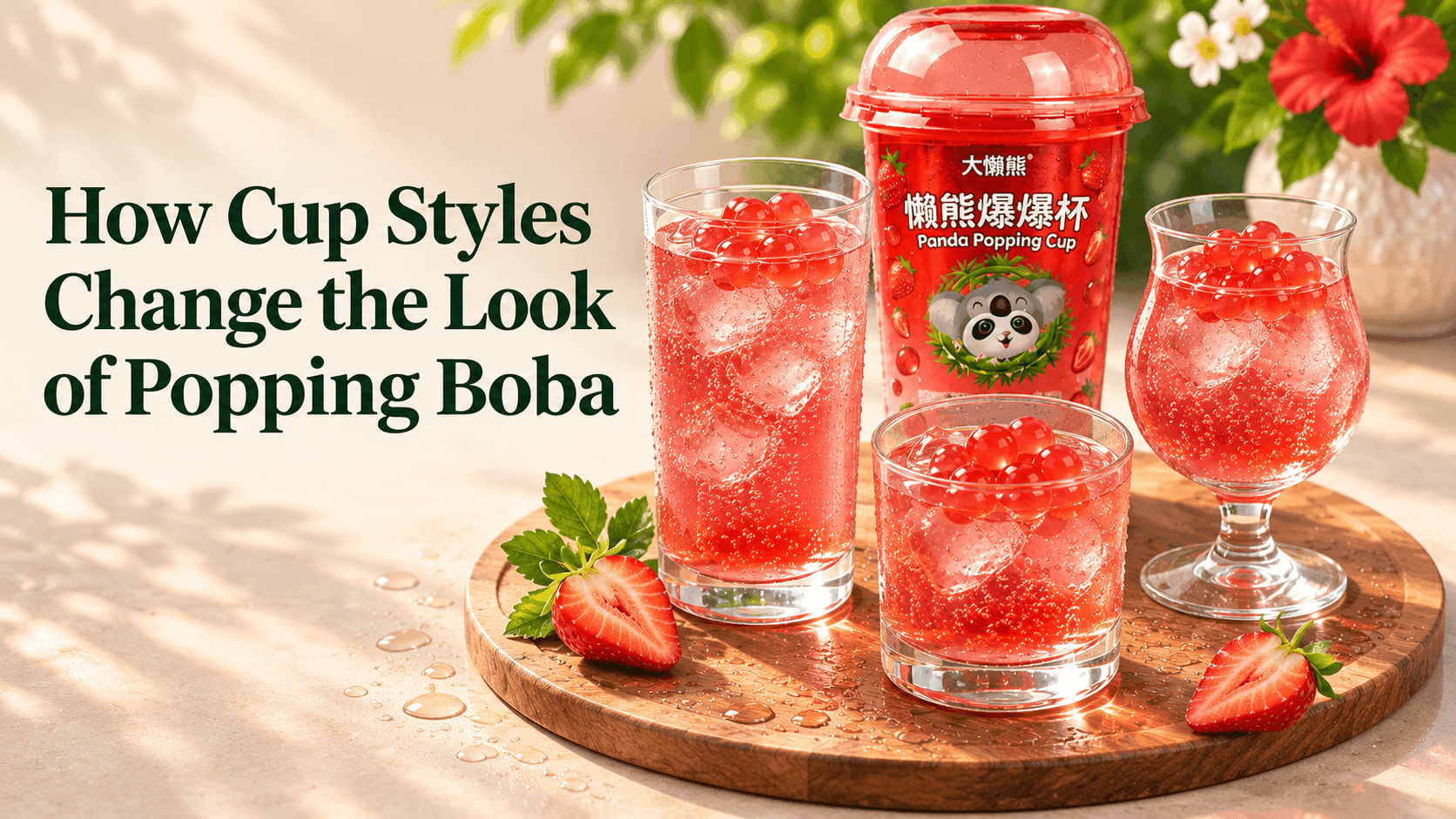
A popping boba recipe does not appear independently of its cup. A clear straight-sided cup may show a bright layer of pearls, while a printed cup can hide part of the same portion. A narrow base can make the pearls look deeper, and a wide dessert vessel can spread them into a thinner layer.
These differences can affect how customers understand the flavor, portion and texture before the first sip or spoonful. They can also expose operational problems such as pearls trapped under ice, poor straw access or a lid that hides the intended visual feature.
A cup appearance test compares serving systems without changing the product story. It does not approve food-contact materials, set a holding time, prove package integrity or replace a complete menu test.
Define the Visual Decision
Start with the question the team needs to answer. The goal may be to choose between two cup shapes, confirm that a printed sleeve leaves the pearl layer visible, compare a beverage cup with a dessert vessel or check whether the selected lid and straw preserve the intended first view.
Write the intended visual target. Terms such as colorful or premium are too broad. A useful target may specify a visible pearl layer, clear separation from the beverage base, recognizable color, balanced headspace and easy access through the approved utensil.
Keep operational and marketing decisions separate. A cup can photograph well and still be difficult to fill, seal, carry or drink from.
Lock the Popping Boba and Recipe
Use one identified popping boba sample and one controlled recipe for the cup comparison. Record the supplier, flavor, sample or lot code, package version, beverage or dessert base, portion method, syrup handling, assembly order and planned service channel.
Before the appearance test, complete the relevant incoming product review. A container with leakage, broken pearls or uncertain identity should not be used to explain cup performance.
If more than one pearl flavor is being considered, complete the vessel comparison for each priority combination or state that the conclusion applies only to the tested flavor and color.
Define the Cup Variables
Identify each serving vessel by supplier or internal code, nominal size, shape, material, transparency, print coverage, color, base geometry, lid and intended straw or spoon. Do not call one cup clear when a printed band or sleeve covers the area where the pearls sit.
Select only the variables that belong to the planned menu. Comparing unrelated cup sizes and recipes at the same time makes it difficult to know whether appearance changed because of geometry or portion.
If a cup material or supplier is not yet approved for food contact and operational use, mark the trial as visual development only. An attractive result does not establish material suitability.
Prepare a Blank Reference
Photograph or observe each empty cup and each cup with the base but without popping boba. The blank shows how wall tint, frosting, print, ice, foam and the base itself affect visibility before the pearls are added.
Use the same background and lighting for all cups. Reflections can make clear cups appear cloudier or more colorful than they look at the service counter.
A blank also helps separate cup effects from color carryover. If the base changes after the pearls are added, refer to the controlled popping boba color and flavor carryover test rather than attributing every visual difference to the cup.
Standardize the Portion and Syrup
Use the approved or provisional portion method consistently. Record the utensil or weighing basis, the pearl-to-syrup handling and the actual portion placed in every test cup.
A solid scoop, perforated utensil or uncontrolled draining step can change the amount of syrup and therefore the visible color, layer depth and flavor. Do not switch methods between cups to make one vessel look better.
If the portion is still being developed, state that the appearance conclusion is provisional. The final menu presentation should be checked again after portion and yield are approved.
Use One Assembly Sequence
Prepare each cup in the same sequence unless assembly order is the specific variable under study. Adding pearls before ice may place them differently from adding them after the beverage base. Mixing can create a distributed effect instead of a visible layer.
Record the fill level, ice, foam, toppings and garnish. Even a small change in headspace can alter the balance between the pearl layer and the rest of the drink.
The popping boba menu test guide explains why the cup, lid, straw, base, portion and customer journey should be tested as one system. The appearance study should feed into that broader decision rather than replace it.
Observe the First Read
Place the finished cups at the distance and angle a customer or staff member will normally see. Record whether the pearls are visible, whether their color is recognizable and whether the presentation communicates a topping rather than an unexplained sediment or defect.
Review the front, side and top view. A customer-facing print panel may hide the pearls from the front while the side remains clear. A domed or flat lid may change the top view and the perceived balance of fruit, foam and toppings.
Use descriptive notes such as pearl layer visible above the cup base or print band covers half the portion. Avoid a single attractive score that cannot guide a design decision.
Check Layer Depth and Distribution
Compare how the same portion occupies the base geometry. A narrow cup may create a deeper layer; a wide cup may spread the pearls. Neither is automatically better. The result should match the named concept and expected access method.
Observe whether pearls collect under ice, remain against one wall, float within another inclusion or disappear behind an opaque base. Record whether light mixing restores the intended distribution and whether that action belongs to the approved service method.
Do not infer serving quantity from appearance. A visually deep layer can result from cup shape rather than a larger portion.
Review Color Contrast and Print Interference
Compare the pearl color with the base, cup tint, printed graphics, sleeve and background. A red pearl may be clear in a pale tea and difficult to distinguish in a heavily printed or similarly colored vessel.
Check whether the print creates misleading color changes or makes the portion look uneven. If the cup includes branding, preserve the required information and barcode or operational areas; do not remove them only to improve a photograph.
A color and flavor carryover study answers whether the pearls or syrup change the base. The cup test answers how that finished combination is seen through the serving system. Keep the two conclusions separate.
Test Lid Straw and Spoon Access
Fit the final or closest representative lid and utensil. Confirm that the pearls remain visible where intended and that the customer can reach them without an awkward angle, excessive tilting or an unintended opening.
For a beverage, observe whether the straw location and cup base geometry allow the final pearls to enter the straw. For a dessert, check whether the spoon can collect pearls from the wall and base without excessive product left behind.
The result should be recorded as part of the full service system. A cup that hides the pearls but improves access may require a design or menu-description decision rather than a simple rejection.
Photograph the Real Service Conditions
Use the actual or representative counter lighting, background, condensation, lid and carry condition. Studio images can support marketing, but the selection decision should also consider what the customer sees in the store and after pickup.
Label every photograph with the cup code, recipe version, pearl sample, portion method and evaluation point. Do not use an AI image or a different pearl portion as the approved reference.
If the operation uses a recipe card, the approved finished image should match the real product, cup, pearl distribution and version used by stores.
Record a Limited Decision
Summarize each cup by exact code and tested application. Record first-view visibility, layer depth, contrast, print interference, lid and utensil fit, staff handling, customer access and decision status.
Approve, conditionally approve, revise or reject the cup for the named recipe and channel. Do not generalize a result from one beverage base, cup size or pearl flavor to every menu item.
Repeat or assess the test after changes to cup geometry, material, print, sleeve, lid, straw, base color, recipe, portion, syrup method, ice, garnish or assembly sequence.
Foodservice teams can share the planned cup, beverage base and popping boba application with Victory Foods for a focused sample comparison before the final menu presentation is approved.
Frequently Asked Questions
Can the same popping boba portion look different in two cups
Yes. Base geometry, transparency, print coverage, color, ice and headspace can change the visible layer even when the actual portion is the same.
Does a clear cup always show popping boba best
Not automatically. Reflections, condensation, base color, print and customer viewing angle all affect visibility. The cup also needs to work with the lid, straw and service route.
Should cup appearance be tested without the beverage base
Use the empty cup and blank base as references, but make the final decision with the complete recipe and serving system.
Does the test prove the cup is food-contact compliant
No. Food-contact suitability and market compliance require separate supplier documents and destination-market review.
Can photographs replace the service test
No. Photographs are useful records, but the cup should also be filled, lidded, carried and used with the planned straw or spoon.
When should the cup test be repeated
Review it after relevant changes to the cup, print, lid, utensil, recipe, base color, pearl, portion, syrup handling or assembly order.