
How to Run a VOLT Retail Message Consistency Audit Before Launch
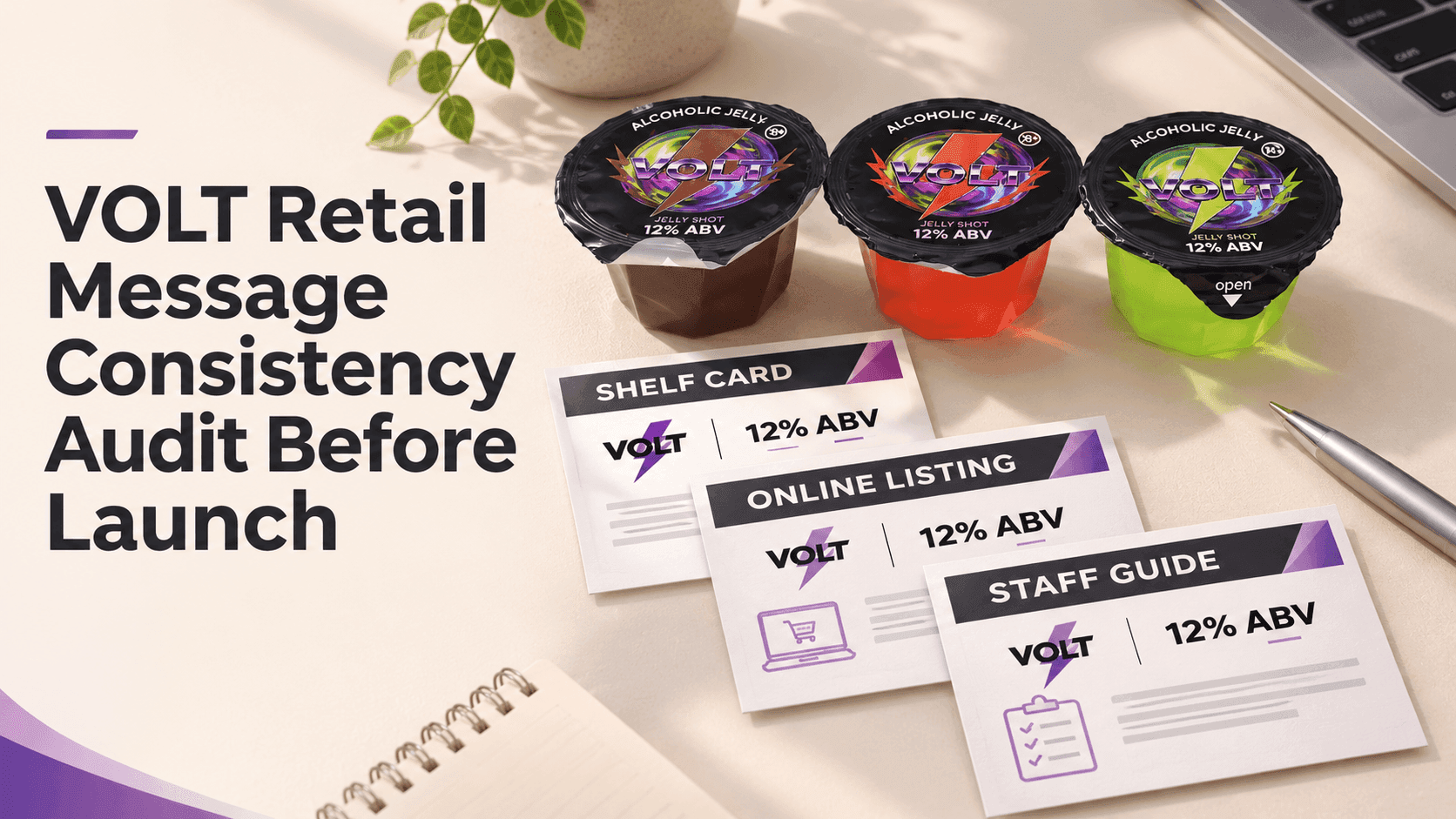
VOLT can be described accurately on one surface and inconsistently on another. This guide shows importers, distributors and retailers how to compare the approved pack, shelf material, online listing, staff script and sales kit before launch while keeping the alcohol content and adult-only identity clear.
How to Run a VOLT Retail Message Consistency Audit Before Launch
A new retail format becomes harder to understand when the box, shelf tag, online listing and staff explanation use different words. One surface may identify an adult jelly confectionery containing alcohol while another shortens the description until the alcohol nature or jelly format is unclear.
The current VOLT retail format contains six individually sealed cups at 12 percent ABV in apple, grape and cherry flavors. It is positioned as an adult jelly confectionery containing alcohol and is intended only for adults of legal drinking age. The current version has an 18-month ambient shelf life under approved conditions and should be protected from direct sunlight.
A retail message consistency audit compares approved materials before launch and records every mismatch. It does not create a legal classification, approve a market, replace label review or decide licensing, import, advertising, online-sale or age-verification requirements. Those decisions remain with the responsible destination-market parties.
Define the Audit Question
Begin with a specific release question. A useful audit asks whether every material for one product version gives an accurate and compatible first understanding of VOLT.
State the market, language, channel, product version, artwork version and planned launch date. A general review of all VOLT content is too broad. The audit should identify the exact pack and exact materials that will reach a named distributor, retailer or consumer path.
The audit is a reconciliation task. It checks whether the sources agree, which differences are intentional and which differences require correction or local approval before release.
Name the Approved Sources
Create a source list before opening the customer-facing files. The list may include the approved commercial specification, final package artwork, current product sheet, approved category description, local compliance insert, storage statement, visual asset folder and any retailer-required language.
Assign an owner and version to each source. Mark unresolved items as pending instead of choosing the most convenient wording from an old presentation or email.
The buyer guide to the six-cup format provides the confirmed product definition and explains why the same definition should appear across buyer presentations, product pages, retail training and consumer communication. The audit should still use the controlled documents for the exact order and market.
Lock the Product and Artwork Version
Record which retail box, cup artwork and flavor assortment the materials describe. A message can be factually correct for an older version and still be wrong for the version being launched.
Compare every image with the actual pack. The product name, wording, dimensions, cup proportions, colors, flavor cues and alcohol information should match the approved version. A polished render should not replace a real reference when it changes what the buyer or shopper sees.
If the material shows loose cups, confirm that the complete six-cup retail unit is also explained where needed. Loose product images may demonstrate texture but can hide the retail pack structure and the information carried by the outer box.
Build a Material Register
List every customer-facing and trade-facing item in scope. Typical items include the outer box, individual cups, shelf tag, display card, e-commerce title and description, retailer product data, distributor presentation, staff product card, sampling card, customer-service response and approved social launch asset.
For each item, record the file name, version, owner, language, audience, channel, approval status and planned location. A screenshot should include the page address and date when the live platform can change independently of the master copy.
Do not assume that a retailer has copied the latest file. Ask the account owner to provide the material that will actually be printed, uploaded or used in training.
Reconcile the Core Product Identity
Check how each material answers what the product is. The approved language should identify VOLT as an adult jelly confectionery containing alcohol or use the market-approved equivalent without presenting that phrase as a universal legal classification.
Short channel copy may use fewer words, but it should not turn VOLT into ordinary fruit candy, a beverage, a medicine or an alcohol-free snack. Search terms may support discovery, yet the first visible product description still needs to create an accurate expectation.
Liquor-filled chocolate can be used as a limited adult confectionery reference when it helps a buyer understand that a confectionery format may contain alcohol. The comparison must not imply that VOLT is chocolate or that the two products share the same classification, licence, tax, label or sales rules.
Keep Alcohol and Adult Status in the First Read
Check whether the shopper can identify the alcohol nature before purchase. The current product is 12 percent ABV and intended only for adults of legal drinking age. The jelly format must not be used to make that information less visible.
Review the complete path rather than one isolated page. A shelf card may lead to a pack, an online search result may lead to a product page, and a distributor slide may lead to a staff script. The combined path should not alternate between clear alcohol information and copy that resembles ordinary confectionery.
An age gate or retailer control does not repair unclear product information. Age-control procedures and accurate product communication have different functions and both must follow the approved market plan.
Match Pack Count Flavors and Product Images
Confirm that the current materials describe six individually sealed cups and identify apple, grape and cherry as the current flavors. Do not infer the number of cups allocated to each flavor unless the approved commercial specification confirms it.
Check singular and plural wording, cup count, flavor names and images together. An online listing should not rename a flavor, show an extra variety or use a cup color that does not match the offered pack.
The six-cup count describes the retail configuration. It is not a serving recommendation, a consumption target or proof that one person should finish the box during one occasion.
Keep Storage Information Within Its Approved Boundary
The current version has an 18-month ambient shelf-life statement under approved conditions and should be protected from direct sunlight. Compare the pack, product sheet, online listing, warehouse note and staff answer for contradictions.
Do not convert ambient storage into a claim that uncontrolled heat, freezing, hot vehicles or sunny displays are acceptable. The local pack and approved handling instructions control the exact wording for the commercial version.
If a material does not need the full storage statement, it should still avoid a conflicting promise. A short shelf tag and a detailed product page can contain different amounts of information while remaining consistent.
Separate Brand Positioning From Market Decisions
Create two audit columns. One column contains controlled product and brand information. The other contains market-specific classification, licence, tax, mandatory label, advertising, online-sale, age-verification and retailer-eligibility decisions.
Adult jelly confectionery is the brand and merchandising position. It does not establish a legal exemption. If a material says or implies that confectionery positioning removes alcohol-related requirements, stop the release and send the question to the responsible market owner.
Do not copy a decision from one country, retailer or platform into another market. A local insert should show the market, reviewer, review date, source and approval status.
Review Shelf Online Staff and Distributor Materials Together
The retail staff guide already recommends comparing the approved label with every customer-facing asset. Use that principle as an operating check rather than treating the staff script as a separate project.
Read the shelf message and online listing from the shopper's perspective. Then ask a trained employee to give the approved explanation using the real pack. Record any fact that appears only after prompting, any contradictory term and any question that the materials do not route to the correct owner.
The VOLT distributor sales kit should use the same core product facts as the retailer materials. Its staff explanation, product sheet and e-commerce description should remain aligned, while local legal and commercial decisions stay in a dated market insert.
Use Codex as an Information Principle
The Codex General Standard for the Labelling of Prepackaged Foods provides an international reference for food information. It states that prepackaged food should not be described or presented in a false, misleading or deceptive way and that the name should indicate the true nature of the food.
That principle supports clear product identity, but Codex does not decide how VOLT is classified, licensed, taxed, advertised or age-controlled in a destination market. The importer and responsible advisers must confirm the complete local requirements.
The audit should therefore identify both message inconsistencies and missing local decisions. It should not turn an international reference into a market approval statement.
Check Translations in Their Final Layout
Compare the approved source copy with every translated version. A translation can preserve the general meaning while weakening the alcohol statement, changing the product type or turning a limited adult confectionery comparison into a legal claim.
Review the text on the actual pack, shelf card, mobile page and staff card. Small spaces can force translators or designers to remove words that are essential to understanding the product.
Record who approved the translation and which version they reviewed. A corrected spreadsheet is not enough when the retailer still holds an older image or page file.
Test the Real Customer Journey
Follow the same path an eligible adult shopper or retail buyer will use. Start with the search result, shelf or buyer presentation. Continue through the product page, package, staff explanation, checkout or account process and post-purchase information that the channel provides.
At each step, ask whether the person can tell that VOLT contains alcohol, is intended only for adults, is eaten as a jelly and comes in the current six-cup assortment. Also check whether the next action sends legal or medical questions to an approved source instead of encouraging staff to guess.
The audit should record the actual path and evidence. A master document may be correct even though the live page or printed shelf card is not.
Record Mismatches and Decisions
Use one issue log for the audit. Each entry should identify the material, location, observed wording or image, approved source, reason for concern, owner, required action, due date and current status.
Classify the issue according to the project's own release process. A missing alcohol statement, wrong artwork or unapproved legal claim may require a different response from a spacing inconsistency. This guide does not create a universal severity scale or approval threshold.
Close an issue only after the corrected item has been checked in its final form. A promise to update a page after launch is not the same as a verified correction.
Approve Release and Archive Old Files
The release record should identify the market, product version, artwork version, material list, unresolved items, approvals and launch status. The person authorizing release should be able to see which materials are approved and which remain blocked.
Remove obsolete files from shared folders, retailer portals and training packs. Mark archived assets clearly so an old image or presentation is not reused for a later campaign.
Repeat the affected checks after changes to the product, artwork, flavor assortment, storage statement, market wording, channel, platform, staff script or distributor material. A prior audit does not automatically approve a new version.
Prepare a Short Buyer Summary
A buyer summary can state the product and artwork version reviewed, the channels checked, the main confirmed facts, the unresolved market questions and the materials approved for use. Keep the summary connected to the detailed issue log.
Importers and qualified retail buyers can discuss the current VOLT pack, destination market and planned sales materials with the Victory Foods export team before the next review round.
Frequently Asked Questions
Is adult jelly confectionery a legal classification
Not necessarily. It is the preferred brand and merchandising description for VOLT. The destination market determines classification, licence, tax, labelling, advertising, age control and channel eligibility.
Can different channels use shorter wording
Yes, when the shorter wording remains accurate and does not hide the alcohol nature, adult-only audience, jelly format or another fact required for that channel. The audit should compare the complete customer path, not word count alone.
Can VOLT be compared with liquor filled chocolate
Only as a limited adult confectionery reference. The comparison must not suggest identical ingredients, format, legal classification, licence, tax or sales permissions.
Must every surface show the complete storage statement
Not always. The approved pack and detailed product information should carry the required wording. Shorter material must not contradict the current 18-month ambient shelf-life statement or the instruction to avoid direct sunlight.
Does the six cup box describe a recommended serving
No. Six cups describe the retail pack configuration. It is not a recommendation for one person, one occasion or rapid consumption.
Can an older product image be used if the text is current
Only if the image still matches the exact approved pack and its use has been authorized. An old image that changes artwork, colors, flavors, proportions or alcohol information should not be used.
When should the consistency audit be repeated
Repeat the affected checks when the product, artwork, language, market, channel, retailer page, staff script, distributor material or approved product information changes.