
How to Write a Popping Boba Recipe Card for Multi Store Foodservice
A product can pass a menu test and still be reproduced differently from store to store. This guide shows foodservice teams how to convert an approved popping boba application into a clear, version controlled recipe card covering product identity, portioning, syrup handling, assembly, service tools, training and change control.
How to Write a Popping Boba Recipe Card for Multi Store Foodservice
A popping boba drink can be approved in a development kitchen and still look, taste and cost differently once several stores begin making it. One employee may use a level scoop. Another may add a second top up. One outlet may drain syrup for several seconds, while another transfers the portion immediately. The recipe name may stay the same even though the product, cup or assembly order has changed.
A recipe card turns an approved menu decision into an operating standard. It identifies the exact popping boba, the finished menu item, the portion method, the tools, the assembly sequence and the version that staff are expected to follow. It does not replace product specifications, supplier instructions, allergen records or a food safety plan. Its job is to make the approved method repeatable at the point of service.
For brands, distributors and foodservice operators, the best card is not the longest card. It is the shortest controlled instruction that still protects product identity, menu quality, cost assumptions and customer experience.
Start With an Approved Menu Decision
Do not write the final card while the recipe is still changing. First complete the foodservice menu test for the exact drink or dessert, serving channel and customer experience planned for launch.
The approved decision should identify the popping boba flavor and version, base recipe, portion target, cup or bowl, ice, other toppings, lid, straw or spoon, assembly order and any service channel limitations. If delivery has not been tested, the card should not imply that the same method is approved for delivery.
A development note can contain alternatives. A store recipe card should present the current approved method. Open questions belong in a trial record, not in the instruction used during service.
Lock the Exact Product and Package Version
Begin the card with a product identity block. Use the supplier name, approved product name, flavor, internal item code, package size and current specification or artwork reference as appropriate for the operation. The information should distinguish the commercial product from an early sample or another flavor that looks similar.
Before the item reaches the card, complete the relevant popping boba quality checklist and confirm that purchasing, quality and operations are referring to the same product. A recipe cannot compensate for broken pearls, an unapproved flavor or a package that arrived in questionable condition.
If staff transfer product to a service container, preserve the identity and traceability required by the operation. The recipe card should point to the approved transfer and labeling procedure rather than inventing a new one. It should also tell staff what to do when the package, label, lot code or product appearance does not match the approved reference.
Define the Finished Menu Output
Name the finished menu item exactly as it appears in the point of sale system and customer communication. Record the approved cup or bowl size, presentation and sales channel. A vague instruction such as make the large fruit tea leaves too much room for interpretation.
Include a concise description of the expected result: where the pearls should appear, the intended fill level, whether the drink is mixed before service and which garnish or lid is used. This is a production reference, not promotional copy. Avoid flavor claims, dietary claims or ingredient statements that are not supported by the current records for the complete menu item.
If several sizes use different portions or tools, create clearly separated versions or a controlled size matrix. Do not hide multiple recipes inside one dense paragraph.
Write the Portion and Syrup Method in Observable Words
The portion line should come from the approved popping boba portion and yield test. State the exact utensil or weighing method, the target basis and how the portion is formed. Words such as one scoop are incomplete unless the scoop and fill condition are identified.
Syrup handling must also be visible in the instruction. A perforated utensil, a solid scoop and a weighed combined portion can produce different menu results. If the approved method includes a controlled pause, leveling action or another handling step, write it in language that one employee can observe in another employee.
Do not add a universal gram weight, drainage time or serving count copied from another product. The card must reflect the tested item, recipe and operating method. When the approved portion changes, update the costing and yield records as well as the card.
Record the Assembly Order
Assembly order affects more than appearance. Adding pearls before ice may place them differently from adding them after the beverage base. A topping added near the rim may interfere with the lid. Mixing may distribute color and flavor differently from leaving the layers visible.
List the steps in the exact sequence used in the approved trial. Each step should begin with a clear action and use the same product names staff see on containers and labels. Keep the number of choices low during service. If a customer option changes the recipe materially, define the approved branch instead of relying on memory.
The card should also state where the process stops if the product looks wrong, the cup is damaged, the wrong ingredient is used or a required tool is unavailable. A stop and escalate instruction is more useful than asking staff to improvise.
Include the Complete Service System
Popping boba is experienced through the cup, lid, straw or spoon as well as through the pearls themselves. Identify the approved serving components by the names or codes used by the operation. A change in straw diameter, lid opening or cup headspace can change whether the customer can reach the pearls comfortably.
Link the operating choice to the approved popping boba packaging for foodservice. Staff should know which source pack to open, how it is identified and which package condition requires rejection or escalation. The card does not need to repeat the full package specification, but it should not leave the source container ambiguous.
If dine in, takeaway and delivery use different cups or assembly methods, label each approved route clearly. Do not extend approval from one channel to another without representative testing.
Separate the Recipe Standard From Food Safety Instructions
The recipe card can point to approved storage, opening, handling and cleaning procedures, but it should not create new limits. Use the supplier instructions for the exact product and the food business procedures approved for the location.
Good Hygiene Practices provide the foundation for controlling food hygiene hazards, but the practical controls must be written for the actual operation. In the United States, the FDA Food Code is a model used by jurisdictions; local adoption and the applicable rules still need to be confirmed. Other markets require review of their own authorities and operating requirements.
Do not copy an after opening period, temperature, utensil cleaning frequency or discard rule from a generic internet recipe. If the approved control is maintained in a separate food safety document, give the current document name or system reference and keep responsibility clear.
Use Visual References Without Losing Version Control
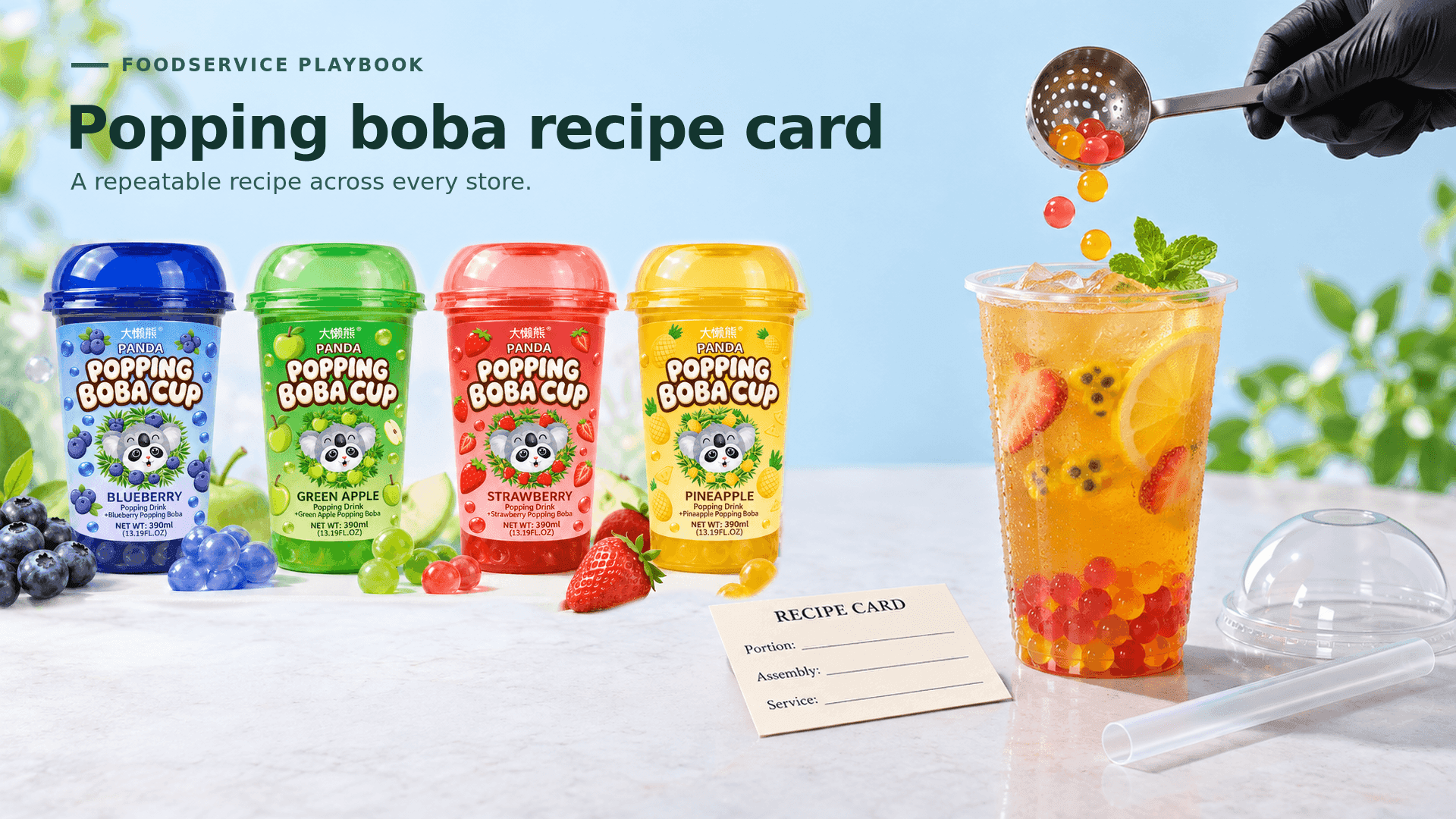
A photograph can show the approved fill level, pearl distribution, lid, straw and finished presentation faster than several sentences. Use a real image of the approved product and menu item under representative lighting. Do not substitute an AI image or an early mockup that changes color, cup proportion or topping quantity.
Label the image with the same recipe version as the text. When the cup, packaging, portion or presentation changes, replace the old image instead of leaving two conflicting references in the store folder.
Images should support the instruction, not replace measurable or observable steps. A staff member should be able to make the item correctly even when the photograph is unavailable or printed in grayscale.
Design the Card for One Read During Service
Place the menu name, size, product identity, portion tool and finished image where staff can find them quickly. Keep the assembly steps in one logical sequence. Use the language that staff actually use, while preserving the approved product names and codes.
Avoid long technical background on the store card. Keep supplier certificates, validation reports and development notes behind the card in the controlled record set. The service instruction should show what to use, what to do, what the result should look like and when to stop.
Test a printed copy or the actual digital display at the workstation. A card that is clear on a laptop may be difficult to read beside equipment, under counter lighting or on a small store tablet.
Assign Ownership Approval and Effective Date
Every card should have an owner, version, approval status and effective date. The responsible functions depend on the business, but operations, product development, quality, purchasing and allergen or regulatory review may each control different parts of the information.
Define who can change the recipe, who approves the change, who updates costing and item data, and who removes superseded copies from stores. A card without ownership can remain in use after the product or packaging changes.
The approval record should identify the evidence used, such as the menu trial, portion test, supplier product information, finished image and training verification. The store card can stay simple because the supporting record is complete.
Pilot the Card With Real Employees
Ask more than one trained employee to make the item from the card without coaching. Where possible, include employees who did not participate in development. Observe where they hesitate, which words they interpret differently and whether they select the correct product and tool.
Compare the finished items against the approved reference. Review portion consistency, pearl and syrup handling, assembly order, headspace, lid fit, straw access, appearance and any spill or rework. The purpose is to test the instruction, not to rank employees.
For a multi store rollout, repeat the pilot in representative locations. Differences in station layout, equipment, storage space and pace can reveal instructions that worked only in the development site. Record the location and conditions so feedback can be evaluated in context.
Control Changes and Retire Old Versions
A recipe card should be updated when a change can affect the menu result or service method. Examples include a new popping boba supplier or version, flavor change, package size, utensil, portion, base recipe, cup, lid, straw, assembly order, allergen information or service channel.
Do not edit a local copy and leave the master unchanged. Route the proposed change through the business approval process, identify what must be retested and issue one new controlled version. Record the effective date and remove or archive the previous version according to procedure.
Temporary substitutions require the same discipline. If a substitute has not been assessed for product identity, menu performance, information accuracy and operational fit, the recipe card should not make it appear approved.
Keep the Evidence Behind the Card
The card is the front line instruction. The supporting file should connect it to the approved product and decision history. Keep the relevant supplier specification, ingredient and allergen records, sample or lot identity, menu test, portion and yield test, photographs, cost calculation, training evidence, deviations and change approvals together under the business record system.
This connection makes troubleshooting faster. If one store reports weak flavor or low yield, the team can compare the current card, product lot, portion method and actual service conditions instead of guessing whether the supplier or employee caused the difference.
The record also prevents an attractive image from becoming the only definition of the product. A repeatable menu item needs an approved formula and workflow behind the photograph.
Use Store Feedback to Improve the System
After launch, collect feedback in categories that can lead to action: product identity, portion variation, syrup behavior, tool fit, spill, assembly time, finished appearance, customer access, package handling and unclear wording. Record the store, date, product lot or version and card version when relevant.
Do not change the recipe after one informal comment. Review the evidence, determine whether the issue is product, instruction, training, equipment or local execution, and decide whether a controlled revision or additional training is needed.
A useful recipe card is stable enough to standardize the menu and flexible enough to improve through documented evidence. That balance helps purchasing, quality, operations and the supplier work from the same approved product story.
Planning a Popping Boba Foodservice Project
Victory Foods China works with beverage, dessert and private label teams on popping boba product and packaging projects. To discuss a popping boba foodservice project, share the target market, sales channel, intended menu application, flavor direction, package format, service method and sample requirements so the project team can review the relevant development path.
Frequently Asked Questions
What is a popping boba recipe card
It is a controlled point of service instruction that identifies the approved product, finished menu item, portion method, tools, assembly sequence, presentation and current version.
Should the card include an exact portion
Yes, when the business has approved one for the exact product and recipe. The card should state the measurement basis and tool without copying a generic weight or scoop size from another product.
Can one card cover every store
One controlled card can support multiple stores when they use the same approved product, recipe, tools and service system. Representative store pilots should confirm that the instruction works across real layouts and workflows.
Does the recipe card replace a food safety plan
No. It can point to approved storage, handling, cleaning and escalation procedures, but applicable food safety controls must come from the exact product, the operation and destination market requirements.
When should the card be revised
Review it after meaningful changes to the popping boba, supplier, package, portion, utensil, base recipe, cup, lid, straw, assembly order, allergen information or sales channel.
What should happen to old recipe cards
Superseded copies should be removed or archived under the business document control process so stores do not continue using an obsolete method.