
How to Approve a Responsible Retail Display for VOLT Adult Jelly
A retail display can make VOLT easier to understand, but it can also hide alcohol information or create a youth-oriented impression if it is approved only as decoration. This guide gives importers and retailers a structured review for product identity, 12 percent ABV disclosure, six-cup presentation, adult audience, pack visibility, placement, age controls, storage, staff alignment and version control.
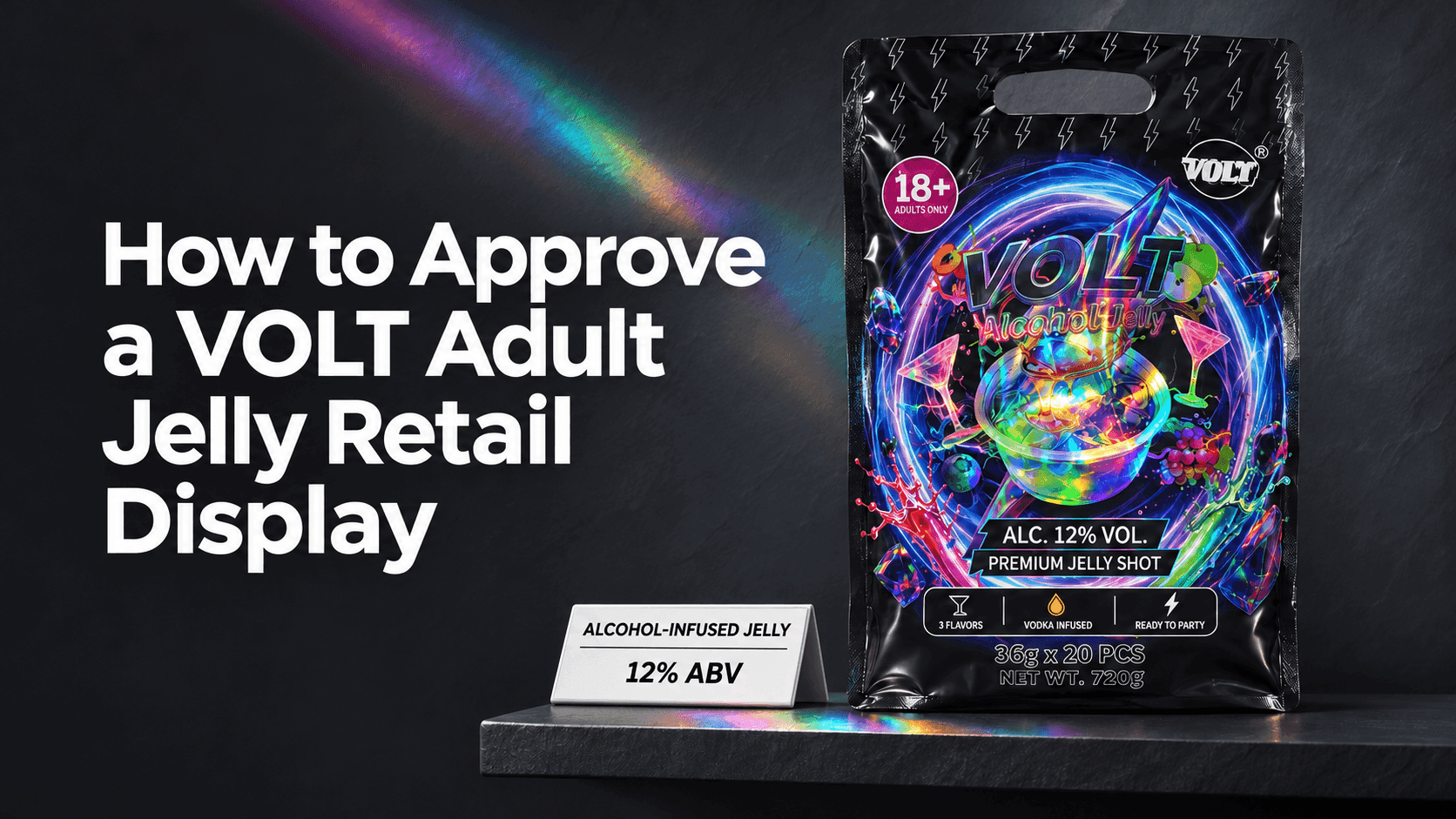
How to Approve a Responsible Retail Display for VOLT Adult Jelly
A retail display for VOLT should do more than attract attention. It should help a legal-age adult understand that the product is a jelly confectionery containing alcohol, recognize the six-cup format and find the information needed for a responsible purchase. It should also fit the retailer's approved age-control and product-handling system.
The current VOLT retail format contains six individually sealed cups at 12 percent ABV in apple, grape and cherry flavors. It has an 18-month ambient shelf life under approved storage conditions and should be protected from direct sunlight. Those facts can anchor the display review, but they do not determine legal classification, licensing, advertising permission, placement or age-verification requirements in a destination market.
For importers, distributors and retailers, display approval is therefore a controlled decision. The pack, shelf material, fixture, location, staff message and digital listing should work as one information system. Approval should be based on the exact product version and the rules confirmed for the intended market and channel.
Start With an Approved Retail Route
Do not begin with artwork. First confirm that the proposed channel and display location are eligible for the product under destination-market rules and retailer policy. The responsible market partner should determine the applicable classification, import route, licences, taxes, mandatory statements, advertising restrictions, age controls and sales procedures.
Adult Jelly Confectionery is a useful brand and merchandising description. It does not remove the alcohol or replace a legal category. Placing VOLT beside liquor-filled chocolate, wine or gifting products also does not create a legal conclusion. The approved retail route must come before the display brief.
Record the market, retailer, store format, proposed department, access conditions and responsible approver. If the route is unresolved, mark the display as not approved rather than allowing a design concept to imply permission.
Define the Job of the Display
A display should have one primary communication job. It may need to introduce the adult jelly format, explain the six-cup box, support an approved gifting occasion or help shoppers distinguish VOLT from ordinary fruit jelly. Trying to explain every product and compliance detail on one small card usually weakens the first message.
Write the intended adult audience and purchase context before reviewing copy. A specialist adult retailer, authorized gifting area and controlled event counter may require different information order and staff support. The display should be designed for the real environment rather than a generic presentation image.
The approval record should state what a shopper should understand before purchase. At minimum, the shopper should recognize that VOLT contains alcohol, is intended for adults of legal drinking age, uses a jelly cup format and contains six individually sealed cups in the current assortment.
Lock the Exact Product Pack and Artwork Version
Approve the display against the exact commercial pack or an authorized production-representative version. Record the product name, artwork version, flavor assortment, cup count, ABV statement and relevant market label. Do not mix early mockups, obsolete cartons and current cups in one review.
Use real product photography. The outer box and at least one individual cup should remain recognizable when the display needs to explain the format. Do not redraw the label, alter brand colors, change the package proportions, invent a different cup count or place generated text over required information.
If a tray, security fixture, gift sleeve or display carton covers part of the retail pack, review the assembled configuration. Required or approved information that is visible on the loose pack may become hidden once the product is placed in the fixture.
Build a Clear Information Hierarchy
The display should identify the brand and product format before introducing a lifestyle message. A practical content order for local review is VOLT Party Jelly, alcohol-containing adult jelly confectionery, 12 percent ABV, six individually sealed cups, apple grape and cherry flavors, and adult-only status.
This order is a communication framework, not universal regulatory copy. The importer must adapt names, warnings, language, type size and placement to the final market approval. A shelf card should supplement the commercial label, not rewrite it or contradict it.
Codex CXS 1-1985 defines labelling broadly enough to include written or graphic matter displayed near food for the purpose of promoting its sale. It also states that prepackaged food should not be described or presented in a false, misleading or deceptive way. National requirements remain controlling, but the principle is useful when checking whether shelf material creates a different product impression from the pack.
Keep Alcohol and Adult Status Visible
The display must not make the shopper search for the alcohol nature of the product. Do not use candy as the only category cue. Do not place a decorative header, price card or security device over the approved ABV or adult-only information when that information is expected to remain visible.
The jelly format, fruit colors and individual cups can make the product look familiar. The surrounding presentation should therefore avoid children's confectionery, toys, school themes, cartoon characters with strong youth appeal and language that normalizes the product for minors.
A colorful product can still be presented responsibly. The goal is not to remove its identity, but to use adult context, factual wording and controlled placement so the display does not imply that an alcohol-containing product is ordinary children's jelly.
Use the Adult Confectionery Reference Carefully
Liquor-filled chocolate can help some adult shoppers understand the broad idea of alcohol in a confectionery format. The comparison can be useful as one short category reference, especially when a buyer needs to explain why VOLT is eaten rather than poured.
The display should also make the differences clear. VOLT is a fruit-flavored jelly in individually sealed cups, not chocolate. It has its own 12 percent ABV specification, package and market review. The comparison must not suggest identical ingredients, serving behavior, legal classification, licences or tax treatment.
If the reference takes more space than the VOLT description, it is probably doing too much work. The product should be understandable on its own after the brief comparison has created familiarity.
Review Creative Content for Responsible Adult Marketing
Review every image, headline and promotional instruction, not only the product facts. The display should not show minors, school settings, driving, intoxication, competitive consumption, drinking challenges or claims that alcohol improves confidence, popularity, health, relaxation or social success.
The United Kingdom CAP Code provides one regional example: alcohol marketing communications should not target people under 18 or encourage immoderate, irresponsible or anti-social drinking. That code is not a global rule and its product definition may not determine how VOLT is classified. Use it only as an example of why the destination market's alcohol advertising rules must be checked before approving creative work.
Keep the occasion optional. The display may present an adult gifting, tasting or sharing context where permitted, but it should not imply that VOLT is required for a successful party or that consuming more creates a better experience.
Check Placement Access and Age Controls
A display can be accurate and still be unsuitable for its location. Review adjacency, shopper flow, supervision, self-service access, display height, checkout procedure and the retailer's age-verification system. A front-of-store position may increase visibility while making adult control harder.
Do not assume one placement works in every market. An authorized alcohol department, adult gifting area, specialist retailer, hospitality setting or controlled duty-free channel may be considered where local rules and retailer authorization permit. A general children's candy aisle should not be the default.
The display brief should state who checks eligibility, who answers shopper questions and what happens when the point-of-sale system or store procedure does not recognize the product correctly. The display cannot substitute for an operational age-control process.
Protect the Pack During Display
The display fixture should keep the outer box intact and protect the six sealed cups from crushing, moisture, excessive handling and direct sunlight. Test how staff load and remove packs and whether the remaining boxes stay stable after one unit is taken.
The confirmed product has an 18-month ambient shelf life under approved conditions and should be protected from direct sunlight. Do not convert that statement into an invented temperature range or assume that ambient storage allows display in a hot window, uncontrolled heat or freezing conditions.
Agree how staff handle opened cartons, leaking cups, unreadable codes, damaged boxes, returns and expired or questionable stock. The approval should connect the display to the retailer's stock rotation and damaged-product procedure.
Align the Pack Shelf Card Digital Page and Staff Script
A shopper should receive the same core product story at every touchpoint. Compare the pack, shelf card, price label, e-commerce title, product page, distributor catalogue, staff guide and sampling material line by line.
Check the product name, alcohol nature, 12 percent ABV, six-cup count, apple grape and cherry assortment, adult-only status and approved storage statement. If one asset says ordinary candy while another says alcohol-infused adult jelly confectionery, stop and resolve the source copy before launch.
Retail staff should use the same approved explanation that appears in customer-facing material. They should not add claims about licence exemptions, standard drinks, health effects, safety, FDA approval or universal legal classification.
Use a Structured Approval Record
A display approval record should identify the market, retailer, store format, display location, product version, artwork version, fixture version, copy language, images, owner, reviewers, decision and effective date. Attach or reference the final visual so approval cannot be transferred accidentally to a later draft.
Assign review responsibilities. Brand and sales teams can confirm positioning and commercial purpose. Quality can check pack identity, condition and storage communication. Operations can review replenishment and damage handling. The importer or qualified market adviser must confirm the legal and retailer requirements that apply in the destination market.
Record open questions and conditions. Approve, approve with defined conditions, revise and resubmit, or reject. A vague email saying looks good should not be the only evidence for a display that affects alcohol communication and retail access.
Pilot the Display Before Wider Rollout
Use a limited, authorized retail pilot to check whether the approved display works in practice. Record the exact location, display version, product version, dates, staff support and any approved sampling or demonstration activity.
Observe whether legal-age adult shoppers understand that the product contains alcohol, recognize the jelly format, notice the six-cup pack and identify the three flavors. Also record repeated questions, staff explanation needs, age-verification exceptions, pack damage, misplaced stock, returns and customer-service topics.
Sales alone do not show whether the communication is working. One successful store or event does not prove national demand. Use the pilot to decide whether the message, placement, fixture, training or market assumption needs revision before expansion.
Control Changes and Remove Obsolete Materials
Review the display whenever the product, artwork, ABV statement, flavor assortment, cup count, warnings, storage statement, fixture, placement, retailer policy or destination-market requirement changes. Decide what must be rechecked before issuing a new version.
Remove superseded shelf cards, digital files and store instructions from active use. A correct new pack can still be misrepresented by an old display, and an approved display can become inaccurate after a product change.
Keep the approval history with pilot feedback and the final artwork. This makes it easier to distinguish a product issue from a display, training or local execution problem.
Discussing a VOLT Retail Display Project
Qualified importers, distributors and retail buyers can request a current VOLT sample set to review the real six-cup pack and plan market-appropriate retail communication. Share the destination market, intended channel and proposed display context so the discussion can focus on the product information and local questions that require confirmation.
Frequently Asked Questions
Is Adult Jelly Confectionery a legal classification
Not necessarily. It is the preferred brand and merchandising description for VOLT. The destination-market classification, licences, taxes, labels, advertising rules and retail permissions must be confirmed separately.
What facts should remain consistent across the display
The current approved product facts include six individually sealed cups, 12 percent ABV and apple, grape and cherry flavors. The display should also keep the alcohol nature and adult-only positioning clear.
Can VOLT be compared with liquor filled chocolate
Yes, as a brief mental category reference for adult confectionery containing alcohol. The comparison must not imply identical ingredients, format, legal classification or selling rules.
Can a retailer redesign the product pack for a display image
No. Use a real product reference and preserve the packaging design, text, dimensions, proportions, cup count and colors. Do not invent or redraw the commercial pack.
Can VOLT be placed in a regular candy aisle
A general children's candy aisle should not be the default. Placement must follow the approved product route, local rules, retailer policy, age-control needs and risk of shopper confusion.
How should a display pilot be evaluated
Review shopper understanding, staff questions, age-control exceptions, pack condition, returns and operational fit as well as sales. One store or event should not be treated as proof of national demand.
Does an 18 month shelf life allow direct sunlight
No. The current version has an 18-month ambient shelf life under approved conditions and should be protected from direct sunlight.
Can buyers request a finished sample
Yes. Qualified importers, distributors and retail buyers can request a current sample set for product, packaging and display planning.