How to Test Popping Boba on a Foodservice Menu Before Launch
A popping boba sample can pass a product inspection and still create problems at the counter. This foodservice guide shows buyers how to test the pearls inside the actual drink or dessert, measure portion control, review service handling and document a clear launch decision.
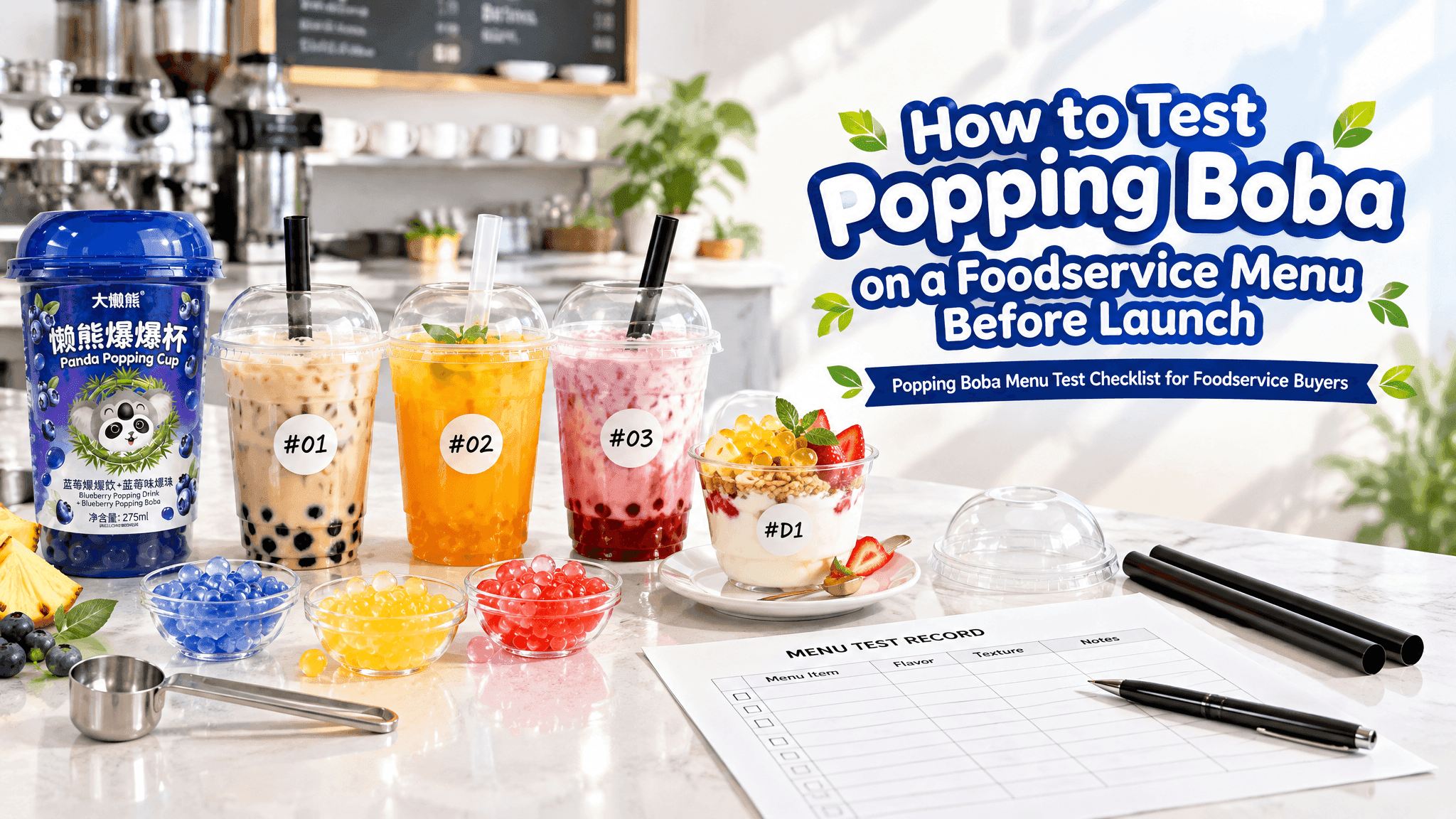
How to Test Popping Boba on a Foodservice Menu Before Launch
A popping boba sample can look acceptable in its original container and still perform poorly on a cafe menu. The flavor may become weak in the finished drink. The pearls may be difficult to pick up with the chosen straw. Staff may use inconsistent portions, or the package may not fit the outlet's storage and service routine.
These are application problems rather than a substitute for supplier quality control.
A foodservice menu test places the approved sample inside the product and workflow that customers will actually experience. The buyer can then decide whether the formula, portion, package and operating instructions are ready for launch.
Define the Launch Decision
Begin with one clear decision. A trial designed to choose a fruit pairing is different from a trial designed to approve a straw, set a portion or confirm a takeout format.
Useful decision questions include:
- Which popping boba flavor works best with the selected beverage base
- Does the pearl size and texture fit the planned straw or spoon
- Can staff portion the product consistently during normal service
- Does the finished drink or dessert remain acceptable through the intended customer experience
- Is the package practical for receiving, opening, storage and use after opening
Write the decision at the top of the trial form. If several questions remain open, separate them into stages. Changing the beverage base, pearl flavor, portion and package at the same time makes it difficult to identify the cause of a problem.
Lock the Sample Version
The trial must refer to an exact sample. Record the supplier, product name, flavor, sample code or lot, package type, date received and approved storage instructions.
If the team tests two versions, use neutral codes and keep them separate. Do not combine leftover samples or transfer pearls into an unmarked container without preserving traceability.
Before the menu trial, complete the relevant product quality review. Appearance, seal condition, aroma, texture, size consistency and documentation should be checked before the product enters an application test. A menu trial cannot explain a defect that was already present in the incoming sample.
Use the Real Menu Base
Test the pearls in the final or closest available version of the drink or dessert. A spoonful tasted by itself does not show how the product will behave with tea, fruit beverage, dairy or non-dairy bases, sparkling drinks, yogurt, shaved ice, pudding or another menu system.
The base can change the overall impression of sweetness, acidity, aroma, color and texture. The trial should observe these interactions rather than assume that a flavor pairing will work from its name alone.
For each candidate application, record:
- exact base recipe or version
- popping boba flavor and sample code
- portioning tool and target portion
- cup or bowl size
- ice, toppings and other inclusions
- lid, straw, spoon or serving utensil
- assembly order
- time and condition at each evaluation point
Keep the record practical enough for a store team to repeat. If the recipe cannot be reproduced during a trial, it will be difficult to control after launch.
Test the Complete Eating or Drinking System
Popping boba is part of a system that includes the base, package opening and the customer's method of consumption.
For a beverage, test the actual cup, lid and straw. Observe whether the pearls enter the straw naturally, whether customers must search for them at the bottom and whether the last part of the drink has a different pearl-to-liquid balance from the first.
For a dessert, test the actual spoon or fork and serving container. Check whether the pearls stay where staff place them, roll away from the portion, become hidden by another topping or create an awkward bite size.
Do not approve the application from a photograph. The finished item must be opened, carried, mixed if required and consumed in the intended way.
Evaluate Flavor Balance in the Finished Item
Score the popping boba together with the base and then score the base without it. This comparison helps the team identify what the pearls add.
Review:
- clarity of the intended flavor
- sweetness balance
- acidity balance
- aroma at first service and during consumption
- any unexpected aftertaste
- whether the pearl liquid and the base support or compete with each other
- whether the inclusion improves the menu item enough to justify its operational cost
Use descriptive comments rather than a single overall score. A note such as "too sweet" is less useful than "the pearl filling makes the final third of the drink sweeter than the approved target." The second comment points to a specific moment and a possible adjustment.
Observe Texture Across the Customer Experience
Texture should be checked at more than one point. Evaluate the item immediately after assembly and at the later points that represent the real service route, such as table service, customer pickup or delivery.
Use the approved product instructions and the outlet's food safety plan to set the evaluation conditions. Do not invent a holding period or apply guidance from another popping boba product.
At each point, observe:
- membrane integrity and the expected burst
- firmness or softness relative to the approved target
- surface stickiness or clumping
- interaction with ice and other inclusions
- movement through the straw or pickup by the utensil
- pearl distribution from the first portion to the last
- changes in the surrounding liquid or base
If the texture changes, record the full conditions. The product team needs to know the base, temperature, elapsed time, package and handling sequence before it can investigate the cause.
Standardize the Portion and Check Yield
An attractive menu item can become commercially unstable when every employee uses a different amount of topping.
Choose a practical portioning method and test it during realistic service. A scoop, ladle, pump or pre-portioned unit should deliver the intended amount without excessive liquid loss, spillage or repeated adjustment.
Record the target portion, actual portions during the test and approximate servings obtained from the approved package. The target must come from the finished menu concept and product instructions rather than a generic online recipe.
The yield review should include usable product, product left in the container, spills and any remainder that must be handled under the approved procedure. Gross package weight alone does not show the true cost per sellable menu item.
Run the Trial Through the Service Workflow
Ask the people who will receive, store, open and portion the product to perform the test. Product developers may approve a flavor while missing a problem that appears during a busy shift.
Follow the product through these steps:
1. Receive and inspect the package.
2. Store it under the approved unopened conditions.
3. Open it with the tools available at the outlet.
4. Transfer or stage it only if the approved procedure allows this.
5. Portion it into the actual menu item.
6. Protect the product during service.
7. Follow the approved after-opening storage, identification and discard procedure.
8. Clean the utensils and work area under the outlet's food safety system.
Record awkward lifting, difficult lids, dripping, slow scooping, container instability and confusion about labels. These observations may lead to a different pack size, serving tool or workstation position even when the pearls themselves are acceptable.
The outlet must follow its local food code and food safety plan. International hygiene principles can guide the review, but the applicable authority and approved store procedure determine the operating requirements.
Review Allergen and Menu Information
The menu trial should use the final supplier ingredient and allergen documents available for the sample. Do not infer allergen status from flavor, color or appearance.
Review the popping boba together with every other component in the menu item. The business should determine how ingredient and allergen information must be provided for packaged, non-prepacked, made-to-order and delivery items in the destination market.
Also check the customer-facing name and description. The wording should identify the texture clearly without promising a formulation, ingredient, claim or dietary status that has not been confirmed.
If staff answer allergen questions, give them the approved source of information and an escalation route. A tasting note or verbal supplier comment is not a substitute for the required documents.
Test Dine In Takeout and Delivery Separately
One assembly method may not work for every channel. A drink consumed at the counter may reach the customer quickly, while a takeaway or delivery item goes through sealing, carrying and a longer customer journey.
Test each planned channel with its real cup, lid, bag and instructions. Observe leakage, appearance, pearl distribution, straw access and texture at the relevant evaluation points.
If the application only passes for dine-in service, record that limitation. Do not extend the approval to delivery without a representative test.
Train Staff With the Approved Method
The launch guide should show the exact product, portioning tool, assembly order, finished appearance and storage instructions. It should also state what staff must do when the package is damaged, the product looks different from the approved reference or a customer asks an allergen question.
Use photographs of the real approved product and menu item. Remove old images when the supplier lot, package, flavor or portion changes.
Before launch, ask staff to make the item from the guide without coaching. Compare the result with the approved reference. If different employees produce noticeably different items, revise the instructions or tools before adding more training text.
Document the Launch Decision
Close the trial with a written outcome. A useful record identifies the exact sample, menu base, portion, package, service channels and conditions evaluated.
Use one of four outcomes:
- approved for the defined menu item and channels
- approved with specific operating actions
- revision and retest required
- not suitable for the current application
List open actions with an owner and decision date. Keep the approved reference recipe, photographs and supplier documents together so purchasing, training and quality teams use the same version.
Frequently Asked Questions
Can the same popping boba work in every drink
It should not be assumed. Flavor balance, texture, visual appearance, pearl movement and the drinking method can change with the base and package. Test every priority application as a complete menu item.
How long can popping boba remain open at a foodservice outlet
Use the approved instructions for the exact product and the outlet's applicable food safety procedure. Do not copy an after-opening period from another supplier, flavor or sample.
How many menu applications should a buyer test
Start with the applications planned for launch and the decisions that carry the greatest commercial or operational risk. Additional ideas can follow after the core item has a repeatable method.
Does a menu test replace incoming quality checks
No. Incoming checks evaluate the received product and package. The menu test evaluates how an approved sample performs in the outlet's recipe, service tools and customer journey.
What should the outlet record about allergens
Keep the current supplier ingredient and allergen documents, review the complete menu item and provide information according to the destination market and sales format. Staff should use approved records rather than memory.
When is a popping boba menu item ready to launch
It is ready when the exact product and recipe meet the defined sensory and operational targets, required food safety and information controls are in place, staff can reproduce the item and the intended sales channels have been tested.
If you are planning a popping boba menu trial, Victory Foods can review the intended application, package and sample requirements with your team.