
Popping Boba Beyond Bubble Tea: 6 Product Applications for Beverage and Snack Brands
popping boba private label, popping boba manufacturer, popping boba beverage ideas, popping boba OEM, RTD popping boba drink, popping boba snack, popping boba product development, texture innovation beverages, popping boba supplier, private label beverage manufacturer
Popping Boba Beyond Bubble Tea: 6 Product Applications for Beverage and Snack Brands
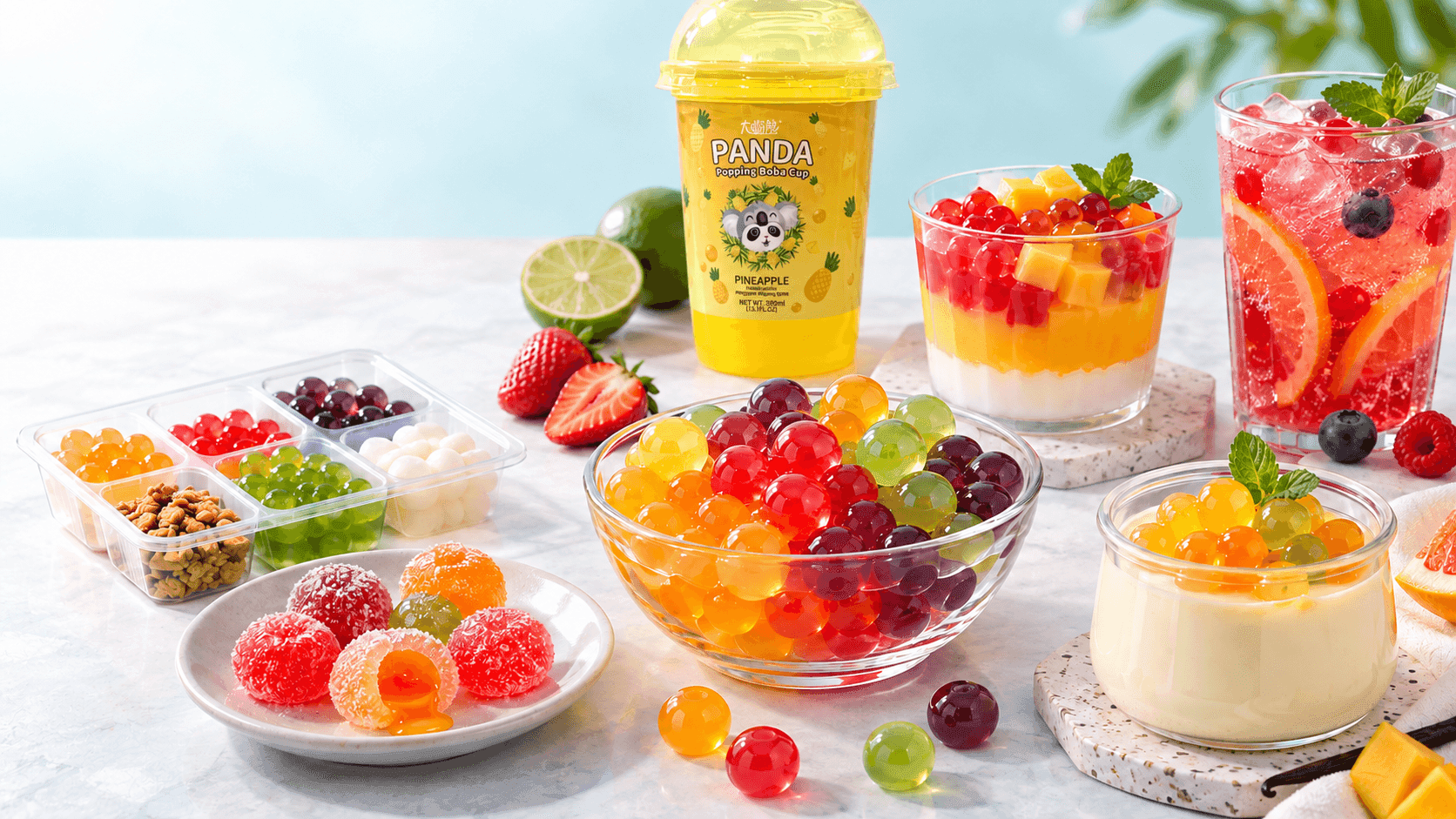
Popping boba does not have to remain a bubble-tea topping. For beverage and snack brands, bursting pearls can become a product-design tool that adds texture, visual movement and an interactive eating experience to RTD drinks, jelly cups, candy concepts, desserts and seasonal products.
That distinction matters.
When brands think about popping boba only as an ingredient, the first question is usually:
What flavor should we use?
When they think about it as part of the product experience, the question becomes:
What can the consumer do, feel or discover because the popping boba is there?
That second question creates far more room for innovation.
In 2026, texture is becoming increasingly visible in food and beverage innovation. FoodNavigator has described “sensemaxxing” as a movement toward products that layer texture, flavor, color and function, while beverage trend forecasts for 2027 point toward playful, texture-driven and immersive formats.
For brands, popping boba fits naturally into this environment because the ingredient delivers something flavor alone cannot:
a physical moment of interaction.
Here are six commercial product directions worth considering.
1. RTD Popping Boba Drinks
The most obvious move beyond traditional bubble tea is the ready-to-drink beverage.
Instead of buying a drink and adding pearls separately at a café, the consumer receives the beverage and popping boba as one packaged experience.
This can work with product directions such as:
- fruit beverages;
- juice-style drinks;
- tea-inspired beverages;
- tropical drinks;
- flavored hydration concepts;
- lifestyle beverages.
The commercial advantage is not simply that the drink contains boba.
The pearls create visible movement inside the package and a changing mouthfeel while drinking.
That can help an RTD beverage stand apart in a refrigerator or convenience-store environment where many products otherwise compete primarily through flavor and packaging graphics.
The concept is already appearing in the functional beverage space. A product presented at the 2026 Summer Fancy Food Show combined an energy-oriented beverage concept with real popping boba, demonstrating how texture can be integrated into a modern packaged drink rather than treated only as a foodservice topping.
For private-label brands, the important development questions include pearl size, beverage viscosity, sweetness, flavor pairing, package opening and the intended drinking experience.
2. Popping Boba Jelly Cups
Popping boba and jelly create two different textures inside one product.
The jelly provides the main structure.
The pearls provide surprise.
This makes the format especially suitable for brands that want a snack to feel more interactive without requiring complicated consumer preparation.
A jelly cup could combine:
soft jelly + fruit flavor + bursting center
to create a layered sensory experience.
For children's products, the emphasis might be color, character design and playful flavor combinations.
For older consumers, the same technical idea could move toward tropical flavors, sour profiles or more premium visual presentation.
The important product-development principle is contrast.
If every component has the same texture, the popping pearls lose part of their purpose.
The surrounding jelly should therefore be designed with the boba experience in mind.
3. Sour Candy and Confectionery Concepts
Popping boba can also move away from beverages entirely.
One direction is confectionery.
Imagine a product where the consumer receives a sweet or sour candy-style base and then experiences a liquid burst.
This can work particularly well with high-impact flavor combinations such as:
mango + sour passion fruit
strawberry + lemonade
green apple + sour lime
peach + raspberry
The appeal here is not traditional refreshment.
It is sensation.
That aligns with the broader movement toward foods designed around contrast, surprise and shareable sensory experiences.
FoodNavigator has noted that emerging beverage flavor development is also layering sour, candy and other playful profiles to create more immersive products.
For brands targeting younger consumers, convenience stores, novelty candy channels or social-media-led launches, this can create a very different positioning from traditional bubble tea.
4. Dessert and Pudding Products
Another application is to use popping boba as a contrast element inside softer desserts.
For example:
creamy pudding + fruit popping boba
creates a different experience from either component alone.
The pudding provides smoothness.
The pearl creates a short burst of acidity or fruit flavor.
This contrast can help brands develop dessert concepts around:
- mango;
- coconut;
- strawberry;
- peach;
- lychee;
- passion fruit.
The same principle could be adapted for multi-compartment products where consumers mix the components themselves.
That introduces another layer of engagement:
the consumer finishes the product.
For retail brands, this type of interaction can be particularly useful when the goal is to make a familiar dessert category feel new without requiring consumers to learn an entirely unfamiliar product.
5. DIY and Interactive Snack Kits
Popping boba can become even more interesting when it is separated from the main product until consumption.
A snack kit could include:
Base Product + Popping Boba + Sauce / Powder / Candy Element
The consumer then mixes or assembles the snack.
This turns consumption into an activity.
The idea is especially relevant for:
- children's snacks;
- gifting;
- convenience retail;
- novelty products;
- seasonal promotions;
- social-media-friendly concepts.
The product is no longer simply “something to eat.”
It becomes something to do.
This is an important distinction for brands competing in highly visual snack categories.
A DIY format can also create more room for character branding, instructions, collectible packaging and multiple flavor combinations.
6. Seasonal and Limited-Edition Products
Popping boba can also function as a seasonal innovation tool.
Brands do not necessarily need to build their entire portfolio around the format.
Instead, bursting pearls can create a limited-edition reason to revisit an existing product.
Examples might include:
Summer: watermelon + lime popping drink
Halloween: dark grape jelly + sour green popping boba
Holiday: cranberry + apple bursting pearls
Valentine's: strawberry + lychee pink boba
Tropical Campaign: mango + passion fruit
This strategy allows brands to combine two powerful innovation tools:
texture + seasonal flavor.
Seasonal products can also give retailers something visibly different for promotional displays without requiring the brand to permanently expand its core range.
Why Texture Matters More Than a Novel Ingredient
Popping boba should not be added simply because it looks unusual.
The texture needs a job.
Recent product-development discussions increasingly treat texture as something that should be designed early rather than added at the end. Ingredion, for example, emphasized at IFT FIRST 2026 that texture contributes to consumers' perceptions of quality, satisfaction and value, and should be considered from the beginning of development.
That principle is highly relevant to popping boba.
Brands should decide whether the pearl is supposed to create:
surprise, contrast, play, premium sensory appeal, visual movement or product interaction.
Once that purpose is clear, decisions about flavor, size, quantity and surrounding product become easier.
Familiar Format + Unexpected Texture Can Reduce Consumer Friction
Innovation does not always require inventing an entirely new food category.
Sometimes the stronger strategy is:
Familiar Product + New Experience
For example:
a familiar fruit drink + popping pearls;
a familiar pudding + bursting fruit center;
a familiar jelly cup + contrasting boba;
a familiar candy flavor + liquid burst.
Research discussed by Kerry suggests consumers can be more receptive to new textures when those textures connect with familiar consumption behaviors such as sipping or spooning.
That makes this approach particularly relevant for international product development.
A brand can innovate without requiring the consumer to understand an entirely new eating ritual.
What Should Buyers Decide Before Developing a Popping Boba Product?
Before contacting an OEM/ODM manufacturer, buyers should define more than flavor.
A useful product brief should include:
Product Format
RTD drink, jelly cup, candy concept, pudding or DIY kit?
Target Consumer
Children, teens, young adults, families or another group?
Consumption Occasion
At home, convenience retail, school snack, party, café or on-the-go?
Flavor System
Should the boba match the base flavor or contrast with it?
Texture Role
Is the goal surprise, sour impact, premium mouthfeel or playful interaction?
Package Format
Cup, bottle, pouch, tray or multi-component pack?
Destination Market
Where will the product be sold?
These decisions allow the manufacturer to evaluate the product as a complete system rather than simply adding popping boba to an existing formula.
Developing Popping Boba Products With Victory Foods
Victory Foods already develops multiple hydrocolloid-based formats, including beverages, jelly cups, squeeze jelly drinks, puddings and shaped jelly products, while its existing blog portfolio includes popping-boba concepts such as Panda Popping Cup and Sour Popping Boba.
That creates an opportunity for private-label development beyond a single product format.
A buyer can begin with:
Consumer + Occasion + Base Product + Texture Experience + Flavor + Packaging + Market
and then determine where popping boba genuinely improves the concept.
Because the commercial opportunity is not simply:
“Put boba in more products.”
It is:
“Use texture to make familiar products more memorable.”
FAQ
Can popping boba be used outside bubble tea?
Yes. Depending on the product design and manufacturing feasibility, popping boba can be explored in RTD beverages, jelly products, puddings, confectionery concepts, DIY snack kits and other applications.
What products work well with popping boba?
Products where the pearls provide a meaningful texture contrast are especially interesting. Fruit drinks, soft jelly, smooth desserts and candy-inspired products can all create different sensory experiences.
Can popping boba be used in an RTD packaged beverage?
Yes, packaged popping-boba beverages already exist commercially. Product development needs to consider factors such as the beverage base, pearl characteristics, package format and intended drinking experience.
What flavors work with popping boba?
Fruit-forward combinations such as mango, passion fruit, strawberry, lychee, peach, grape and citrus can provide useful starting points. The best combination depends on whether the pearl is intended to complement or contrast with the base product.
What should I tell a popping boba manufacturer before requesting samples?
Define the target consumer, product format, base flavor, boba flavor, desired texture experience, packaging, destination market and commercial positioning before sample development begins.
Publishing Recommendations
Internal Link Placement
- In the RTD beverage section, link 'Panda Popping Boba Drink' to https://victoryfoodscn.com/products/panda-popping-boba-drink
- After the RTD application example, link 'Riding the Texture Trend' to https://victoryfoodscn.com/blog/riding-the-texture-trend-why-wdl-s-new-panda-popping-cup-is-the-ultimate-rtd-beverage-for-2026
- In the dessert application section, link 'popping boba jelly cups and desserts' to https://victoryfoodscn.com/products?category=fruit-jelly-cups
- Near the buyer brief, link 'requesting OEM samples' to https://victoryfoodscn.com/blog/private-label-functional-jelly-sample-guide
External Link Placement
- In the texture-trend introduction, link the phrase 'sensemaxxing makes every bite count' to https://www.foodnavigator.com/Article/2026/03/10/sensemaxxing-makes-every-bite-count-in-calorie-conscious-era/
- In the functional RTD example, link 'popping boba functional beverage example' to https://www.specialtyfood.com/news-media/news-features/member-press-releases/swiydo-debuts-at-2026-summer-fancy-food-show-with-functional-innovation-in-zero-cal-beauty-sparkling/
Backlink Recommendations
- From the Panda Popping Boba Drink product page, add a related guide link using the anchor 'six applications beyond bubble tea.'
- From 'Riding the Texture Trend,' add a sentence after the RTD example linking to this article with the anchor 'other popping boba product applications.'
- From the Drool Drippers Sour Popping Boba article, add a contextual link after the confectionery section using the anchor 'popping boba applications for beverage and snack brands.'
Featured Image Brief
Bright 16:9 product-application hero arranged as a six-part visual around glossy popping boba: RTD cup, jelly cup, sour candy, pudding, DIY snack kit and seasonal beverage. Use realistic food photography, vibrant fruit colors, visible bursting pearls and a clean commercial layout. Leave the upper-left area clear for a headline and avoid excessive labels.
Alt Text
Six beverage and snack applications for popping boba beyond traditional bubble tea
Long Term Content Matrix
Pillar: Popping Boba Product Applications. Funnel stage: awareness to consideration. Search intent: product ideation. Primary audience: beverage brands, snack brands, retailers and importers. Strategic role: expands popping boba from one product into a broader innovation platform.