
Popping Boba Quality Checklist for Beverage and Dessert Buyers
A colorful sample is only the beginning. Beverage, dessert and retail buyers can use this checklist to compare popping boba quality from opening and burst to packaging, traceability and real service performance.
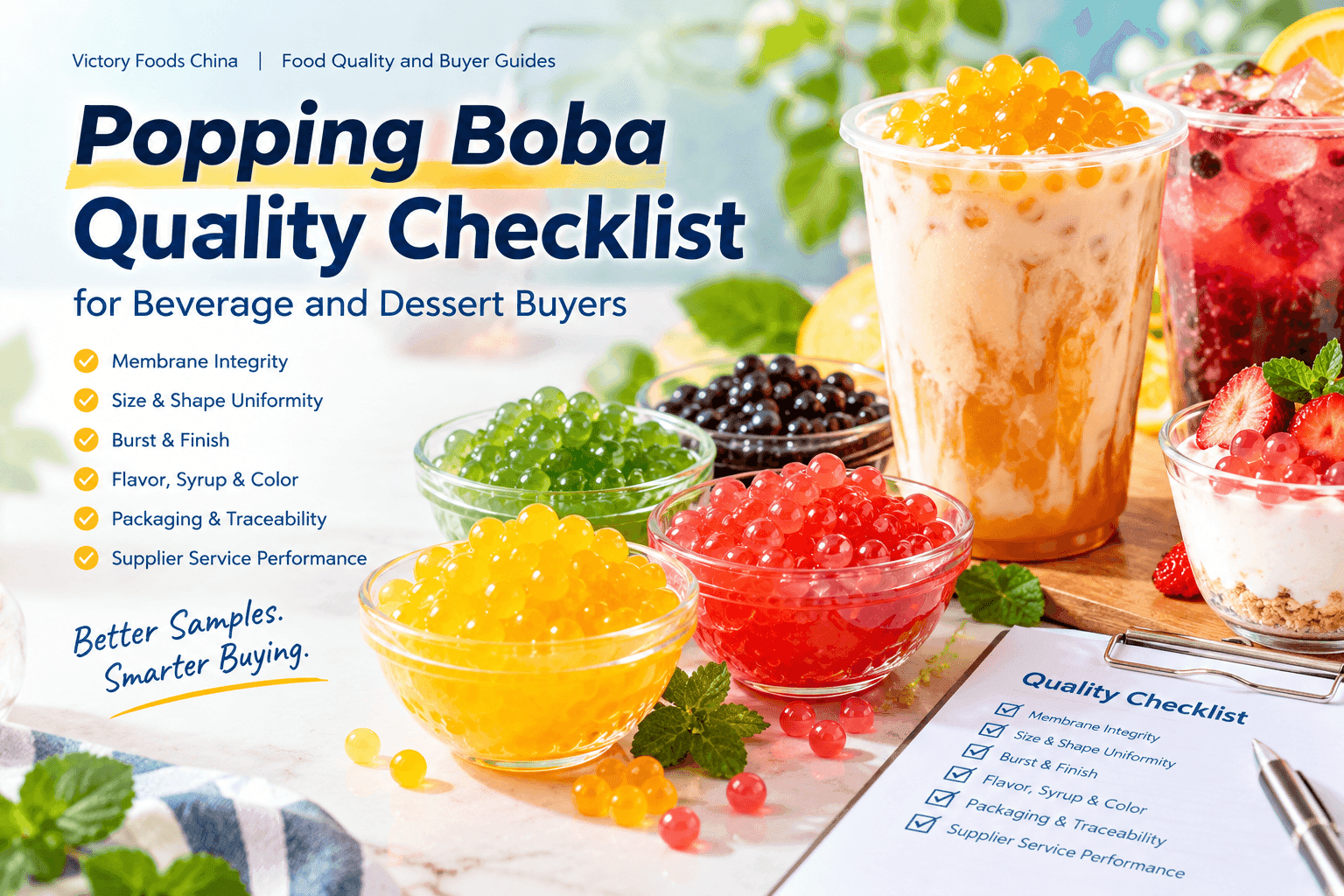
Popping Boba Quality Checklist for Beverage and Dessert Buyers
Popping boba is easy to judge by color and much harder to judge as a commercial ingredient.
A buyer needs to know how the pearls perform when opened, scooped, mixed, displayed and served. The membrane should protect the filling without becoming unpleasant to bite. The size should be consistent enough for the intended package and equipment. The syrup, flavor, color and label information must also fit the target product and market.
This checklist gives beverage brands, dessert manufacturers, foodservice operators, distributors and private-label teams a practical way to compare samples.
Confirm the Intended Application First
The best popping boba for a sealed ready-to-drink cup may not be the best option for a dessert topping station or a frozen application. The product is exposed to different liquids, temperatures, holding times and handling methods.
Before requesting samples, tell the supplier:
- whether the pearls will be used in beverages, desserts, retail cups or another format
- the base liquid or food they will contact
- expected acidity, temperature and holding time
- straw, spoon, nozzle or filling-equipment requirements
- target pearl size and color direction
- packaging and distribution conditions
- destination market and label needs
Application context allows the supplier to recommend a relevant product instead of sending the most visually attractive sample.
Inspect Membrane Integrity
The membrane must survive normal transport and handling while still producing a clean burst during eating.
Open the sample and check for excessive broken pearls, leaking centers or fragments in the syrup. Gently stir and scoop the product using the utensil or equipment planned for service. Observe whether the pearls tolerate normal handling without becoming rubbery or fragile.
Membrane performance should be tested again after contact with the intended beverage or dessert base. Acidity, dissolved solids, alcohol, temperature and holding time may change performance. A result in the original syrup does not guarantee the same result in the finished application.
Check Size and Shape Uniformity
Consistent size affects appearance, portioning and equipment compatibility. Large variation may create an uneven consumer experience or cause problems with straws, nozzles and automated filling.
Spread a representative sample in a shallow clear tray. Look for misshapen, collapsed or fused pearls. If size is a critical control, agree on a measurable range and sampling method with the supplier rather than relying on a photograph.
Color should also be reasonably consistent within the agreed product standard. Natural or formulation-related variation may be acceptable, but the buyer and supplier should define what is normal.
Evaluate the Burst and the Finish
A good evaluation separates membrane sensation from filling quality.
Notice how much pressure is needed for the pearl to burst, whether the membrane disappears cleanly and whether fragments remain in the mouth. Then assess the filling for flavor intensity, sweetness, acidity and aftertaste.
Test at the real serving temperature. Cold conditions can change sensory perception and may change the way the membrane feels. If the product will be consumed through a straw, test that route instead of evaluating only with a spoon.
Use a small scorecard so multiple reviewers evaluate the same attributes. Notes such as sample A was fun are less useful than a consistent record of burst strength, membrane residue, flavor, color and compatibility with the base.
Review the Syrup
The surrounding syrup protects and carries the pearls, but it also affects draining, mixing and finished-product sweetness.
Check clarity or expected opacity, aroma, visible particles and separation. Observe how easily the pearls can be scooped or drained. If syrup enters the final beverage, measure its effect on flavor, color and recipe balance.
Do not assume the drained pearl and the pearl with syrup produce the same result. Define how staff or production equipment will portion the product.
Test the Complete Recipe
Popping boba should be evaluated in the buyer's finished concept, not only tasted directly from the package.
Prepare the intended drink or dessert using a documented recipe. Record the quantity, base, temperature and time. Evaluate immediately and again at the longest realistic holding point supported by the product guidance and service plan.
Watch for:
- membrane weakening or hardening
- color migration
- flavor dilution or conflict
- floating, settling or uneven distribution
- clogging of a straw or nozzle
- changes in the base around the pearls
If the application is a sealed retail product, a controlled shelf-life and package evaluation will be needed. A quick foodservice test cannot support a retail shelf-life claim.
Inspect Packaging and Seals
Packaging must protect the pearls and syrup through distribution. Review the container, closure, liner, seal, carton and pallet configuration appropriate to the order.
On arrival, inspect for leakage, swelling, damaged closures and contaminated outer surfaces. Confirm that the package can be opened safely and resealed if that is part of the intended use. Check whether the pack size matches the buyer's rate of use so that unnecessary open-product holding is avoided.
For food-contact packaging, buyers may need declarations or supporting information appropriate to the material and destination market. Packaging artwork and labels should match the approved product version.
Confirm Product Information and Traceability
A commercial sample should connect to a defined specification. Ask for the product name, ingredient information, allergen information, net content, storage conditions, lot coding, shelf life and relevant quality limits for the exact item.
Traceability should link the retail or foodservice unit to production records. Buyers should understand where the lot code appears and how complaints or quality investigations would be handled.
If the product is customized, version control becomes important. Flavor, color, pearl size, syrup and packaging can all change, so the approved sample should be clearly identified.
Plan Storage and Foodservice Handling
Follow the supplier's approved storage and after-opening instructions for the exact product. Do not copy handling periods from another brand or another formula.
At the point of use, staff should protect the product from contamination, use clean utensils and follow time and temperature controls required by the local operation and law. The 2026 FDA Food Code provides a current model for retail and foodservice controls in the United States, but it is not a global rulebook and local adoption can vary.
General food hygiene principles also apply across receiving, storage, preparation and service. The operating procedure should be written for the actual venue rather than left as an informal habit.
Compare Suppliers With the Same Test
Supplier comparison is meaningful only when samples are tested under the same conditions.
Use the same recipe, pearl quantity, temperature, holding time and evaluation form. Photograph the samples under the same light. Record lot numbers and test dates. Separate mandatory requirements from preferences.
A simple decision table can include:
- application fit
- membrane integrity and burst
- size and visual consistency
- flavor and syrup performance
- packaging and logistics
- documents and traceability
- customization capability
- commercial terms and lead time
Price belongs in the decision, but a cheaper ingredient that fails in service can create waste, complaints and reformulation costs.
Request a Popping Boba Sample Review
Buyers can share their application, base recipe, serving conditions, destination market, desired flavor and package format to request a more relevant sample set. Testing the product in its real use case gives both parties better information than selecting from a color chart alone.
Frequently Asked Questions
What is the first quality check for popping boba
Begin with membrane integrity, broken-pearl level and the burst experience, then test the pearls in the intended final recipe.
Can one popping boba work in every beverage
Not necessarily. Acidity, alcohol, temperature, dissolved solids, holding time and service equipment can affect performance.
Should buyers test through the final straw or nozzle
Yes. Equipment compatibility is part of the consumer and operating experience.
How long can popping boba be held after opening
Use the approved instructions for the exact product and local food-safety requirements. This article does not set a universal after-opening period.
What documents should accompany a commercial sample
Request the exact product specification, ingredient and allergen information, storage guidance, shelf life, lot identification and other documents relevant to the market and application.