
Why Texture Is Becoming a Product Strategy in Food and Beverage
Texture is more than a sensory detail. For food and beverage brands, it can define the format, make quality visible, support discovery and determine how a product must be processed and packed.
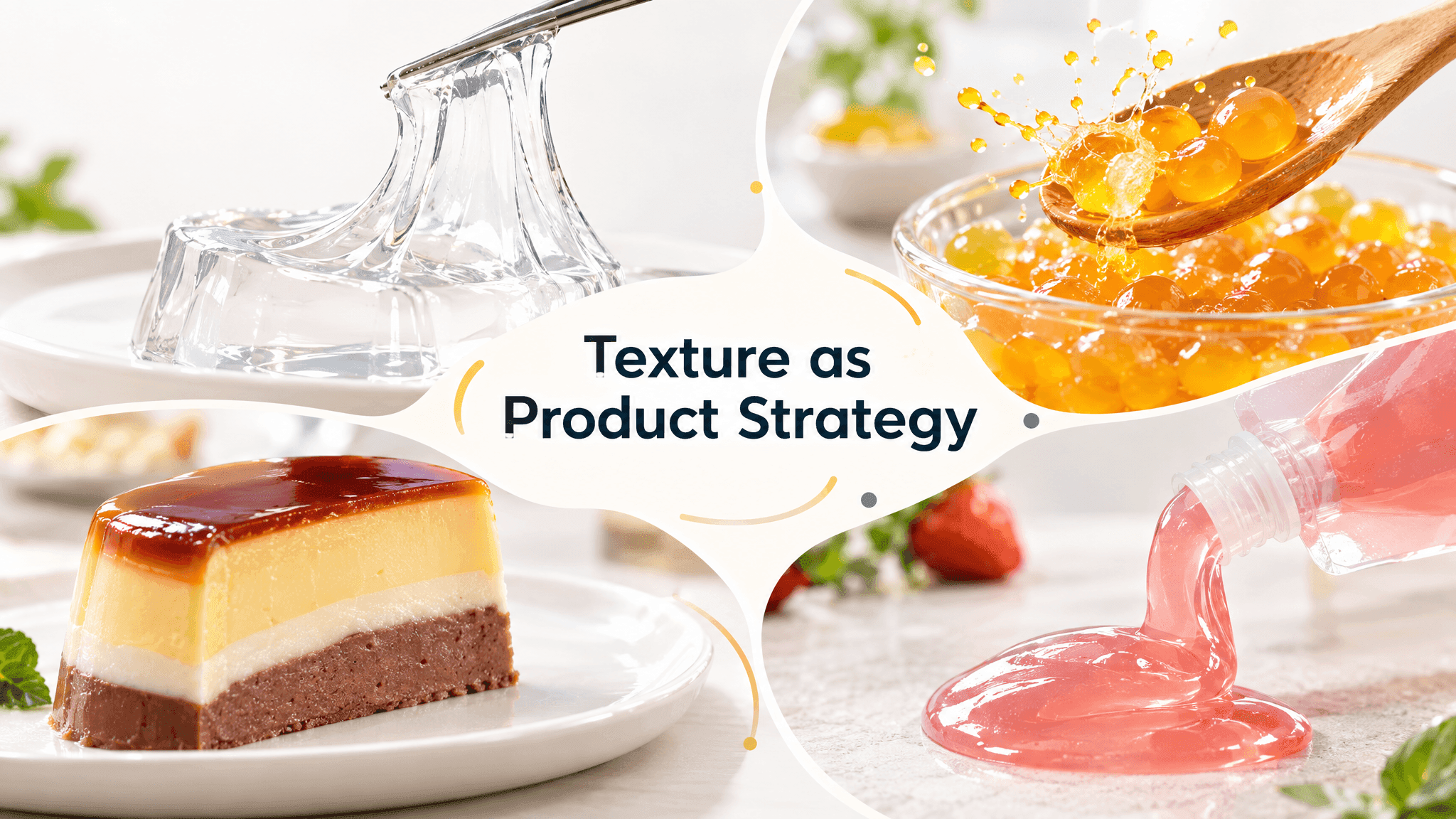
Why Texture Is Becoming a Product Strategy in Food and Beverage
Food and beverage innovation is often described through flavor, ingredients or nutrition. Texture is sometimes added at the end as if it were a finishing detail.
That view is too narrow.
Texture can determine what the product is, how it is consumed, what equipment is required, how the package works and whether people remember the experience. A popping boba beverage, a squeezable jelly, a layered pudding and a freezer pop can use related flavor ideas while creating completely different occasions because their structures are different.
For product teams, texture is becoming a strategic design choice rather than a final sensory adjustment.
Texture Can Define the Format
Some products cannot be separated from their texture. Remove the burst from popping boba and it becomes a different ingredient. Remove the set from a jelly cup and it becomes a drink or sauce. Change a freezer pop so it remains hard and icy instead of soft enough to bite, and the consumer experience changes.
This means a development brief should describe the intended action as well as the flavor.
- Does the product burst, chew, melt, squeeze or spoon
- Should it hold a shape or flow
- Is it eaten alone or added to another food
- Does it need a straw, spoon, pouch or cup
- What should happen during the first bite and aftertaste
Those answers guide formulation and packaging earlier than a simple request for a fruit flavor.
Texture Makes Quality Visible
Consumers may not see a process specification, but they can often detect inconsistency through texture. A jelly that releases water, a pearl with a weak membrane or a pudding with graininess signals that something has changed.
For manufacturers and buyers, this makes texture a practical quality language. Product specifications can define characteristics such as firmness, elasticity, viscosity, particle size, burst strength or absence of unacceptable separation. Sensory standards and instrument measurements can complement each other when they are appropriate to the product.
The important step is to translate words such as premium, smooth or chewy into attributes that a development and quality team can evaluate consistently.
Texture Creates Discoverable Moments
Visually distinctive textures are easy to demonstrate. A transparent pearl that bursts, a layered dessert that holds a clean line or a jelly that bends without breaking can communicate an experience in a few seconds of video.
Recent food coverage has highlighted consumer interest in chewy, crunchy and multi-texture experiences across global cuisines. The business opportunity is not to copy every viral item. It is to understand why the format is shareable and whether it fits the brand.
A texture-led product still needs repeat purchase. The visual moment may earn attention, but flavor, portion size, convenience, price and reliable quality decide whether novelty becomes a stable item.
Texture Changes Flavor Perception
Flavor is not experienced in isolation. The food structure can influence how aroma and taste compounds are released during eating. A firmer gel may release flavor differently from a softer one. Fat, protein, sugar, acid and hydrocolloids can change both mouthfeel and perception.
This is why a flavor approved in a liquid base cannot simply be assumed to work in a jelly, pudding or filled confectionery. Reformulation may be necessary even if the label uses the same flavor name.
Current research on hydrocolloid and flavor interactions reinforces a practical point for product teams: texture development and flavor development should happen together.
Texture Determines Processing Choices
A target texture must survive manufacturing, filling, sealing, transport and storage.
Hydration time, temperature, shear, acidity, mineral balance and order of addition can influence the structure. Inclusions may float or settle. Particles may block filling equipment. A product that looks stable in a small laboratory beaker may behave differently in a production tank.
The development path should therefore include a pilot or production trial that tests the real process and package. Scaling is not only a matter of multiplying every ingredient by the same number.
Texture and Packaging Must Be Designed Together
The package controls how the consumer reaches the texture.
A popping boba cup needs a closure that protects the pearls and syrup. A squeeze jelly needs a film and opening that allow controlled flow. A pudding cup needs enough rigidity for transport and spoon use. A freezer pop package must perform during ambient distribution and later freezing by the consumer.
Packaging also changes expectations. A clear cup may make color and particle uniformity highly visible. An opaque pouch can protect light-sensitive content but removes the visual preview. A wide opening suggests spooning, while a narrow spout suggests squeezing.
Good design aligns the product structure, package and eating action.
Texture Can Organize a Portfolio
Brands do not need every product to use the same format. A portfolio can be organized around different jobs and occasions.
A ready-to-drink popping boba cup can provide visual fun and an immediate beverage occasion. A functional jelly stick can emphasize portability and a controlled serving. A pudding can support dessert and indulgence. A freezer pop can turn hydration or fruit flavor into a seasonal frozen experience.
The common capability is not one product. It is the ability to design and manufacture controlled textures for different consumers and channels.
This broader view gives Victory Foods room to discuss alcohol-infused jelly, functional formats, popping boba and other foods without forcing them into one category. Each article can solve one buyer problem while the overall library demonstrates food formulation and manufacturing depth.
Ask Better Questions at Concept Stage
Before requesting samples, a buyer can answer five questions.
First, what action should define the eating experience? Second, which consumers and occasions are being designed for? Third, what shelf and distribution conditions must the texture survive? Fourth, what package makes the action easy? Fifth, which quality attributes will be used to approve the sample and later production?
These questions prevent a common problem: approving a visually attractive sample without defining what must remain consistent at scale.
Build a Texture Brief
A useful texture brief can include reference products, target words, unacceptable defects, serving temperature, intended eating method, pack format and shelf-life goal. References should explain what is liked about each example rather than asking a manufacturer to copy another product.
Brands and importers developing jelly, popping boba, pudding, squeeze formats or freezer products can request a texture-focused sample discussion. A short brief gives the R&D team a stronger starting point than a flavor name alone.
Frequently Asked Questions
Why is texture a strategy instead of a trend
Texture can define the format, equipment, package, consumer action, quality controls and product portfolio. Those decisions last longer than a short-lived social trend.
Can the same flavor work across a drink and a jelly
It may require adjustment. Food structure can change aroma release, sweetness perception, acidity and overall flavor balance.
How should a buyer describe texture
Describe the intended action and measurable attributes, such as burst, firmness, elasticity, viscosity, particle size, spoonability or squeeze behavior.
Does a viral texture guarantee repeat purchase
No. Visual interest can support discovery, but repeat purchase also depends on flavor, convenience, price, quality and channel fit.
Which Victory Foods products fit a texture led framework
Relevant examples include jelly formats, popping boba beverages and toppings, puddings, squeeze products and freezer pops. Each should be evaluated for its own market and use case.