
How to Present Strawberry Aloe Vera Drinks to Retail Buyers
A practical guide to presenting strawberry aloe vera drinks to retail buyers, covering product identity, flavor samples, packaging, retail fit and a clear quotation request.
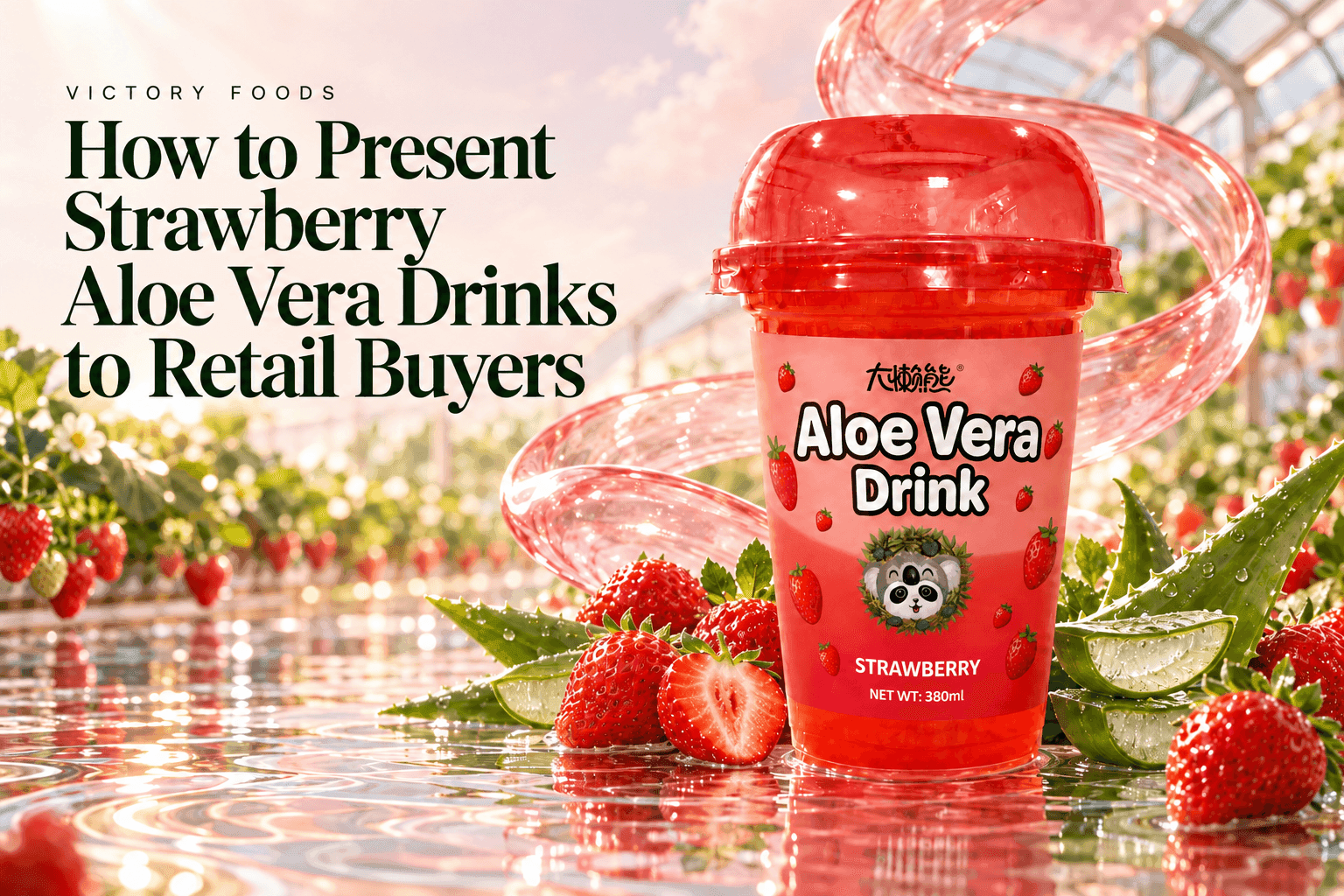
How to Present Strawberry Aloe Vera Drinks to Retail Buyers
A strawberry aloe vera drink presentation should help a retail buyer answer four practical questions: what is the product, how does it taste, where could it sit in the store and what information is needed to order it? A clear explanation of the drink, supported by real samples and accurate product details, makes that conversation more useful.
Victory Foods offers a 380 mL ready-to-drink aloe vera beverage with pulp in a cup. The current range includes Original, Mango, Pineapple, Coconut and Strawberry, with a snap dome lid. For importers and distributors preparing a retail proposal, this provides a specific product to demonstrate rather than a general promise of beverage innovation.
This guide uses the Strawberry flavor to explain how to introduce the aloe drink to a retail purchasing team, prepare a sample meeting and connect the product story with the information needed for a listing decision.
Start with a product description the buyer can reuse
The first description should identify the product without making the buyer interpret a slogan. A useful starting sentence is: “A strawberry-flavored aloe vera beverage with pulp, supplied in a 380 mL ready-to-drink cup.”
That sentence gives the buyer a beverage category, a texture feature, a package size and a specific flavor. It can be used consistently in an introductory email, a product sheet or a retailer's internal listing request.
Then provide the product page so the buyer can review the current range and continue the discussion with the supplier. Keep the same product name throughout the presentation, sample labels and quotation. Changing between unrelated names can make one item look like several different products.
Explain the drinking experience before the brand story
The aloe pulp is a sensory feature that deserves a simple explanation. Describe the beverage as a liquid drink with aloe pieces, then let the sample show the texture. A buyer should understand how the product is consumed before reviewing a longer company introduction.
Our article on food texture as a product strategy discusses why the intended action belongs in the product brief. In an aloe beverage presentation, the relevant experience is drinking while encountering soft pieces. Describe that experience in ordinary language and confirm the wording against the actual sample.
Avoid using a different food format as a shortcut. A jelly, a pudding and an aloe drink may all involve texture, but they create different expectations. The cup's appearance alone does not tell a new customer whether the contents should be drunk or eaten with a spoon.
Show where the drink fits within the beverage assortment
A retail buyer needs to understand the proposed shelf role. Before the meeting, identify the store format, the nearby drinks and the reason this cup deserves consideration. A supermarket, an international grocery shop and a convenience store may ask different questions about the same product.
For example, an international grocery buyer may focus on how clearly the package and shelf description explain an unfamiliar texture. A convenience store buyer may begin with shelf height, space per item and ease of replenishment. Treat these as questions to resolve with the retailer rather than assumptions about guaranteed demand.
Our beverage category provides context for buyers reviewing adjacent products. Use it to support a focused conversation about the proposed drink range. A presentation becomes harder to evaluate when it moves repeatedly between unrelated food categories before explaining the aloe beverage itself.
Start with Strawberry and compare the wider range
For this proposal, put Strawberry first. Show its red cup artwork and identify the flavor clearly, then use the sample to discuss aroma, sweetness and aloe texture. The flavor name should describe the product without suggesting an unverified amount of fruit juice.
The wider range includes Original, Mango, Pineapple and Coconut alongside Strawberry. Original can provide a comparison for the base beverage, while the other flavors give buyers further options to evaluate. Start with the proposed Strawberry item, then offer comparisons when they help the listing decision.
If the retailer has room for only a small opening range, explain why you are recommending particular samples. The reason might come from a previous tasting, the retailer's assortment brief or customer feedback that you can describe accurately. Confirm packing and ordering conditions before presenting a mixed selection as an available commercial offer.
Prepare a tasting that leads to a decision
Agree on the purpose of the sample session. The buyer may be deciding whether to explore the category, which flavors to shortlist or whether a particular product version meets an existing brief. A clear question helps everyone interpret the feedback.
Identify each sample by flavor and supplier reference, and record the condition in which it arrived. Follow the supplied storage and preparation instructions. Compare the samples under consistent conditions and check the package before opening.
Ask the buyer to describe flavor recognition, sweetness, acidity, aftertaste, liquid mouthfeel and aloe texture. Keep these observations separate from personal liking. Our sensory scorecard guide was written for functional jelly, but its method of identifying samples and recording useful comments can be adapted to this beverage.
Photograph the actual product the retailer will receive
Use a clear front view of the real cup, with the flavor name and package details readable. Add another view only when it answers a practical question, such as the closure appearance or the way the cup sits on a shelf.
A creative blog cover can attract attention, while a listing photograph needs to identify the supplied item. Keep the two uses clear in your asset folder. A retailer should not have to guess which decorative objects are included with the drink.
For a range presentation, use photographs of the actual flavors being offered. Keep the cup's shape, proportions, colors, printed wording and artwork consistent with the supplied product. If artwork is still under discussion for a private label project, label that image as a proposal and replace it with the approved version before the listing goes live.
Make the pack easy to assess for the sales channel
The 380 mL cup and snap dome lid are visible parts of the product. Bring an intact sample so the buyer can assess shelf height, handling and the readability of the flavor name. Ask for the confirmed closure construction and any supplied use instructions instead of inferring them from a photograph.
Discuss the outer pack separately. The retail team may need units per case, case dimensions, gross weight and the arrangement of cups inside the carton. An online seller also needs to review the parcel configuration used for delivery to customers.
Our secondary packaging guide explains the different jobs of retail presentation and transport protection. Although written around functional jelly, that distinction helps organize the questions for a cup beverage. Confirm the actual aloe drink packing specification with the supplier.
Put shelf life into the buyer's delivery plan
The current aloe drink listing states a two-year shelf life and storage in a cool, dry place. Share those details with their storage conditions, then confirm what applies to the ordered version and the planned shipment.
The retailer may require a minimum remaining shelf life at receipt. Work backward from that requirement through delivery to stores, warehousing, customs clearance and transit. Ask the supplier to confirm the remaining shelf life expected at dispatch so the buyer can review the complete route.
Keep display preferences separate from storage instructions. If a retailer wants a particular presentation temperature, ask the supplier for suitable guidance. A tasting served cold does not by itself define the storage conditions for unopened commercial stock.
Separate the product story from unconfirmed claims
A straightforward aloe beverage description is more useful than a collection of wellness promises. Explain the cup format, flavors and pulp texture. Use nutrition information only when the quantity basis and ordered product version are clear.
A flavor name does not establish fruit juice content, and a fat declaration does not establish sugar content. Request the approved ingredient list and nutrition panel before adding diet, ingredient or nutrition claims to a retailer's product page.
Give the same information to sales, marketing and the retailer. When a buyer asks a question the presentation does not answer, record it for the supplier response. This keeps the eventual listing connected to confirmed product information rather than to an assumption made during the meeting.
Clarify whether the project uses the current brand or private label
Some buyers want to distribute the existing aloe drink. Others want to discuss their own brand. State which route is being considered before asking the supplier to prepare a quotation or development plan.
Victory Foods offers OEM/ODM services. Our guide to private label versus custom formulation explains why new artwork and a different formula can involve different work. For this beverage, confirm which changes are available and what they mean for sampling, packaging quantities and timing.
If the retailer wants a new flavor direction or package, describe the requirement as a development question until feasibility is confirmed. Keep the current product proposal separate from future options so the buyer knows which item can be evaluated now.
Make the commercial follow up specific
Close the presentation by agreeing on the next decision. The buyer may need more samples, a completed listing form, a packing specification or a quotation for selected flavors. Record who needs each item and when it will be reviewed.
For the quotation request, provide the destination country, selected product version, intended channel, estimated quantity and required arrival date. Ask for the relevant order minimum, case arrangement, production timing and delivery terms. Compare offers on the same commercial basis.
After a tasting, send a short record of the samples reviewed and the questions still open. An encouraging conversation is not the same as a listing approval. Keep the approved product details, artwork and commercial documents connected as the project moves forward.
Introduce the manufacturer with relevant context
Victory Foods, Fujian Jinjiang Weiduoli Food Co., Ltd., was established in 1997 and is based in Jinjiang, Fujian, China. Our portfolio includes beverages, jelly products and puddings, alongside OEM/ODM services.
Use the company introduction to explain who the buyer will work with. Then return to the aloe drink project and the information required for the next step. The retailer should be able to connect the supplier identity with the samples and documents in the proposal.
Frequently asked questions
What is the Victory Foods strawberry aloe vera drink
It is the Strawberry flavor in our ready-to-drink aloe vera beverage range, with aloe pulp and a 380 mL cup with a snap dome lid. Other listed flavors are Original, Mango, Pineapple and Coconut.
What should a retailer review before listing an aloe drink
Review the sample, flavor selection, actual packaging, ingredient and nutrition information, storage instructions, remaining shelf life and commercial terms. Confirm the details for the product version being ordered.
How can a distributor explain aloe pulp to a new buyer
Describe the drink as a liquid beverage with aloe pieces and demonstrate it with a representative sample. Let the buyer evaluate the texture alongside the flavor rather than relying only on package photography.
Does the retailer need to list every available flavor
No. The opening range should reflect the retailer's space, buying plan and sample feedback. Confirm the order and packing conditions for each chosen flavor before agreeing on the assortment.
Can the aloe drink be discussed as a private label project
Yes. Victory Foods offers OEM/ODM services. Share the intended market, branding direction and product requirements so our team can confirm the options available for this beverage.
Request samples for your retail proposal
If you are preparing a strawberry aloe drink presentation for retailers, share your destination market, channel, preferred flavors and estimated quantity with Victory Foods. Tell us whether the project concerns the current product or a private label discussion.
Our team can confirm sample arrangements, current product information and the questions needed for a relevant quotation. Start with a clear retail brief so the sample meeting and the commercial discussion describe the same product.