Retail Placement for VOLT Adult Jelly Confectionery A Buyer Guide
VOLT needs a retail context that explains its jelly format without hiding its alcohol content. This buyer guide covers category wording, adult-only placement, shelf communication, staff guidance, storage and market testing for the six-cup 12 percent ABV pack.
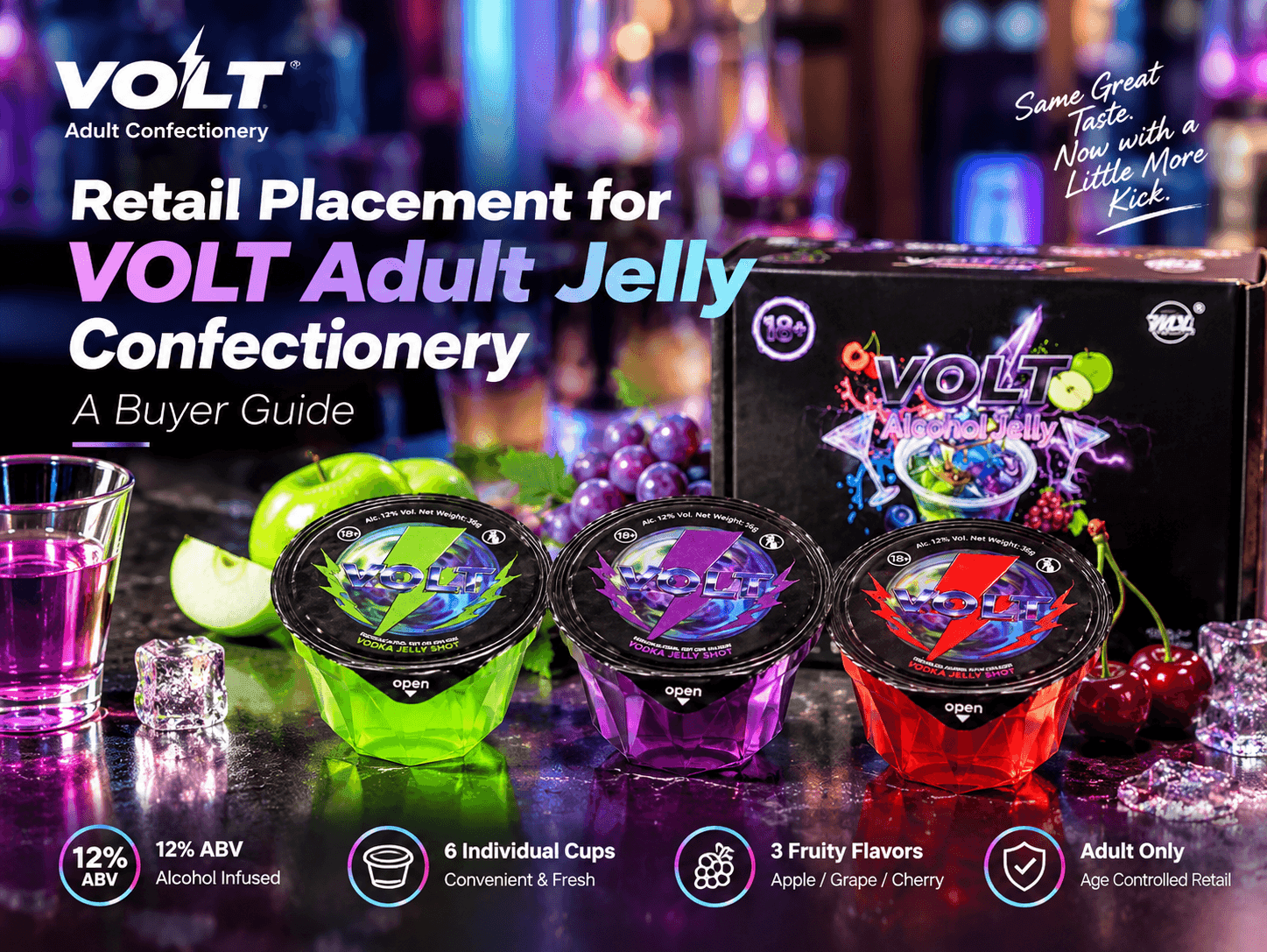
Retail Placement for VOLT Adult Jelly Confectionery A Buyer Guide
VOLT Party Jelly combines a familiar confectionery experience with a clearly alcoholic product. Each retail box contains six individually sealed jelly cups at 12 percent ABV in apple, grape and cherry flavors. That combination creates a practical retail question before launch: where should the product be placed so an adult shopper understands it quickly and the retailer can apply the right controls?
The answer should begin with the destination market, not with a universal shelf rule. Adult Jelly Confectionery is a useful consumer category description. It is not a legal classification, an exemption or a substitute for local review. The importer and retailer must determine the required product category, licences, taxes, label statements, age controls, sales channels and advertising rules before choosing a display.
Once that route is clear, placement becomes a communication decision. The shelf should tell an adult shopper what the product is, that it contains alcohol and why the six-cup format is different from a bottle, beverage can or ordinary candy.
Separate Legal Classification From Merchandising Language
Legal classification and shelf language solve different problems.
The competent authority decides how a product is treated under applicable law. Formula, alcohol content, format, ingredients, manufacturing process, package and intended market may all affect that decision. A retailer cannot change the legal category simply by placing the pack beside chocolate or snacks.
Merchandising language helps the shopper understand the physical product. For VOLT, the preferred hierarchy is VOLT Party Jelly as the product name, Adult Jelly Confectionery as the main category cue and Alcohol Infused Jelly Confectionery as an explanatory phrase for search and product education.
The description should never hide the alcohol. The 12 percent ABV statement and adult-only message should remain clear wherever local rules require them, including the retail pack, shelf material, e-commerce listing and sampling activity.
Choose an Adult Controlled Retail Context
The safest starting point is a retail context already designed to manage age-restricted products, provided the destination market permits the product to be sold there.
Possible contexts may include a licensed alcohol department, a specialist adult beverage retailer, an adult gifting area within an authorized store, a controlled duty-free assortment or an approved hospitality and event channel. Those are options for evaluation, not universal recommendations. Local product classification and retailer policy must decide which channels are allowed.
A general children's candy aisle should not be the default. The jelly format and fruit flavors may look familiar to younger shoppers even though the product is intended only for adults of legal drinking age. Placement beside children's confectionery, toys or youth-oriented promotions can create avoidable confusion.
Checkout displays also require care. High visibility can support trial, but a self-service position may make age control harder or expose the product to a mixed audience. The retailer should review staff supervision, checkout procedures, display height, adjacency and local restrictions before using a front-of-store position.
Use Adult Confectionery as the Mental Category
Many shoppers already understand that liquor-filled chocolate is a confectionery product intended for adults because it contains alcohol. That familiar reference can help a buyer explain the commercial role of VOLT, but it does not make the products legally equivalent.
VOLT uses a jelly format rather than chocolate, has its own 12 percent ABV specification and must be reviewed under the rules that apply in the destination market. The useful connection is the shopper's mental category: a portioned adult confectionery experience with clear alcohol disclosure.
This framing is more precise than presenting VOLT as ordinary candy. It is also clearer than relying only on the phrase solid cocktail, which may explain the alcohol occasion but does not fully describe the jelly cup format.
Build a Clear Shelf Message
An unfamiliar product should not require a long explanation at the shelf. A compact message can establish the product in a few lines.
The message should identify the brand and format first, then state the alcohol nature and key pack facts. A working structure for local review is:
VOLT Party Jelly
Alcohol Infused Adult Jelly Confectionery
12 Percent ABV
Six Individually Sealed Cups
Apple Grape and Cherry Flavors
For Adults of Legal Drinking Age Only
This is a content hierarchy, not approved regulatory copy. The importer must adapt wording, language, warnings, type size and mandatory information to the destination market and final label approval.
Avoid category labels that create a false impression. Candy on its own can hide the alcohol. Cocktail can imply a beverage when the consumer receives a jelly cup. Alcohol free, low alcohol or similar claims must never appear unless they are accurate and legally supported for the actual product.
Let the Pack Explain the Six Cup Format
The retail box should make the unit structure easy to understand. VOLT contains six individually sealed cups, so the shopper should recognize that the box is a multi-unit pack rather than one large container.
Front-facing presentation can show the brand, adult category and alcohol statement. Side or back panels can explain flavors, cup count, opening instructions, storage and other mandatory information required for the market.
The three-flavor assortment supports discovery, but retail copy should not turn flavor language into youth-oriented imagery or an invitation to rapid consumption. The cups are portioned units inside a shared box, not a drinking challenge.
If the retailer uses shelf trays, security fixtures or secondary display cartons, the final layout should keep required information visible. It should also protect the box from crushing, direct sunlight and handling damage.
Prepare a Short Staff Explanation
Store teams will receive questions when a new format appears. A short, factual answer helps staff explain the product consistently.
A practical staff description is: VOLT is a 12 percent ABV alcohol infused adult jelly confectionery sold as six individually sealed cups in apple, grape and cherry flavors. It contains alcohol and may be sold only according to the local legal drinking age and store policy.
Staff should also know where to find the approved ingredient, allergen, storage and responsible-sale information. They should not improvise claims about effects, safety, serving limits or legal classification.
If the destination market requires age verification, the procedure should cover the product in the same operational system used for other age-restricted sales. That may include point-of-sale prompts, staff training, refusal procedures, online age controls and delivery checks, depending on local law.
Connect Retail Placement to Responsible Marketing
Placement, shelf signs and digital listings all influence who sees the product and how it is understood.
WHO's SAFER initiative identifies restrictions on alcohol availability and marketing as measures that help protect young people and other vulnerable groups. Individual markets implement those principles through different laws and policies. Buyers should therefore treat responsible placement as part of launch planning rather than a final artwork detail.
For VOLT, responsible presentation means avoiding minors, school settings, driving, intoxication, competitive consumption and claims that alcohol improves confidence, popularity or social success. Social occasions can be shown, but the product should never be framed as necessary for a successful event.
Review Label and Shelf Copy Together
The package and display should tell the same story.
Codex CXS 1-1985 states that the name of a prepackaged food should indicate its true nature and that labelling should not be false, misleading or deceptive. National requirements remain controlling, especially for an alcohol-containing product, but the principle is useful when reviewing the retail message.
If the pack says Alcohol Infused Jelly while the shelf tag says Candy, the two messages may create confusion. If the e-commerce title omits the ABV, the shopper may not understand the alcohol nature before opening the product page. If a promotional card uses different flavor or cup-count information, the retailer creates another avoidable mismatch.
The buyer should review the retail pack, shelf tag, product data sheet, online listing, staff script and sampling material as one communication set. Product name, cup count, flavors, 12 percent ABV and adult-only positioning should remain consistent.
Plan Storage and Shelf Handling
The current VOLT version has an 18-month ambient shelf life under its approved storage conditions and should be protected from direct sunlight.
Ambient storage does not mean unlimited heat, freezing or exposure in a sunny window. The retailer should use the approved storage statement and confirm any market-specific wording on the final label.
Shelf handling should keep the retail box intact and the six cups protected. Staff should remove packs with crushing, moisture damage, opened boxes, leaking cups or unreadable mandatory information according to the retailer's quality procedure.
Stock rotation should follow the approved date-marking system. The distributor and retailer should also agree how damaged or returned alcohol-containing products are controlled in the destination market.
Pilot More Than One Approved Placement
A market test can compare retail contexts after legal and retailer approval.
For example, a buyer may test an authorized adult gifting shelf against an approved alcohol department display. The objective is not simply to find the location with the most impulse purchases. The test should also examine whether shoppers understand the format, whether staff questions decrease, whether age controls work and whether the pack remains in good condition.
Useful observations include shopper questions, staff explanation time, incorrect category assumptions, age-verification exceptions, damaged packs, returns, conversion and repeat purchase. The buyer should record the store type, display position, message and test period so results from different locations can be compared.
One successful store or event does not prove national demand. A controlled pilot should help the importer refine the placement, staff script and communication materials before a wider rollout.
Give E Commerce the Same Category Clarity
Online placement needs the same discipline as a physical shelf.
The product title should state the brand, adult jelly format, alcohol nature and 12 percent ABV clearly. Product images should show the actual pack and individual cups without changing brand design, colors, text or proportions. The description should explain the six-cup assortment and approved storage conditions.
The importer should confirm which age gate, account restriction, checkout verification and delivery checks are required by the platform and destination market. A simple website pop-up may not satisfy applicable law or retailer policy.
Search terms can include Alcohol Infused Jelly Confectionery and a limited reference to alcohol jelly shots when necessary for discovery. Public-facing copy should still lead with the chosen VOLT category language and avoid normalizing the product for minors.
Use a Buyer Checklist Before Listing
- Confirm the destination-market product classification in writing.
- Confirm import, licence, tax, channel and age-control requirements.
- Approve the final product name, ABV statement, warnings and local-language label.
- Select only retail placements permitted for the classified product.
- Keep the product away from children's confectionery and youth-oriented promotion.
- Match pack copy, shelf copy, online copy and staff guidance.
- Configure point-of-sale, online and delivery age controls when required.
- Train staff to describe the product without adding unapproved claims.
- Store the current version under approved ambient conditions away from direct sunlight.
- Pilot the placement and record shopper understanding as well as sales.
Request a Finished VOLT Sample Set
Qualified importers, distributors and retail buyers can request a finished VOLT sample set to review the six-cup pack, category message and shelf presentation.
Please include the destination market and intended channel so the sample discussion can focus on product classification, retail placement and local compliance questions.
Frequently Asked Questions
Is Adult Jelly Confectionery a legal product category
Not necessarily. It is the preferred consumer and merchandising description for VOLT. The importer must confirm the legal classification and related requirements in the destination market.
Does the adult confectionery comparison determine legal classification
No. A merchandising analogy cannot determine legal status. Formula, alcohol content, format and local law may produce different classification, label, licence and tax requirements.
Should VOLT be placed in a regular candy aisle
A general children's candy aisle should not be the default. The approved location must follow local law, retailer policy, age-control needs and the risk of consumer confusion.
Can VOLT be displayed beside wine or spirits
It may be an option where the product classification, retailer authorization and local rules permit it. The shelf message should still explain that VOLT is an alcohol infused jelly confectionery in six individually sealed cups.
What should appear on the shelf tag
The hierarchy should identify VOLT Party Jelly, the alcohol infused adult jelly confectionery format, 12 percent ABV, six individually sealed cups and adult-only status. Exact wording requires local review.
Can the product be promoted to Gen Z
Gen Z includes people below the legal drinking age in many markets. Marketing should target verified legal-age adults and should never use youth-oriented placement or creative content.
Does an 18-month shelf life allow display in direct sunlight
No. The current version has an 18-month ambient shelf life under approved storage conditions and should be protected from direct sunlight.
Can buyers request retail-ready samples
Yes. Qualified importers, distributors and retail buyers can request finished samples to review the pack, individual cups, category language and planned retail presentation.