How to Build a VOLT Distributor Sales Kit for Retail Buyers
A distributor sales kit should help a retail buyer understand what VOLT is, how the six-cup format works and which questions require local review. This guide organizes the core story, product facts, visual assets, responsible retail guidance and market-specific inserts without confusing brand positioning with legal classification.
How to Build a VOLT Distributor Sales Kit for Retail Buyers
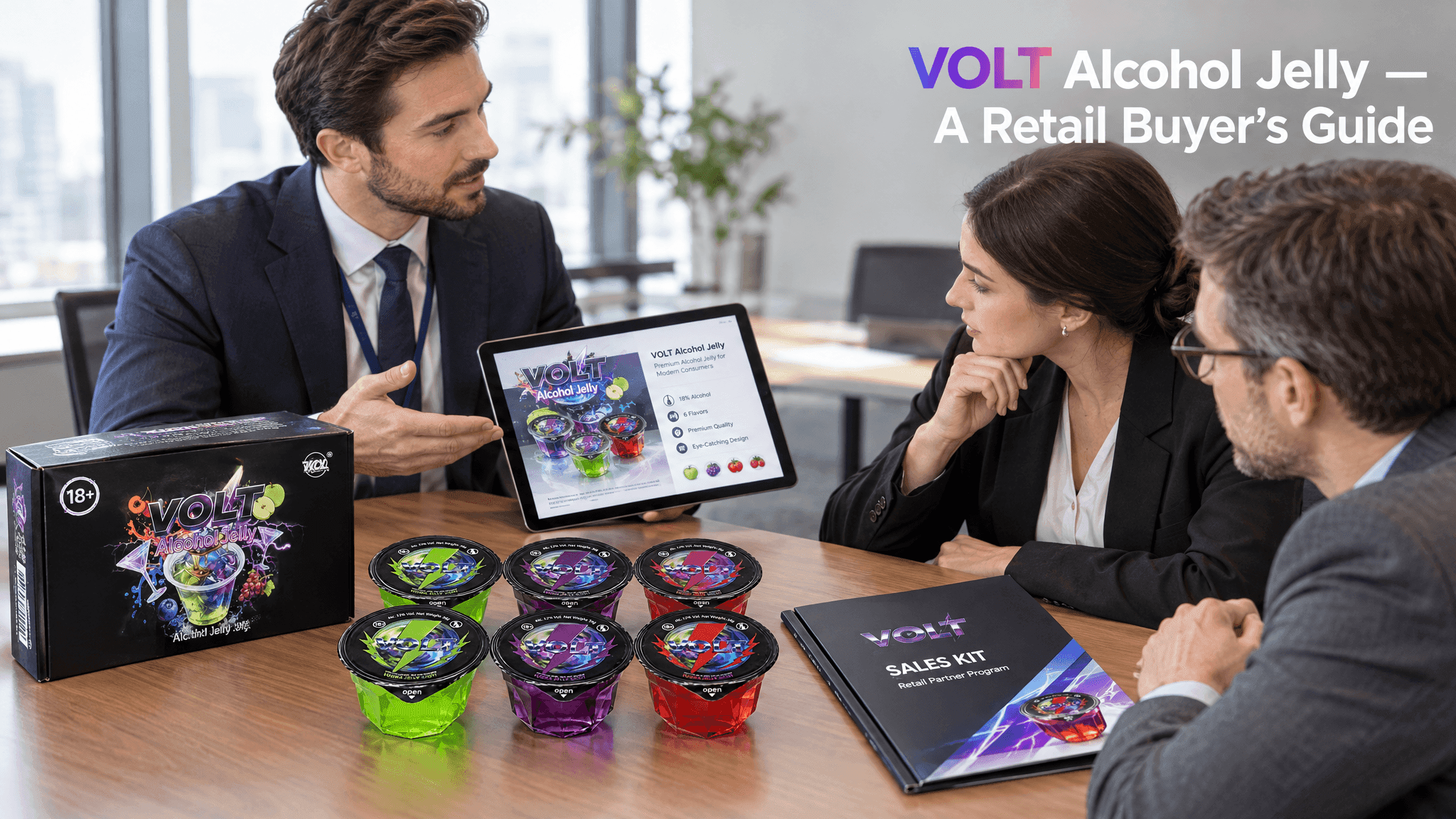
A retail buyer should be able to understand VOLT before the sales meeting becomes a discussion about VOLT Party Jelly unfamiliar terminology. A useful distributor sales kit gives the product one clear category description, shows the real pack, states the confirmed facts and separates the brand story from market-specific legal decisions.
c is positioned as an adult jelly confectionery containing alcohol. The current retail format contains six individually sealed cups at 12 percent alcohol by volume in apple, grape and cherry flavors. Confirmed storage guidance is ambient storage for up to 18 months while avoiding direct sunlight. The product is intended only for adults of legal drinking age.
Those facts should appear consistently in the presentation, product sheet, sample instructions and follow-up email. The buyer can then evaluate the retail proposition without receiving a different description from every member of the sales team.
This guide explains how to assemble that material into a practical distributor kit. It does not determine the product's legal classification, licensing or retail conditions in a destination market.
Begin With One Category Definition
The first page should answer one question in plain language: What is VOLT?
Use a short definition such as:
VOLT is an adult jelly confectionery containing alcohol, presented as six individually sealed fruit-flavored cups for adults of legal drinking age.
Keep that wording close to the product name. Do not make a buyer infer the category from party photographs or phrases such as jelly shot, solid cocktail or novelty drink. Those expressions may create a different expectation and can complicate later discussions about placement, labeling and consumer communication.
Liquor-filled chocolate can provide a familiar mental reference because many buyers already recognize it as confectionery intended for adults. Use the comparison only to explain the broader adult confectionery occasion. VOLT has its own fruit jelly texture, cup format and alcohol declaration, and the two products may receive different legal treatment in a destination market.
Build the Kit Around Buyer Questions
A sales kit is more useful when its order follows the buyer's decision process. The core sequence can answer:
- What is the product
- What is inside the retail pack
- Which adult occasions may fit the format
- Where might the product sit in the intended channel
- What does the retailer need to explain responsibly
- Which commercial and compliance details still require confirmation
- What should the buyer examine in the finished sample
This sequence keeps the category explanation ahead of price, promotion and launch claims. It also prevents the sales team from presenting a possible retail placement as though it were already approved for every market.
Create a One Page Product Sheet
The product sheet should give the buyer a reliable reference after the meeting. It should use the approved product name and a photograph of the exact pack version being offered.
Include only confirmed information:
- six individually sealed cups in the retail box
- 12 percent alcohol by volume
- apple grape and cherry flavors
- adult only positioning
- ambient storage for up to 18 months
- protection from direct sunlight
- contact details for commercial and technical follow-up
Do not add an unconfirmed serving recommendation, standard drink equivalence, ingredient claim, certification or regulatory status. If the final net quantity, ingredient list, nutrition declaration, warnings or market label are still under review, identify those items as pending rather than filling the space with assumptions.
The product sheet should also carry a revision date or version code. When artwork or product information changes, the distributor can remove the old sheet instead of allowing conflicting versions to circulate.
Show the Complete Six Cup Format
Loose sample cups can demonstrate flavor and texture, but they do not show the complete retail proposition. The kit should include clear images of the closed outer box, the six-cup arrangement, an individual sealed cup and the opened product where an approved image is available.
The visual sequence helps a buyer understand that the cups are individually sealed and grouped in one retail presentation. It also supports practical questions about shelf space, gifting, sharing, handling and display.
Keep product images documentary rather than decorative. The brand, colors, pack proportions and printed information must match the real sample. Do not create a new flavor, change the cup size, remove the alcohol declaration or use an artificial package render that looks more finished than the current commercial version.
Explain the Adult Occasion Without Overpromising
The buyer needs to know how the product may be understood by legal-age consumers. The kit can show adult home gatherings, gifting, dessert presentation or other responsible social occasions that fit the selected channel.
Use adults, moderate presentation and a clear food context. Avoid images or copy associated with rapid consumption, drinking games, intoxication, driving, youth culture or unrestricted public sampling. Do not recommend how many cups a person should consume.
The occasion page should support the product definition rather than replace it. A lifestyle photograph may attract attention, but the buyer still needs to see that the product contains alcohol, comes in six sealed cups and is intended only for adults of legal drinking age.
Give Retailers a Clear Explanation
Include a short staff explanation that can later be adapted to approved local wording. For example:
VOLT is an adult jelly confectionery with alcohol. This box contains six sealed cups in apple, grape and cherry flavors at 12 percent ABV.
The script should stay aligned with the product sheet and the e-commerce description. It should not claim that confectionery positioning removes alcohol-related obligations.
Add a short list of questions that staff should refer to a manager or the importer. These may include legal classification, licensing, taxes, standard drink calculations, age-verification procedures and market-specific warnings. A sales kit becomes more credible when it identifies the boundary between approved product facts and local professional advice.
Separate the Core Deck From the Local Insert
The central product story can remain consistent across markets. Legal and commercial details should sit in a controlled local insert that the responsible market partner reviews.
The core deck can contain the approved brand definition, pack structure, confirmed product facts, adult occasion, sample process and visual assets. The local insert can address:
- proposed legal classification and responsible adviser
- import and licensing requirements
- label language and mandatory warnings
- taxes duties and deposit obligations where applicable
- permitted sales channels and retail placement
- age verification and sampling rules
- advertising and digital marketing restrictions
- approved distributor and retailer responsibilities
This separation reduces the risk that a sales representative copies one country's answer into another market. The local insert should show its market, owner, review date and approval status.
Add the Commercial Fields Buyers Actually Need
Do not hide basic procurement questions behind brand language. The sales kit should provide confirmed commercial information or mark it for follow-up.
Relevant fields may include case configuration, minimum order information, production lead time, available documents, artwork process, sample status and logistics terms. Only include values approved for the current quotation and market. If a field changes by order, use a dated commercial sheet rather than embedding a permanent number in the brand presentation.
The kit should also state which product version the quotation covers. A price for one pack configuration should not appear beside images from another version.
Include a Structured Sample Review
The finished sample should connect the buyer presentation to the real product. Provide the current retail box when possible, not only loose cups.
Ask the buyer to review separate attributes:
- clarity of the adult confectionery definition
- visibility of the alcohol information
- condition of the outer box and individual seals
- opening experience
- appearance aroma texture and flavor
- understanding of the six-cup assortment
- questions about placement staff explanation and local compliance
Keep flavor preference separate from category understanding. A buyer may enjoy cherry most and still be uncertain about shelf placement. Another buyer may understand the product immediately but request a packaging change. Separate records make the follow-up more precise.
Where sampling is permitted, the importer or host should use a controlled procedure for adults of legal drinking age. The activity should demonstrate the product, not encourage speed or volume.
Prepare a Visual Asset Folder
The sales kit should link to a controlled folder rather than attach random images from previous projects.
Useful assets include:
- front and angled photographs of the exact retail box
- photographs of all six sealed cups
- individual images of apple grape and cherry
- an approved opened-product image
- adult lifestyle images that follow the brand and responsibility rules
- pack dimensions or dielines when approved for buyer use
- current logos and brand files
Label every asset with the product version and usage status. Mark outdated artwork as archived. A buyer should not build a listing from a photo that no longer matches the sample or label under review.
Match the Kit to the Meeting Stage
The first buyer conversation does not need every technical document on screen. Start with the category, product, pack, adult occasion and channel question. Use a concise core deck and keep supporting documents available for the next stage.
A buyer who wants to proceed may then need the detailed product sheet, label file, case information, quality documents, sample record and route-to-market responsibilities. Compliance specialists may need a separate review pack.
This staged approach keeps the first meeting understandable while preserving access to the evidence required for a serious evaluation. It also avoids turning legal caveats into small print that nobody discusses.
Control Versions and Follow Up in Writing
Assign an owner to the master sales kit. Record the product version, artwork version, market insert and revision date. The distributor should know which files may be translated and who must approve a translated claim.
After the meeting, send the buyer the same core materials used during the presentation. Summarize open questions and identify whether Victory Foods, the distributor, the importer or the buyer will respond. Do not answer a regulatory question from memory when the correct response requires local review.
Track repeated buyer questions. If several buyers misunderstand whether VOLT is eaten or poured, the definition or images may need improvement. If they understand the product but ask about the same missing case detail, the commercial sheet may be incomplete.
Avoid Common Sales Kit Errors
Several errors make a new category harder to understand:
- changing the product name across slides
- showing loose cups without the retail box
- describing adult confectionery as a legal exemption
- hiding the 12 percent ABV statement in small text
- using unapproved pack renders or colors
- mixing current and obsolete artwork
- presenting one market's rules as universal
- equating ABV with a standard serving
- using youth-oriented or rapid-consumption imagery
- making an unconfirmed claim to close a buyer objection
Remove these conflicts before the presentation reaches the retailer. Consistency builds recognition faster than adding more slogans.
Make the Kit Easy to Update
Build the materials as separate controlled files: core presentation, product sheet, commercial sheet, local compliance insert, visual folder and sample review form. This structure allows one element to change without rewriting every page.
The distributor can then prepare a market-specific buyer package while preserving the approved VOLT identity. The result should make three things clear: what the product is, what the current pack contains and which decisions still belong to the local market partner.
Importers and qualified retail buyers can request a finished VOLT sample set and current product materials for an initial category review.
Frequently Asked Questions
What should the first page call VOLT
Use the approved product name and describe VOLT as an adult jelly confectionery containing alcohol. Do not present that positioning phrase as a universal legal classification.
Can the sales kit compare VOLT with liquor filled chocolate
Yes, as a brief mental reference for adult confectionery. The kit should also explain that VOLT has a different jelly format, package and alcohol declaration and may receive different legal treatment.
Which product facts are confirmed
The current format contains six individually sealed cups at 12 percent ABV in apple, grape and cherry flavors. Confirmed storage guidance is ambient storage for up to 18 months while avoiding direct sunlight.
Should the sales kit include local licensing advice
Only after the responsible market partner or qualified adviser has confirmed it. Keep market-specific guidance in a dated local insert rather than presenting one answer as universal.
Does 12 percent ABV show how many standard drinks are in one cup
No. ABV is the alcohol concentration. A standard drink calculation also depends on the amount of pure alcohol and the applicable local definition. Use approved market-specific information rather than estimating in the sales presentation.
What should accompany a buyer sample
Provide the exact product sheet, pack version, storage guidance, adult-only notice and a structured review form. Where local rules permit sampling, use a controlled procedure for adults of legal drinking age.