How to Build a Damaged Pack Procedure for VOLT Adult Jelly Retail
A damaged pack procedure helps retailers remove questionable VOLT packs from sale, preserve evidence, maintain adult-only control and escalate the issue without guessing the cause. This guide separates outer-box damage, cup or seal concerns, unreadable information, customer response and technical disposition for the six-cup 12% ABV format.
How to Build a Damaged Pack Procedure for VOLT Adult Jelly Retail
A damaged retail pack is more than a cosmetic problem. It can affect product information, cup protection, traceability, adult-only control and the evidence needed to understand what happened.
VOLT is presented as adult jelly confectionery, but that positioning is not a legal classification. The product contains 12% ABV and comes as six individually sealed cups in apple, grape and cherry flavors. A store procedure therefore needs to treat a damaged pack as an alcohol-containing product issue while following the rules of the destination market.
The goal is not to diagnose every cause at the shelf. The goal is to remove questionable product from sale, preserve useful evidence, keep the product under appropriate control and send the right information to the responsible retailer, distributor or quality contact.
Define Which Conditions Enter the Procedure
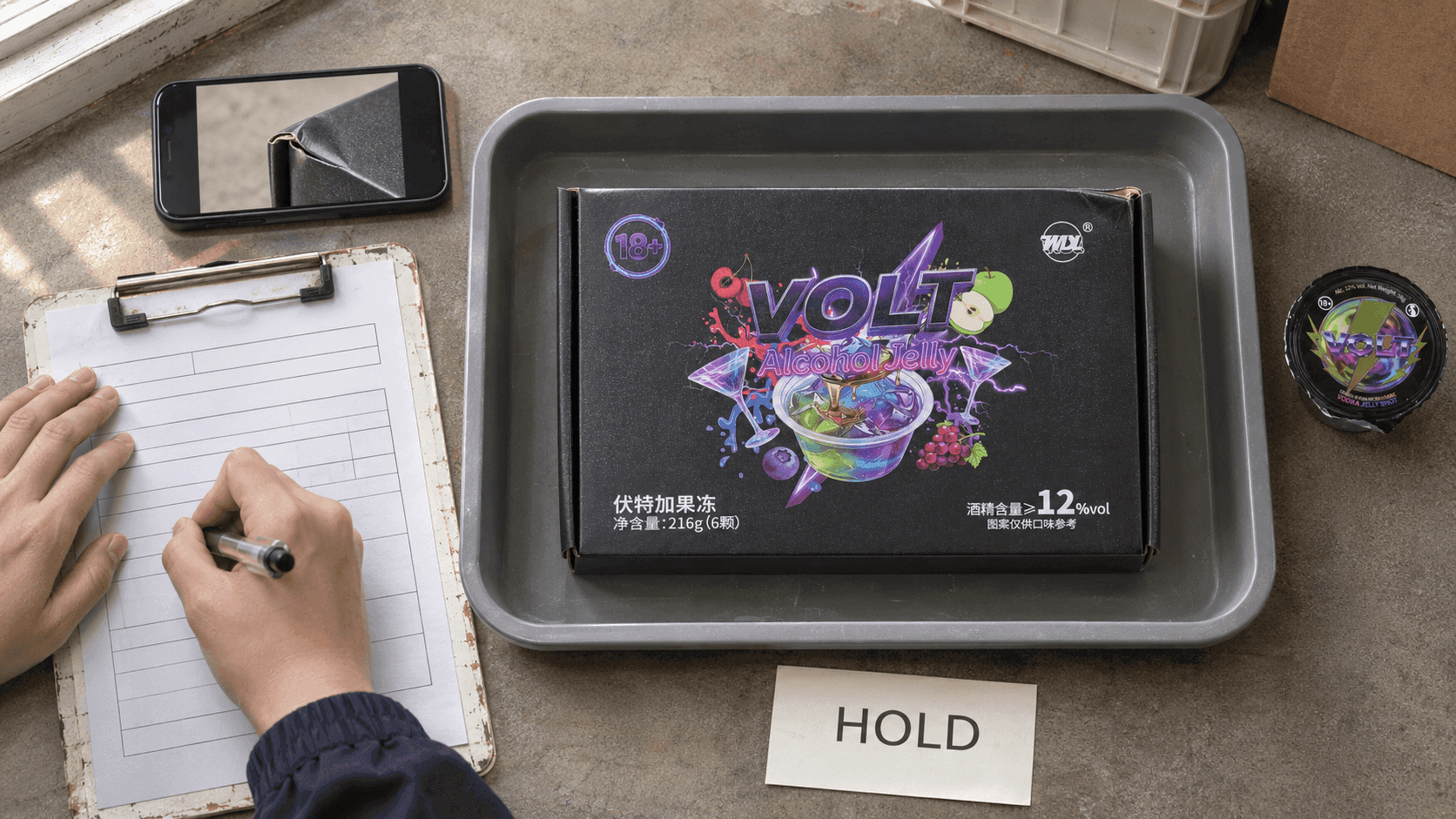
Start by listing observable conditions that require action. Examples include a crushed or wet outer box, an opened box, missing cups, a torn or leaking cup, a lifted or damaged seal, sticky residue, an unreadable alcohol statement, an unreadable lot or date field or evidence that the pack was stored or handled outside its approved instructions.
Do not ask front-line staff to decide the technical cause. A wet box may result from an external spill, product leakage or another handling event. A lifted edge may be damage after packing or a package-performance concern. The first record should describe what is visible without turning an observation into an unsupported conclusion.
Define separate routes for customer-returned product, damage found before sale and damage found during delivery or shelf replenishment. The same evidence fields can be used, but control, refund, return and reporting responsibilities may differ.
Confirm the Exact Product and Pack Version
Record the product name, flavor, six-cup pack identity, artwork or packaging version when available, lot code, date code and the store or channel where the pack was found. Photograph the front, back, damaged area, code fields and the relationship between the outer box and the individual cups.
The current VOLT format uses six individually sealed cups. Treat the retail box and its intended cup count as one controlled pack unless the approved destination-market program specifically permits and labels another form of sale.
Do not place an unidentified loose cup back into a box. If the cup cannot be connected reliably to the correct pack, lot and flavor, keep it with the isolated evidence and record the uncertainty.
Inspect Without Creating More Damage
Begin with a visual check of the unopened or already-damaged pack. Do not squeeze a questionable cup, press a lifted seal back into place, wipe away all residue before photographs or open an intact cup merely to investigate a retail complaint.
Use protective handling appropriate to the observed condition and the retailer's procedure. If product is leaking, prevent contact with saleable stock and surfaces while keeping the package available for evidence when safe to do so.
Record whether the outer box alone appears affected or whether any cup, lid, code or mandatory information is involved. This distinction helps the next reviewer choose the correct packaging, product-quality or retail response.
Separate Outer Box Damage From Cup or Seal Concerns
A scuffed corner and a leaking cup do not represent the same question. Outer-box damage may affect presentation or protection, while a cup or seal concern may require a controlled technical review of package integrity and product disposition.
The alcohol jelly cup seal integrity guide explains why visual inspection, mechanical seal-strength work, leak detection and shelf-life evidence answer different questions. Retail staff should record the condition and isolate the pack rather than attempt to prove seal integrity at the shelf.
A cup that looks intact should not automatically be returned to sale if it came from an opened, contaminated or otherwise questionable pack. The approved retailer and quality procedure should decide whether the complete pack, selected units or the full affected quantity remains on hold.
Remove Affected Packs From Sale
Move the affected pack away from customer access and saleable inventory. Apply a clear hold or isolation status so another employee cannot return it to the shelf before review.
The verified retail placement guide for VOLT recommends removing packs with crushing, moisture damage, opened boxes, leaking cups or unreadable mandatory information according to the retailer's quality procedure. Use that guidance as the shelf-level trigger, then follow the locally approved disposition process.
Count the affected packs and cups without inventing a broader scope. If several packs share the same lot, delivery, display or storage condition, record that relationship and escalate it; the authorized quality owner should decide whether additional stock must be checked or held.
Preserve Useful Evidence
A useful damaged-pack record includes the date and time found, store or warehouse location, reporter, product and pack version, flavor, lot and date codes, quantity affected, photographs, storage position, nearby conditions and a plain description of the damage.
Record whether the pack came from a customer, a shelf, back stock, a delivery case or a sample activity. Note any handling already performed, including cleaning, movement, opening or disposal, because those actions can change the evidence.
Use one incident reference across photographs, held product, retailer notes and communication with the distributor or manufacturer. Avoid sending isolated images without the product identity and context needed to interpret them.
Maintain Adult Only Control
Damaged status does not remove the product's alcohol content. Keep held packs, returned cups and samples within the retailer's adult-product control and prevent access by underage customers or unauthorized staff.
Do not use damaged product for informal tasting, staff consumption or customer giveaways. A questionable package is evidence and controlled stock, not a promotional opportunity.
If the store uses a customer service desk or returns area, confirm that alcohol-containing returns are handled under the destination market's age, access and transaction rules. The adult confectionery description must not be used to bypass those requirements.
Choose the Right Escalation Path
Send the record to the named retailer, distributor or quality contact according to the agreed responsibility map. The contact should be able to connect the incident to the supplied lot, packaging version, shipment and other related reports.
Escalate promptly when there is leakage, contamination, missing or unreadable mandatory information, repeated damage, multiple affected packs, an apparent trend or a condition that may extend beyond one retail unit. The exact timing and trigger should come from the approved market and company procedure, not from a generic blog threshold.
Keep commercial and quality decisions visible but separate. A refund or replacement can resolve the customer interaction, while the affected product may still need a technical review, stock assessment and documented final disposition.
Control Return Credit and Disposal Decisions
Agree in advance who authorizes return to the distributor, credit, destruction, disposal or other disposition. Record the decision, decision maker, quantity and completion evidence so the product does not remain indefinitely in an unclear status.
Alcohol-containing products can be subject to market-specific rules for returns, transport, destruction, tax, inventory and waste handling. Because the destination market is not specified here, the retailer should use its approved local procedure and qualified advice rather than a universal disposal instruction.
Do not discard a damaged pack before required evidence is captured, but do not keep leaking or unsafe material in a way that creates a new hygiene or access problem. The local procedure should balance evidence retention with safe site control.
Train Staff With Short Scenarios
A practical training exercise can show three conditions: a crushed but closed box, a cup with visible leakage and a pack with an unreadable alcohol or lot field. Ask staff to identify the immediate action, isolation location, record fields and escalation contact for each case.
Check whether employees know that 12% ABV must remain clear, that the six sealed cups belong to the controlled retail pack and that adult confectionery is a positioning phrase rather than a shortcut around alcohol rules.
Run the exercise before launch and after relevant changes to packaging, staff roles, storage, retail display, return policy or distributor contact details. Record gaps and update the procedure rather than relying on verbal memory.
Close the Record and Look for Recurrence
Close an incident only when the affected quantity has a documented disposition and required communication is complete. Keep the record connected to the lot, photographs and any investigation or corrective action.
Review recurring observations by damage type, store, delivery, display, packaging version and lot without assuming that correlation proves cause. A repeat pattern can justify a broader assessment of handling, secondary packaging, seal performance, storage or staff practice.
A strong damaged-pack procedure makes the first retail response consistent while leaving technical conclusions to the people with the right evidence and authority.
Retailers and distributors can share their market and damaged-pack workflow with Victory Foods for a focused VOLT sample and handling discussion.
Frequently Asked Questions
What should retail staff do first when a VOLT pack is damaged
Remove the pack from sale and customer access, apply a clear hold status and record the visible condition without guessing the cause.
Can an intact cup from an opened box be returned to the shelf
Not automatically. Keep it with the isolated pack and let the approved retailer or quality procedure decide whether any unit can return to sale.
Should staff open a cup to check a suspected seal problem
No, not as a routine shelf response. Preserve the condition and send the identified pack to the authorized quality contact unless the approved investigation procedure instructs otherwise.
Does adult confectionery mean the pack can be handled as ordinary candy
No. Adult confectionery is a brand positioning phrase. VOLT contains 12% ABV, and classification, licensing, returns, disposal, age control and retail eligibility depend on the destination market.
What evidence should be captured
Capture the product and pack version, flavor, lot and date codes, location, quantity, photographs, visible condition, source of the pack, relevant storage or handling context and actions already taken.
Who decides whether damaged VOLT product is returned or destroyed
The responsible party defined by the retailer, distributor and destination-market procedure should authorize and document the final disposition.
When should the procedure be reviewed
Review it after relevant packaging, channel, display, storage, staffing, return-policy or contact changes and when incident records show recurring patterns.