
How to Test Popping Boba Color and Flavor Carryover Across Beverage Bases
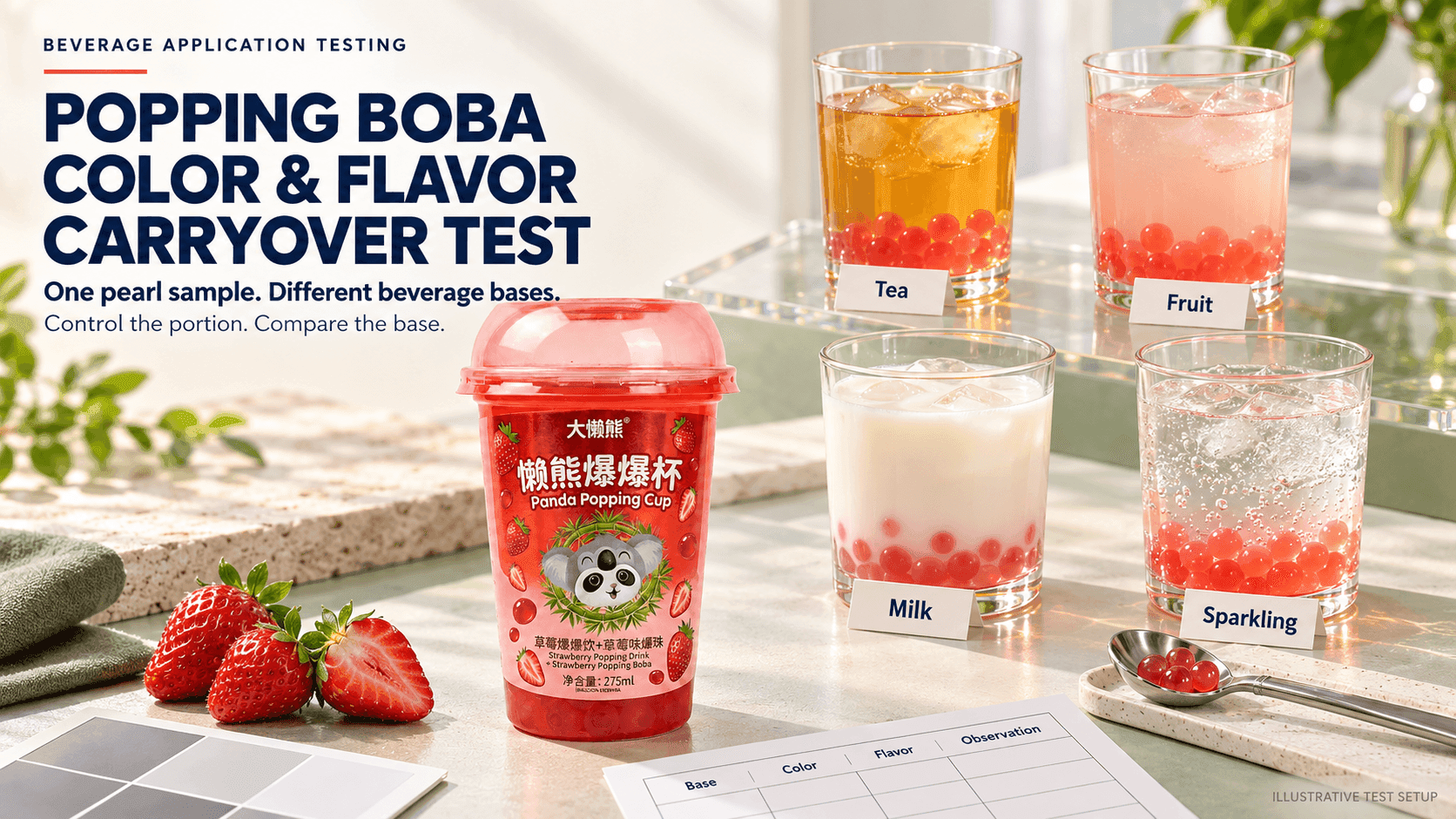
Popping boba can look and taste balanced in its original syrup yet behave differently in tea, fruit beverages, dairy or non-dairy drinks. This guide shows foodservice and beverage teams how to build a controlled base matrix, standardize the pearl and syrup portion, observe color movement, evaluate flavor carryover and convert the findings into a clear application decision.
How to Test Popping Boba Color and Flavor Carryover Across Beverage Bases
Popping boba can look balanced in its original syrup and change the appearance or flavor of a finished beverage within the actual service period.
A colored pearl may tint a clear drink, soften the visual tone of milk tea or create a ring of color near the bottom of a cup. Syrup transferred with the pearls may strengthen fruit notes, add sweetness or compete with tea, dairy and botanical flavors. These effects are not automatically defects. They may be desirable in one menu concept and unacceptable in another.
A controlled carryover test helps the team distinguish product behavior from recipe variation. It compares the same popping boba sample across defined beverage bases while controlling portion, syrup handling, assembly order, serving vessel and evaluation point. The result supports an application decision for the exact combination tested.
This test does not establish shelf life, an after-opening period or regulatory approval. It also does not replace incoming quality checks or a complete foodservice menu trial. Its purpose is narrower: to show how color and flavor move from the popping boba system into the intended beverage bases.
Define the Application Decision
Start with the decision the test must support.
The team may need to choose one pearl flavor for several drinks, identify which beverage base needs a lower-syrup portion, compare a clear and an opaque application or decide whether a visually dramatic color change fits the brand concept. Write the main question before selecting samples.
A useful decision statement names the exact product, bases and use. For example, the test may compare one approved strawberry popping boba sample in a black tea, a fruit beverage and a dairy-based drink prepared under the planned menu method.
Do not combine every development question in one session. Pearl membrane strength, straw compatibility, portion cost, package handling and delivery performance require related but separate observations. A focused carryover study produces clearer evidence than a broad tasting in which several variables change at once.
Lock the Popping Boba Sample
Record the exact sample before the container is opened. Include the supplier, product name, flavor, sample or item code, batch or lot, pack format, date received and the approved handling instructions available for that item.
Confirm that the product has already passed the incoming checks needed for the test. A container with an unidentified leak, excessive broken pearls or an uncertain sample version should not be used to explain base compatibility. Complete the relevant popping boba quality review first.
Keep one container or controlled sample as the source for the comparison when practical. If more than one container is required, record each lot and confirm that the comparison is not unintentionally measuring lot or handling differences.
Photograph the product label and sample code. Neutral sample codes are useful when reviewers should not know the supplier or flavor name, but the test owner must keep the traceability key.
Lock Every Beverage Base
Each base should be a defined recipe or commercial item rather than a broad label such as tea or milk drink.
Record the base name, recipe or product code, batch where relevant, preparation method, sweetener level, dilution, added flavors and other ingredients that can affect the result. If the base is prepared in the outlet, document enough detail for another trained person to reproduce it.
Use the final or closest available commercial version. A plain laboratory solution may help investigate one mechanism, but it does not represent the full menu item unless that is the intended product.
When two versions of a base are compared, change one defined factor at a time. A different tea, sweetener, acidity direction and serving temperature in the same comparison make it difficult to explain the result.
Build a Representative Base Matrix
The matrix should reflect actual launch priorities rather than every beverage category in the market.
Possible groups include clear tea, milk tea, fruit beverage, dairy or non-dairy drink, yogurt drink, sparkling beverage or another system that belongs to the planned menu. Select only the groups the business is considering.
Within each group, identify the exact base. Two fruit beverages can interact differently because their formulas, colors and flavor systems differ. A result in one plant-based drink should not be generalized to every non-dairy base.
Include a blank version of each base without popping boba. The blank shows the starting color, aroma, sweetness and flavor of the beverage. It also gives reviewers a direct reference when the finished sample appears different.
Use Reference Controls
Controls make a visual and sensory comparison easier to interpret.
At minimum, keep the unmodified base and the popping boba in its original container or syrup. Depending on the question, the team may also compare the normal service portion with a defined lower-syrup or alternative handling method that is operationally realistic and approved for evaluation.
Do not create a control that the outlet could never reproduce. A laboratory-drained pearl may isolate syrup effects, but it should not become the menu recommendation unless the draining method can be defined, reviewed and performed safely in service.
Label every cup with a neutral code. The code should identify the base, pearl sample, portion method and evaluation point in the master record without revealing unnecessary information to tasters.
Standardize the Portion and Syrup Handling
Color and flavor carryover can change when the pearl-to-syrup relationship changes. The test must therefore control how the portion is taken.
Identify the utensil or weight method, the intended amount, whether the product is mixed before portioning when permitted, where the utensil enters the container and whether a defined pause or draining step applies. Use observable instructions instead of phrases such as add a little syrup.
If the operation has already approved a portion and yield method, use that method. If portioning is still under development, state that the carryover result is provisional and may change when the serving method is finalized.
Record the actual portion for each test cup. A recipe prepared with inconsistent amounts cannot show whether the base or the portion caused the difference.
Standardize Assembly and Service Conditions
The assembly sequence can change the visible result. Pearls added before the beverage may release syrup at the bottom. Pearls added after ice or foam may distribute differently.
Record the order of ingredients, mixing action, cup type, ice or no-ice condition, lid, straw or spoon and any other step that belongs to the planned service method. Use the same process for every sample within the comparison.
Prepare the test under the handling instructions for the exact products and the operation's food safety plan. Clean utensils, protected ingredients and clear sample identification are part of a valid foodservice test.
The FDA Food Code is a model used by United States jurisdictions for retail and foodservice rules. It is not a universal operating procedure and local adoption varies. Every outlet should follow the requirements and approved procedures that apply to its location.
Document the Starting Appearance
Photograph and describe each base before adding the pearls.
Record transparency or opacity, base color, foam, suspended material and any natural variation relevant to the comparison. Place the samples against the same neutral background under consistent lighting. Include a color reference card when the team needs repeatable photography, but do not treat a phone photograph as a laboratory color measurement.
Then photograph the prepared beverage immediately after the defined assembly step. Capture the whole cup and a closer view of the pearl and base interface when useful.
The purpose is not to make the samples look attractive. The images should help the team identify where color appears, how far it moves and whether the effect is visible under the planned presentation.
Observe Color Movement at Planned Evaluation Points
Choose evaluation points that reflect the real customer journey and available product guidance.
A counter-service drink may need an immediate observation and another point that represents the planned pickup or consumption window. A delivery concept may need a separate representative test. Do not invent a long holding period solely to make the color change more dramatic.
At each point, observe where the color is located. It may remain close to the pearls, form a gradient, tint the full base, collect around ice, appear in foam or become difficult to see in an opaque drink.
Use descriptive language before assigning a judgment. Notes such as faint red tint throughout the clear base or visible purple layer near the bottom are more useful than good color or bad color.
If quantitative color measurement is important, define an appropriate method and instrument with qualified technical staff. This application guide does not set a universal color difference limit.
Evaluate Flavor Carryover in the Finished Beverage
Taste the blank base and the prepared sample under the same planned serving conditions.
Separate the pearl experience from the beverage experience. First assess the base liquid away from a pearl. Then assess a normal sip that includes the intended amount of pearls or syrup. Finally, consider the combined aftertaste.
Record whether the popping boba contribution is absent, subtle, balanced, dominant or conflicting for the intended concept. Note changes in perceived sweetness, acidity, fruit character, tea character, dairy notes, aroma and finish only when reviewers can describe them consistently.
Avoid asking whether the sample tastes nice. Ask whether the carryover supports the named beverage and whether the result can be reproduced with the planned service method.
Separate Syrup Effects From Pearl Effects
The surrounding syrup and the filled pearl can contribute differently.
If the base tastes different before a pearl is bitten, transferred syrup is a likely contributor. If the flavor appears mainly when the pearl bursts, the filled pearl may be providing a more localized experience. Both can be appropriate, but the menu description and portion method should reflect the actual result.
A controlled secondary comparison may help when the first test shows excessive carryover. Compare the approved service method with one realistic alternative while keeping the base, pearl sample and total assembly unchanged.
Do not wash, rinse or extensively drain the product unless the supplier and food safety review support that method. An improvised method can change product quality, yield and hygiene conditions while producing a result that the commercial operation cannot maintain.
Distinguish Intended Visual Design From a Defect
Color movement is not automatically a failure.
A gradient may be part of the intended visual experience. A clear drink that slowly changes color can support an interactive menu concept. The same effect may be unacceptable when the brand requires a stable transparent base or when customers could mistake the appearance for separation or inconsistency.
Write the visual target before scoring the sample. The decision should compare the observed result with that target, not with a general preference for more or less color.
Unexpected particles, broken pearls, unusual clouding or a change outside the agreed product behavior should be recorded separately and referred to the appropriate quality review. Do not label every visible change as migration when the cause is unknown.
Compare Bases Without Overgeneralizing
Summarize each exact base and pearl combination separately.
One combination may be approved for a clear fruit drink, conditionally approved for milk tea and rejected for a pale botanical beverage. That result applies to the tested versions, portion method and service conditions.
Do not conclude that a pearl is compatible with all tea, dairy or fruit bases. Changes in formula, supplier, color, sweetener, acidity, preparation, cup or serving conditions may require a new comparison.
A matrix is useful for the decision record. Each row can identify the base, pearl sample, portion method, immediate appearance, later planned observation, flavor carryover, operational note and decision status.
Place the Result Within the Full Menu Test
A carryover study answers one part of menu readiness.
The complete popping boba menu test should also confirm membrane performance, straw or spoon access, finished recipe balance, employee handling, cup and lid behavior, takeout or delivery needs, ingredient and allergen information and the final launch decision.
Carry the approved base and portion combination into that broader trial. If the menu trial changes the recipe, service method or evaluation point, review whether the carryover result still represents the finished item.
Keep the carryover record as supporting evidence rather than copying its conclusions into unrelated applications.
Review Ingredients Labels and Market Rules Separately
An application test cannot determine whether a color additive, flavor, ingredient statement or claim is permitted in the destination market.
Use the current supplier documents for the exact popping boba and every beverage base. Review the complete finished item, including allergens and the way ingredients must be communicated for the sales format.
In the United States, FDA requirements for color additives address approved uses, applicable conditions and labeling. A visually acceptable carryover result does not establish that an ingredient or declaration complies. Other markets have their own requirements, so the responsible brand or importer should complete the appropriate review.
Do not infer the identity of a color from appearance. The same visual result can come from different formulations, and a color name used in development is not a substitute for the approved ingredient document.
Record a Clear Decision
Close the study with a status for every base and pearl combination.
Useful statuses include approved for the defined application, approved with a specified portion or presentation condition, revision and retest required, or not suitable for the current concept. State the exact sample, base version, portion, syrup method, cup and evaluation points covered.
List the reason for the decision in observable terms. If the result needs a formula revision, a different flavor, less syrup transfer or a stronger visual target, assign the next action and identify which variable may change.
Retain the recipe, photographs, score sheets and sample identities together. The record should allow another team to understand what was tested without reconstructing the session from memory.
Repeat After Meaningful Changes
Repeat or assess the test when the popping boba formula, color, flavor, syrup relationship, supplier, base recipe, portion method, assembly order, cup or intended service period changes in a way that could affect the result.
A new commercial lot does not automatically require a full development study when it meets the approved specification, but unexplained visual or flavor differences should be investigated through the applicable quality process.
Use the earlier study as a comparison, not as proof that the new combination will behave identically. Record the change, the evidence reviewed and the reason the team accepted, limited or repeated the test.
Frequently Asked Questions
Is color migration always a defect in popping boba
No. Some menu concepts intentionally use a gradient or changing drink color. The team should define the desired appearance and compare the observed result with that target.
Should the pearls be drained before the test
Use the intended and approved service method. If a draining step is being considered, define it and test whether staff can reproduce it safely. Do not switch methods between samples.
Can one result cover every tea or dairy base
No. The result applies to the exact base, popping boba sample, portion and service conditions tested. Different formulas may produce different visual and flavor behavior.
How long should the beverage be observed
Use evaluation points that represent the planned service and customer journey and that remain within the approved handling information. This article does not set a universal holding time.
Does the test prove that the color additive is permitted
No. Ingredient and labeling compliance require a separate review of the exact formula, supplier documents, intended use and destination-market rules.
What should be kept in the test record
Keep the sample and base identities, recipes, portion and syrup method, assembly sequence, serving conditions, photographs, observations, reviewer notes and the final decision.
Foodservice and beverage teams can share the planned base, serving method and popping boba concept for a focused sample comparison before the menu formula is finalized.