How to Control Functional Jelly Changes After Sample Approval
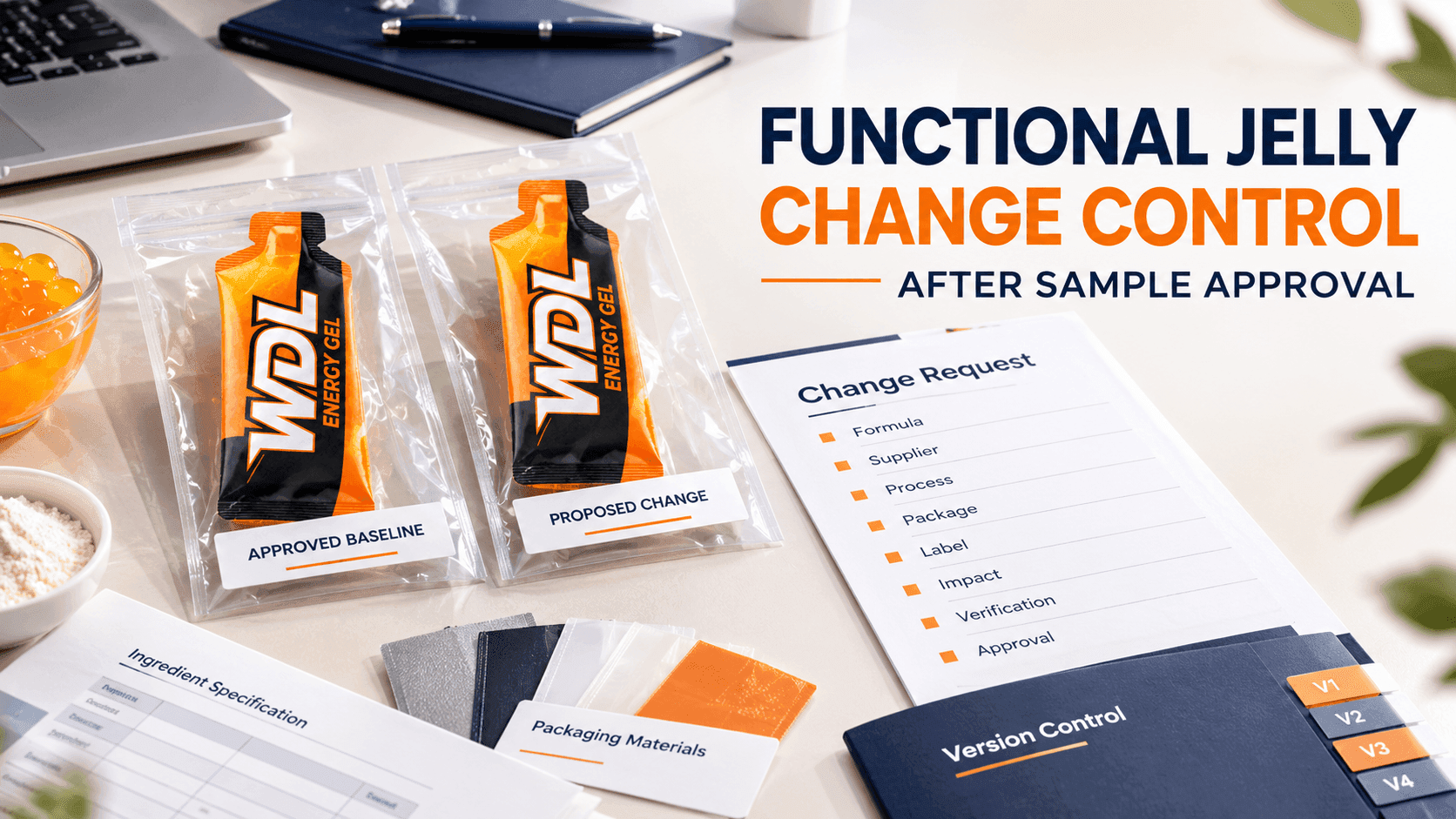
An approved functional jelly sample becomes the baseline for controlled production, but later changes can affect texture, flavor, labeling, packaging, shelf-life evidence and food-safety controls. This guide shows buyers how to document a proposed change, assess its impact, select the right verification and approve the new version before use.
How to Control Functional Jelly Changes After Sample Approval
An approved functional jelly sample creates a reference for the product the buyer intends to purchase. It does not make every later formula, ingredient, process or package change automatically equivalent to that sample.
A different ingredient grade can alter flavor or texture. A new process setting can change gel structure even when the formula remains the same. A packaging change can affect sealing, product protection or the evidence supporting shelf life. A label update can become inaccurate if it is not linked to the current formula.
Change control gives the buyer and manufacturer a defined route for reviewing those differences before they reach commercial production. The process should identify what is changing, assess which product records may be affected, select appropriate verification and record approval for the new version.
This is different from a sample revision brief. A revision brief directs development toward an acceptable prototype. Change control begins after a version has been approved as the project baseline.
Establish the Approved Baseline
The team cannot evaluate a change unless it can identify the current approved product.
The baseline record should connect:
- the approved sample or reference code
- the formula and ingredient versions
- the intended functional ingredient target where applicable
- the manufacturing process or instruction version
- the primary package and relevant component references
- the artwork and destination-market label version
- finished product specification for functional jelly
- the shelf-life and validation evidence that
- the approval decision and date
Do not rely on a photograph, email thread or sample nickname as the only reference. The baseline must be specific enough for purchasing, research and development, production, quality and regulatory teams to confirm that they are discussing the same version.
An approved physical sample can support sensory comparison, but food changes over time. Its storage history and suitable comparison period should be understood. The controlled documents remain essential even when a retained sample is available.
Define What Counts as a Change
Change control should cover more than intentional reformulation. A product may change because a supplier, material, production line, test method or destination market changes.
Relevant categories can include:
- ingredient identity grade level or source
- flavor color sweetener acid or hydrocolloid adjustment
- functional ingredient target or overage strategy
- supplier manufacturing site or specification change
- mixing heating cooling holding filling or sealing conditions
- production equipment line or factory change
- primary package material dimensions seal layer or closure
- secondary packaging and case configuration
- artwork ingredient declaration nutrition information claim or warning
- analytical method sensory method or acceptance criterion
- storage statement shelf-life claim or distribution condition
- intended consumer market use or serving format
The project procedure should define which changes require formal review and who can classify them. A supplier describing a change as minor does not decide its impact on the finished product.
Start With a Written Change Request
The change request should describe the difference before anyone decides whether it is acceptable.
Record the current item and proposed item, the reason for the change, the requested implementation date, the products and markets affected and the person proposing it. Attach specifications, technical data, artwork or other evidence needed to compare the two versions.
Avoid general statements such as equivalent ingredient, improved process or updated film. State the observable difference. If the exact information is confidential, the manufacturer still needs an internal assessment with enough detail to support the decision and provide the buyer with an agreed summary.
The request should also identify whether any stock, printed packaging, work in progress or open order uses the current version. This prevents an approved change from creating an uncontrolled mixture of old and new materials.
Assess the Finished Product Impact
The assessment should begin with the complete product rather than one department's narrow view.
Depending on the proposed change, reviewers may need to consider:
- food-safety hazards and existing controls
- allergen status and cross-contact controls
- composition and functional ingredient targets
- ingredient declaration nutrition values claims and warnings
- flavor color aroma sweetness acidity aftertaste and texture
- process capability fill behavior and seal cleanliness
- package compatibility barrier performance and food contact use
- shelf-life evidence and storage instructions
- test methods specifications and release documents
- destination-market registration notification or customer approval
The list is a starting point, not a universal test plan. The responsible technical team should identify the specific questions to ask a functional jelly manufacturer about quality contro
Record the assessment even when the conclusion is that existing evidence remains applicable. The record should explain why, rather than treating no additional work as the default.
Review Ingredient and Supplier Changes Carefully
Two ingredients with the same common name may differ in grade, composition, carrier, concentration, particle size, flavor contribution, color, solubility or interaction with the jelly system. Supplier specifications and manufacturing controls may also differ.
For a functional jelly, a source change may affect more than the declared active ingredient. It can alter acidity, bitterness, aftertaste, clarity, sediment, hydration or gel strength. The technical review should compare the relevant specifications and decide whether bench work, analytical verification, sensory review or production evidence is needed.
Purchasing should not implement a substitution only because the original item is unavailable or the replacement is less expensive. Emergency supply pressure changes the timing of the decision, not the need to assess the product impact.
If the ingredient supports a label claim or declared amount, the regulatory and analytical basis should be checked against the proposed source and finished formula.
Treat Process Changes as Product Changes When Relevant
An unchanged formula does not guarantee an unchanged jelly.
Mixing order, shear, heating, hydration, hold time, cooling, filling and sealing can influence hydrocolloid behavior and the finished eating experience. Equipment geometry or batch size may also change how the product moves through the process.
The change request should identify the affected process step and the reason for the adjustment. Reviewers can then decide whether the change requires a documented process comparison, a trial batch, additional in-process checks or an update to the manufacturing instruction.
If the new process is introduced to correct a recurring deviation, the team should verify that the underlying cause has been addressed. A permanent process change should not be hidden inside a one-time deviation record.
Evaluate Packaging as Part of the Product
Primary packaging has direct contact with the jelly and supports sealing, handling, storage and consumer use. A material, dimension, seal layer, closure or supplier change may affect more than appearance.
The review can consider compatibility with the formula, seal performance, filling behavior, barrier needs, code legibility, opening experience, transport performance and the food contact conditions for the intended market.
Printed artwork and secondary packaging also need control. A small dimensional change can move mandatory text, change the fit of a label or alter case packing. A new case configuration can affect logistics even when the individual unit is unchanged.
When existing shelf-life or packaging evidence was generated with the previous material, the assessment should determine whether that evidence still represents the proposed version. The answer may involve documented justification, bridging work or new validation.
Check Labels Claims and Market Files
Formula and supplier changes can affect the ingredient list, nutrition information, allergen statement, functional ingredient declaration and claims. Process or serving changes may affect directions or storage language. A new market can introduce different mandatory information.
Compare the proposed product with every active artwork version. Do not approve the formula first and assume the label team will discover the change later.
The assessment should identify which files need review, who owns that review and whether current printed stock can still be used. If an artwork change is required, link its version to the approved change record and implementation lot.
The product should not carry a claim that was supported by an earlier version but has not been checked against the changed product and destination-market rules.
Choose Verification That Matches the Change
Different changes create different questions. The response should match the affected product attributes and the available evidence.
Possible actions include:
- document comparison with a written technical justification
- supplier document or specification review
- targeted analytical or package testing
- a new bench sample and sensory comparison
- a production trial or line verification
- label and regulatory review
- supplemental shelf-life or stability work
- new validation when the existing basis no longer applies
The team should define what will be tested, which version will be used, the decision criteria and who can approve the result. Avoid ordering a broad set of tests without explaining how they answer the change question.
Some changes may require several actions. A new package film could need document review, sealing work, finished-pack checks and shelf-life assessment. A simple correction to non-product artwork may follow a different route.
Decide Whether Existing Evidence Can Bridge the Change
Bridging means using relevant evidence from the approved version to support the changed version with a documented rationale and any focused additional work.
The assessment should state what is unchanged, what evidence is being relied on and why that evidence remains relevant. It should also identify the limits of the conclusion.
Do not use product similarity as the entire justification. A conclusion that two versions are comparable should be based on the attributes affected by the change and the question the evidence was designed to answer.
When the change creates a new product condition or removes the basis of the earlier work, new validation may be required. The responsible technical and regulatory teams should make that decision for the actual project.
Approve the New Version Before Implementation
The change record should end with a clear disposition.
The result may be approved, approved after defined actions, rejected or returned for more information. State the effective version, implementation date or lot where appropriate, remaining actions and the people who authorized the decision.
Do not allow purchasing or production to treat a proposed change as approved because samples have arrived or old material is running low. The new version should enter use only after the required reviews are complete.
If commercial timing requires a temporary deviation, document its scope, risk assessment, approval, affected quantity and end date. A temporary decision should not become the permanent process by repetition.
Update Every Linked Record
Approval is incomplete if the master documents still describe the old product.
Update the formula reference, ingredient and supplier list, manufacturing instruction, finished product specification, package documents, artwork, test plan, quality agreement, shelf-life file and commercial product sheet as applicable. Remove obsolete versions from points of use while retaining the required history.
The change log should connect the request, impact assessment, supporting evidence, approval and effective production lot. This traceability helps both parties answer later questions without reconstructing the decision from email.
Communicate the approved change to every affected market and function. The buyer should know whether the change requires a new sample, new label file, updated sales material or notification to a customer or authority.
Verify the First Production After the Change
The first commercial run under the new version may need focused checks based on the impact assessment.
Confirm that production used the approved material, process, package and artwork. Compare the relevant finished attributes with the approved criteria and record any deviation. If the change included a production trial, verify that the commercial handover follows the approved trial conditions and actions.
Do not assume that document approval proves execution. First-run verification closes the change by showing that the authorized version was implemented as planned.
Put Notification Rules in the Commercial Relationship
Buyers should ask how the manufacturer controls changes and which changes require advance notification or approval. Those expectations can be defined in the relevant quality agreement, specification or supply contract.
The agreement should identify the scope, notice route, responsible contacts, records and approval expectations without replacing the manufacturer's internal food-safety and quality procedures. It should also address urgent substitutions and market-specific changes.
A practical system gives the manufacturer a route to propose improvements and gives the buyer visibility before a change affects the purchased product.
Brands and qualified buyers can discuss how an approved functional jelly sample will be linked to specifications, validation evidence and future change notifications before commercial production begins.
Frequently Asked Questions
Is a supplier change always a minor change
No. The finished-product impact depends on the material, specification, manufacturing source, function in the formula and available evidence. Review the proposed supplier or grade before deciding what verification is appropriate.
Does an unchanged formula mean no new approval is needed
Not necessarily. A process, equipment, packaging, artwork, test method or market change can affect the approved product or its supporting records even when ingredient quantities stay the same.
When is a new sample needed
A new sample is useful when the proposed change may affect sensory, physical, package-use or other attributes that the buyer needs to evaluate. The project team should decide based on the impact assessment rather than a universal rule.
Does every change require a new shelf life study
No. The technical team should determine whether existing evidence remains applicable, whether focused bridging work is adequate or whether new validation is required. Record the basis for that decision.
Who should approve a functional jelly change
Approval roles depend on the change and the commercial relationship. Research and development, quality, food safety, regulatory, manufacturing, purchasing and the buyer may each have responsibilities. Define those roles before the change is implemented.
What should buyers request from an OEM manufacturer
Ask how changes are identified, assessed, tested, approved, communicated and traced to an effective lot. Also confirm which product, supplier, package, label and market changes require advance buyer notification.