How to Reconcile Mixed Flavor Jelly Cup Packs Before Shipping
A mixed-flavor jelly cup box can contain the correct total count and still have the wrong flavor mix, artwork version or case identity. This guide shows buyers and manufacturers how to reconcile individual cups, retail packs and shipping cases before release without inventing universal sampling or acceptance rules.
How to Reconcile Mixed Flavor Jelly Cup Packs Before Shipping
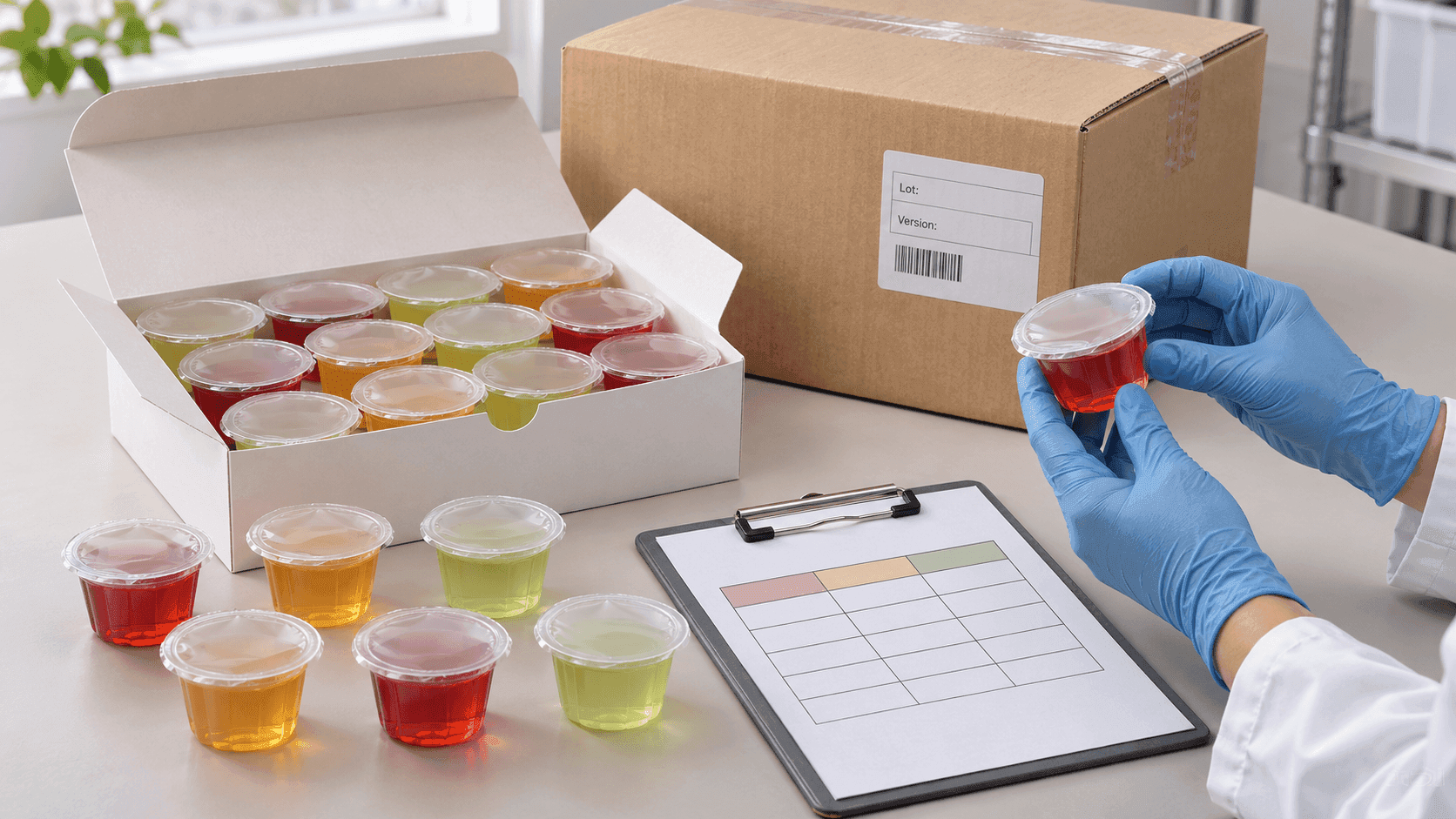
A mixed-flavor jelly cup box is a small assortment system. Each cup has its own flavor and identity, the retail box promises a defined mix, and the shipping case must contain the correct number of finished boxes for the correct market.
A pack can meet the total unit count and still be wrong. One flavor may be overrepresented, a cup may use obsolete artwork, two production lots may be combined without a traceable record, or the case label may describe a different assortment from the boxes inside.
Pack reconciliation connects issued cups and packaging materials with accepted finished packs, rejects, rework and remaining stock. It supports a documented shipping decision for the exact assortment tested. It does not create a universal sample count, defect limit, case quantity or release rule.
Approve the Assortment Before Packing
Define the intended retail unit before the packing line starts. Record the product name, retail pack code, flavor names, number of cups per box, required quantity of each flavor, artwork language, destination market and current specification or packing instruction revision.
The functional jelly variety pack planning guide explains why pack count and mix ratio should be fixed before packaging and why the planned ratio must connect to production and case configuration. Use the controlled project record for the commercial pack rather than an email summary or a sales image.
If the assortment is still being tested, label it as a trial version. Do not issue commercial case labels or item data that make a provisional mix appear approved.
Identify Every Cup Version
List each approved cup by flavor, product code, artwork revision and relevant production lot. Similar colors or fruit images are not enough to establish identity. The operator and reviewer need a code or name that remains clear under normal line conditions.
Confirm that cup lids, labels or printed films match the filling batch and destination market. A correct flavor in the wrong artwork is still a pack error. If the same flavor has more than one approved market version, keep the versions physically and electronically separated.
Record whether multiple finished-product lots may enter one retail box. When they may, define how the box and case remain traceable to those lots and how the relationship is retained in the packing record.
Create a Cup Box and Case Map
Build a simple hierarchy that shows the individual cup, the retail box and the shipping case. For each level, identify the item code, description, approved count, flavor mix, barcode or identifier where applicable, and label or artwork revision.
GS1's variety pack hierarchy shows separate product levels from individual units through pack, case and pallet. The GS1 GTIN Management Standard also notes that a change in pack or case quantity can require a new identifier at the affected higher packaging level. These standards support product-data discipline but do not determine the legal status or release criteria for a specific jelly project.
The map should match the information used by purchasing, production, warehouse and the customer. If the sales order calls the pack mixed fruit while the line instruction uses a code only, include both references so the team can confirm that they describe the same item.
Clear the Packing Area Before the Run
Remove or control leftover cups, boxes, leaflets and case labels from previous products and assortments. Record the line-clearance result under the manufacturer's approved procedure before current materials are issued.
Verify the first materials against the approved map. Check the exact flavor identities, cup artwork, box artwork, case label, lot and date fields, language, item code and pack quantity. A start-up check should use the materials physically present, not only a screen image.
When a changeover occurs during the run, repeat the relevant checks. A flavor refill, new packaging lot or new product lot can introduce a mix-up even when the retail box design stays the same.
Define the Assembly Method
Write how the required flavor mix is created. The line may use dedicated lanes, a pick sequence, a tray pattern, a verified count board or another controlled method. The instruction should let a trained person observe whether the pack is being assembled as approved.
Do not rely on cup color alone. Lighting, similar designs and color-vision differences can make a color-only method unreliable. Use readable flavor names, codes, lane labels or another approved identifier in addition to visual cues.
Where automation is used, record the active recipe and the checks that confirm each feeder or lane contains the correct cup. Where packing is manual, define the sequence, work area and independent verification appropriate to the project.
Check the First Finished Packs
Open or inspect the project-defined first packs and compare them with the approved assortment. Confirm total cup count, count by flavor, cup identity, orientation where relevant, package integrity, box closure and readability of the retail information.
The functional jelly production trial checklist already treats unit count, assortment ratio, case count and case markings as scale-up questions. Use those trial observations to refine the commercial packing instruction, but do not assume a passing trial automatically releases a later production lot.
Photograph the approved first pack when photographs are part of the record. Label the image with the item, pack revision, lot and date so it does not become an uncontrolled visual reference after the assortment changes.
Verify the Mix During the Run
Select packs at the times and locations defined by the approved plan. Consider start-up, after material replenishment, after a stop or adjustment, and near the end of packing when these stages could affect the mix.
Record actual counts by flavor rather than writing assortment correct. If the box contains the right total but the wrong ratio, the record should show which flavor was missing or duplicated and which packs or time window may be affected.
Do not quietly replace a nonconforming cup and report only the corrected box. Preserve the original observation, correction and affected-scope assessment under the applicable deviation process.
Control Rejects Rework and Loose Cups
Identify where rejected cups and incomplete boxes go. Flavor units removed from a pack should remain identifiable and should not return to the line unless the approved rework process protects condition, identity and traceability.
Separate packaging damage from flavor-mix errors. A leaking cup may affect product and packaging quality, while a duplicated flavor indicates an assembly-control problem. Both require records, but they may have different owners and investigation paths.
At the end of a run, count or otherwise reconcile unused cups and packaging materials as required by the system. An unexplained difference can indicate unrecorded scrap, an incorrect issue quantity or a pack that did not receive the approved assortment.
Reconcile the Numbers
The reconciliation should connect quantities issued, accepted, rejected, reworked, returned and remaining. The exact equation and permitted difference must come from the approved operation and product plan.
Review flavor quantities as well as total cups. A total-only balance can hide a swap between flavors. Also reconcile retail boxes and cases when the project uses controlled printed materials or fixed case quantities.
If the numbers do not close, place the affected product under the appropriate control and investigate before release. Do not create an adjustment entry only to make the spreadsheet balance without evidence of what happened.
Confirm the Shipping Case
Inspect finished cases against the approved hierarchy. Confirm the retail pack identity, box count, case label, assortment description, lot or traceability information, destination details and closure condition.
A retail shelf test can help confirm whether flavor and SKU information remains understandable from cup to retail pack and case. The shipping check should use the final case actually prepared for the customer, not a development mock-up.
When more than one product lot or packaging lot enters a case, follow the defined traceability rule. Do not use a broad production date when the quality agreement requires a more precise link.
Close the Decision Record
The final record should identify the approved assortment, materials and lots used, packing period, checks completed, results, rejects, reconciliation, deviations, affected scope, disposition and authorized review.
Release of the pack should remain separate from release of the jelly itself. Correct assortment packing does not prove sensory quality, microbiological status, formula identity, seal performance, shelf life or label compliance as a whole.
Repeat or reassess the process after changes to flavor mix, unit artwork, cup dimensions, pack count, box or case design, product code, line arrangement, feeder, rework method or traceability rule.
Brands and retail buyers can share the planned flavor mix, cup format and case configuration with Victory Foods for a focused sample and packing discussion before the first commercial assortment is approved.
Frequently Asked Questions
Is total cup count enough to approve a mixed-flavor pack
No. The reviewer should also confirm the approved count of each flavor, exact cup and artwork versions, retail box identity, case identity and traceability required for the project.
Can cup color be the only flavor control
It should not be assumed. Similar colors, lighting and artwork can create confusion. Use the approved names, codes, lane labels or other identifiers defined by the operation.
Can different jelly production lots be packed together
Only when the approved product and traceability system permit it and the relationship remains documented. The quality agreement should define the required lot linkage.
Does pack reconciliation replace product release testing
No. It verifies quantities and identities through the pack-out process. The jelly and package still need the other evidence required by the specification and quality system.
Should every project use the same sample count
No. The sampling and decision plan should reflect the operation, pack risk, line design, customer requirements and destination-market obligations.
When should the reconciliation be repeated
Repeat or reassess it after meaningful changes to the assortment, artwork, pack count, packaging hierarchy, production lots, line setup, rework method or traceability system.